Category: Politics & Governments

A high-ranking Japanese official smiling and engaging with military personnel on a naval vessel decorated with flags.

Japan PM Advances Military Reform Amid Regional Threats

Prime Minister Sanae Takaichi is leading Japan through its most significant military transformation since World War II. Facing a nuclear North Korea and an assertive China, the Takaichi administration is pushing to revise Article 9 of the constitution to formally recognize the Self-Defense Forces. Combined with the recent landmark decision to ease military hardware exports, Japan is signaling its transition from a “shield” for U.S. interests to a proactive regional security provider.

Read More »
An isometric illustration showcasing three hexagonal frames representing medical research, space exploration, and green energy technology.

China–Europe Science Ties: Genuine Partnership or Geopolitical Gamble?

The gap between bilateral ambition and multilateral restriction has reached a breaking point in Europe’s science policy. While Spanish PM Pedro Sánchez champions open research with Beijing as a driver of innovation, the European Commission is moving to exclude Chinese entities from strategic fields like semiconductors and AI. As China’s R&D spending nears $723 billion, this report explores whether Europe can afford to de-risk without losing its edge in the global race for frontier technology.

Read More »
Soldiers in military uniforms carrying a large European Union flag in front of the European Parliament building with various national flags in the background.

Europe Can’t Defend Itself Without Turkey

Europe’s pursuit of strategic autonomy faces a harsh reality: its defense architecture is mathematically incomplete without Turkey. From drone supremacy to providing NATO’s deepest missile warning via Kürecik, Ankara offers the scale and industrial speed that the EU currently lacks. As Turkey prepares to command NATO’s Allied Reaction Force in 2028, Brussels must bridge political friction with strategic necessity to ensure a credible defense against regional threats.

Read More »
Indian Prime Minister Narendra Modi standing between two European leaders, holding their hands up in a gesture of unity.

India’s Balancing Act: Surviving Trump 2.0 Without Picking a Side

The second Trump presidency has stress-tested India’s foreign policy like never before. Faced with tariff shocks and diplomatic friction over Russian oil, New Delhi has doubled down on its doctrine of multi-alignment. From finalizing a landmark EU trade deal to joining the US-led “Pax Silica” initiative while maintaining ties with Moscow and Beijing, India is navigating a fragmented global order by transforming economic pressure into strategic resilience.

Read More »
Spanish Prime Minister Pedro Sánchez shaking hands with Chinese President Xi Jinping in front of national flags.

Spain Courts Beijing: Sánchez Bets on China as Transatlantic Ties Fray

In a strategic response to fraying Transatlantic ties, Spanish Prime Minister Pedro Sánchez has solidified a pragmatic partnership with Beijing. By securing high-quality investments from Chinese giants like Chery and CATL—conditioned on local job creation and technology transfer—Spain is positioning itself as a vital manufacturing hub and a diplomatic bridge between China and a fragmented Europe. This report analyzes how Madrid is navigating U.S. pressure to secure its green transition and economic sovereignty.

Read More »
A raised clenched fist wrapped in the Iranian flag against a dark, blurred background with bokeh lights.

Iran’s History of Defiance Challenges US Pressure

The current U.S.-Iran conflict is the latest chapter in a century-long struggle for Iranian sovereignty. By analyzing historical milestones from the 1953 coup to the recent 2026 escalations, this report explores why coercive diplomacy and tactical strikes often backfire. In a region where collective memory shapes modern policy, the pursuit of “domination” continues to underestimate the enduring power of national dignity.

Read More »
A conceptual illustration of hands assembling a missile like a puzzle against a blue background with a North Korean flag piece.

Cold Peace Offers Realistic Path on North Korea

After thirty years of unsuccessful attempts at total denuclearization, North Korea’s nuclear program has evolved into a formidable, permanent threat. As Pyongyang accelerates missile testing and expands its nuclear facilities, the window for traditional diplomacy has closed. A new pragmatic strategy—a “Cold Peace”—focused on immediate risk reduction and crisis management, may now be the only realistic path to ensuring regional stability.

Read More »
A portrait of Donald Trump looking directly at the camera with a serious expression, wearing a blue suit and purple tie.

US-Backed Figures Risk Familiar Fate in Iran Crisis

A recurring pattern in American foreign policy—the cultivation of local proxies for regime change—is once again playing out in the Iran conflict. From exiled figures to ambitious local politicians, those seeking power through external sponsorship often ignore the cautionary tales of the past. History suggests that such collaborations are inherently fragile, frequently ending in isolation or abandonment once Washington’s strategic priorities shift.

Read More »
Two chess kings, one silver and one black, standing on a chessboard with the blurred flags of the United States and Iran in the background.

Iran War Erodes US Appetite for Middle East Role

As the conflict enters its third month, domestic opposition to U.S. military engagement in the Middle East has reached a critical tipping point. Driven by rising energy costs and economic anxiety, a majority of Americans now disapprove of the ongoing campaign. With the 60-day War Powers Resolution deadline approaching, the administration faces a defiant Congress and a public increasingly weary of open-ended regional commitments.

Read More »
A close-up shot of a high-ranking official smiling while standing next to Vladimir Putin with Iranian and Russian flags in the background.

Iran Conflict Strengthens Authoritarian Networks

The ongoing conflict with Iran has unveiled a sophisticated web of cooperation among authoritarian states. Beyond tactical military aid, China and Russia are helping Tehran build a parallel economic and technological system. From electronic warfare sharing to the normalization of non-dollar trade, this “Authoritarian Collaboration” is actively reshaping global alignments and challenging the resilience of democratic alliances.

Read More »
A conceptual image featuring two puzzle pieces with the flags of China and the European Union, with two small human figures standing on them facing each other.

EU Cybersecurity Rules Threaten China Trade Ties

Deepening tensions between the EU and China have reached a new flashpoint over proposed revisions to the European Cybersecurity Act. By introducing “non-technical” risk assessments, the EU moves toward potential exclusion of Chinese technology providers from critical infrastructure. This strategic shift faces fierce opposition from Beijing, which warns of severe disruptions to global trade, renewable energy goals, and the erosion of multilateral WTO principles.

Read More »
A young man standing amidst the grey rubble of destroyed buildings, flashing a peace sign with his hand.

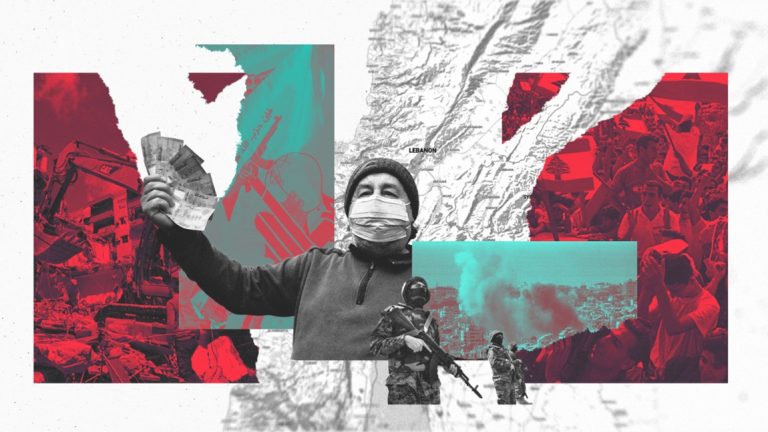
Lebanon Stands at Crossroads of War and Diplomacy

As conflict intensifies, Lebanon has become a critical test case for Middle East stability. A prominent panel at the Middle East Institute is examining the interplay between ongoing military exchanges and historic diplomatic efforts, focusing on whether Lebanon’s institutions can survive the current regional storm and pave the way for a sovereign, peaceful future.

Read More »