Category: Human Rights

Mark Carney and President Volodymyr Zelenskyy standing together at a diplomatic conference.

Canada’s Two-Track Foreign Policy on Crisis

Canada has long championed the international rules-based order, but its divergent responses to the conflicts in Ukraine and Gaza have sparked intense debate. By comparing its robust support for Ukraine with its more restrained approach toward Israel, critics argue that Ottawa’s foreign policy often prioritizes geopolitical alignment over universal human rights.

Read More »
An artistic rendering of the U.S. Supreme Court building overlaid with a glowing American flag.

The Court Held the Line. Congress Still Won’t.

The Supreme Court has decisively rejected the administration’s attempt to end birthright citizenship, affirming that birthright is a constitutional guarantee. While this ruling protects a century-old precedent, it highlights a deepening divide between judicial oversight and a struggling, gridlocked Congress.

Read More »
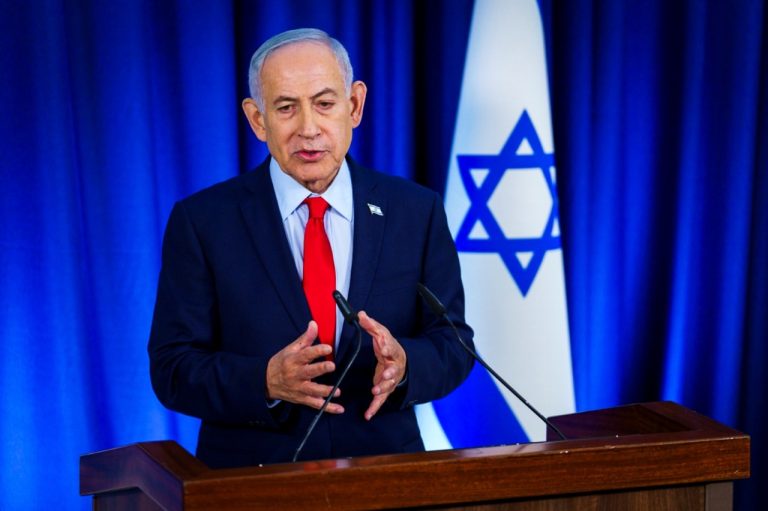
A street scene in an Israeli market with a person holding a political campaign sign featuring Benjamin Netanyahu.

Israel’s Election Cannot Rebuild Democracy With Those Who Broke It

As Israel approaches its October 2026 elections, the call for national unity faces a moral crisis. Can a democratic renewal succeed if it includes parties that have normalized genocidal rhetoric and eroded institutional trust? This piece examines the deep structural divide defining Israel’s most consequential political turning point.

Read More »
Surveillance footage showing detainees lying on the ground inside a secured facility.

Sexual Torture in Israeli Prisons: A Pattern of Systematic Abuse

This analysis examines recent reports concerning systemic sexual violence within Israeli detention facilities. Drawing on verified data from international bodies and human rights organizations, we explore the patterns of abuse documented since 2023, particularly regarding the Sde Teiman facility. The article addresses the critical issue of impunity, the weaponization of legal access, and the profound impact of these practices on vulnerable populations, including minors. By reviewing the failure of internal accountability mechanisms and the persistent lack of transparency, this post underscores the urgent need for international oversight to address these documented human rights violations.

Read More »
A crowd of people marching through a city street while carrying large Palestinian flags.

Israel’s Lebanon Occupation Is Ethnic Cleansing by Another Name

The situation in southern Lebanon remains dire as the declared ceasefire between Israel and Hezbollah faces constant strain. Despite diplomatic efforts and U.S.-led trilateral negotiations, significant Israeli military presence persists, with officials explicitly rejecting withdrawal and signaling a long-term strategy of creating “security buffer zones.” As the humanitarian crisis deepens—with over 1.2 million displaced—this article explores the disconnect between international diplomatic rhetoric and the operational realities on the ground, where the declared “Gaza model” of occupation continues to redefine the geopolitical landscape of the region.

Read More »
A memorial poster displayed in public featuring rows of photos of missing people in Syria.

Syria’s War Crimes Trap: Justice for the Dead or Answers for the Missing?

This analysis explores the critical dilemma of post-Assad transitional justice in Syria. We examine the tension between the popular demand for the death penalty against perpetrators and the structural requirements of international forensic cooperation necessary to identify tens of thousands of forcibly disappeared victims. The piece argues that the current legal framework risks trading long-term institutional accountability and victim identification for immediate, symbolic retribution.

Read More »
Artistic conceptual representation of a Middle Eastern figure integrated with international flags and a scale of justice.

International Law Is Losing the Middle East, Here Is How to Save It

This analysis argues that international law is losing its relevance in the Middle East, transforming from a system of restraint into a language of accusation. By examining the structural failures of the ICJ, ICC, and Security Council, we explore how selective enforcement and the lack of political consequences have rendered legal condemnations ineffective against ongoing conflicts.

Read More »
A crowd of protesters in Myanmar raising their hands in a three-finger salute at night.

Myanmar’s Revolution Builds the Institution the World Said It Needed

This analysis explores the historic formation of Myanmar’s “Steering Council for the Emergence of a Federal Democratic Union,” established on March 30, 2026. By unifying the National Unity Government (NUG) and key ethnic revolutionary organizations under a collective leadership model, the Council marks a significant maturation of the Spring Revolution. The piece details how this institution provides a coherent political interlocutor for the international community, shifting the discourse from a humanitarian crisis to a political transformation. Despite the ongoing challenges of military rule, the Council’s emergence—rooted in civilian supremacy and federal consensus—presents the most significant structural challenge to the junta’s legitimacy to date.

Read More »
A man in a suit sitting at a table, viewed from behind a U.S. House of Representatives seal.

Trump’s Quiet Plan to Revive the Weaponization Fund

This investigation reveals the tactical pivot behind the Trump administration’s apparent abandonment of its controversial $1.776 billion “Anti-Weaponization Fund.” While public testimony before Congress suggested the scheme was terminated, evidence suggests the Justice Department is instead utilizing the 1946 Federal Tort Claims Act as an alternative mechanism to compensate allies. By facilitating out-of-court settlements, the administration maintains a pathway for taxpayer funds to reach supporters—including January 6 defendants—bypassing the legislative and judicial scrutiny that initially froze the formal commission. The piece analyzes how this pattern of public retreat and quiet operational maneuvering continues to challenge the limits of executive power and the integrity of the U.S. Treasury.

Read More »
A collage featuring flags, news headlines from BBC and Reuters, and contrasting imagery of civilians and soldiers to illustrate media framing.

How Western Media Language Became a Weapon in the Iran War

This analysis explores how linguistic choices in mainstream Western media have constructed a specific narrative around the US-Israel military campaign against Iran. By examining the shift from passive-voice framing for airstrikes to active-voice descriptions of Iranian responses, the article illustrates how clinical euphemisms—such as “decapitation strikes”—obscure the legal and humanitarian realities of the conflict. The post argues that existing international relations vocabulary is ill-equipped to describe the doctrine of permanent preemption, calling for more rigorous analytical frameworks that challenge state-led narratives rather than merely repeating them.

Read More »
A view of a destroyed building in Lebanon with a national flag flying in the background.

Lebanon’s Endless War Loop Is a Failure of Strategic Imagination

This analysis explores the historical failure of military-only solutions in the Lebanon conflict, tracing the pattern of violence from 1978 to the present day. Despite massive increases in operational scale—culminating in the devastating impact of the 2026 campaign, which has displaced nearly one-fifth of the Lebanese population—the strategic goal of eliminating Hezbollah remains elusive. By examining the persistent cycle of destruction and rebuilding, we argue that current military operations are trapped in a “strategic time loop.” We assess the widening disconnect between Washington-led ceasefire negotiations and the reality on the ground, questioning whether any military alternative can succeed where fifty years of history has definitively proven failure.

Read More »