Category: Human Rights

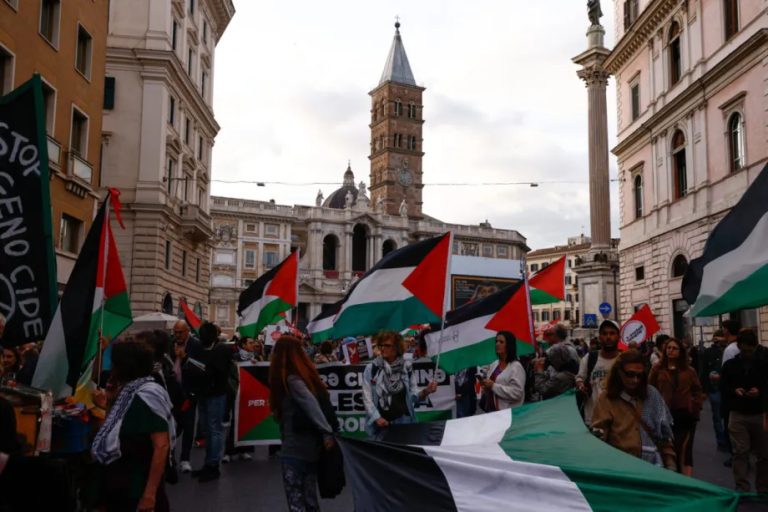
A crowd of people marching through a city street while carrying large Palestinian flags.

Israel’s Lebanon Occupation Is Ethnic Cleansing by Another Name

The situation in southern Lebanon remains dire as the declared ceasefire between Israel and Hezbollah faces constant strain. Despite diplomatic efforts and U.S.-led trilateral negotiations, significant Israeli military presence persists, with officials explicitly rejecting withdrawal and signaling a long-term strategy of creating “security buffer zones.” As the humanitarian crisis deepens—with over 1.2 million displaced—this article explores the disconnect between international diplomatic rhetoric and the operational realities on the ground, where the declared “Gaza model” of occupation continues to redefine the geopolitical landscape of the region.

Read More »
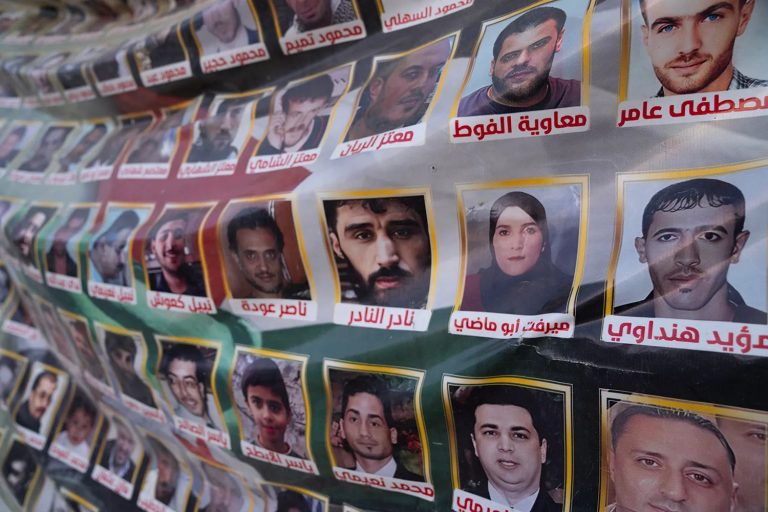
A memorial poster displayed in public featuring rows of photos of missing people in Syria.

Syria’s War Crimes Trap: Justice for the Dead or Answers for the Missing?

This analysis explores the critical dilemma of post-Assad transitional justice in Syria. We examine the tension between the popular demand for the death penalty against perpetrators and the structural requirements of international forensic cooperation necessary to identify tens of thousands of forcibly disappeared victims. The piece argues that the current legal framework risks trading long-term institutional accountability and victim identification for immediate, symbolic retribution.

Read More »
Artistic conceptual representation of a Middle Eastern figure integrated with international flags and a scale of justice.

International Law Is Losing the Middle East, Here Is How to Save It

This analysis argues that international law is losing its relevance in the Middle East, transforming from a system of restraint into a language of accusation. By examining the structural failures of the ICJ, ICC, and Security Council, we explore how selective enforcement and the lack of political consequences have rendered legal condemnations ineffective against ongoing conflicts.

Read More »
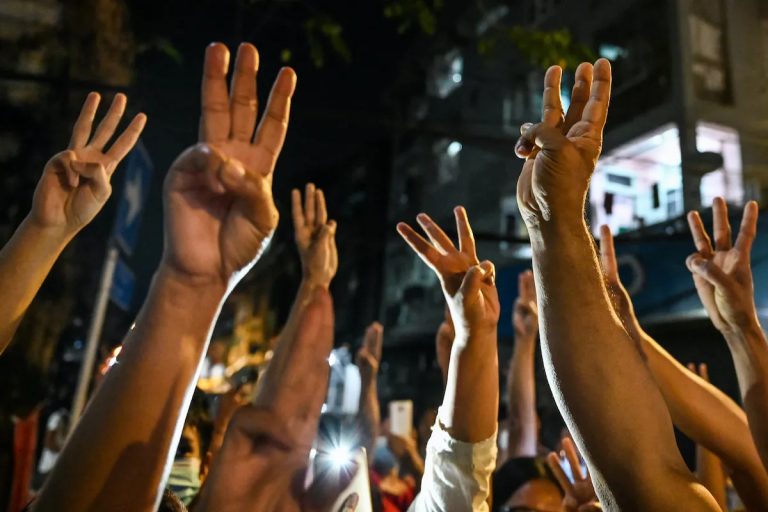
A crowd of protesters in Myanmar raising their hands in a three-finger salute at night.

Myanmar’s Revolution Builds the Institution the World Said It Needed

This analysis explores the historic formation of Myanmar’s “Steering Council for the Emergence of a Federal Democratic Union,” established on March 30, 2026. By unifying the National Unity Government (NUG) and key ethnic revolutionary organizations under a collective leadership model, the Council marks a significant maturation of the Spring Revolution. The piece details how this institution provides a coherent political interlocutor for the international community, shifting the discourse from a humanitarian crisis to a political transformation. Despite the ongoing challenges of military rule, the Council’s emergence—rooted in civilian supremacy and federal consensus—presents the most significant structural challenge to the junta’s legitimacy to date.

Read More »
A man in a suit sitting at a table, viewed from behind a U.S. House of Representatives seal.

Trump’s Quiet Plan to Revive the Weaponization Fund

This investigation reveals the tactical pivot behind the Trump administration’s apparent abandonment of its controversial $1.776 billion “Anti-Weaponization Fund.” While public testimony before Congress suggested the scheme was terminated, evidence suggests the Justice Department is instead utilizing the 1946 Federal Tort Claims Act as an alternative mechanism to compensate allies. By facilitating out-of-court settlements, the administration maintains a pathway for taxpayer funds to reach supporters—including January 6 defendants—bypassing the legislative and judicial scrutiny that initially froze the formal commission. The piece analyzes how this pattern of public retreat and quiet operational maneuvering continues to challenge the limits of executive power and the integrity of the U.S. Treasury.

Read More »
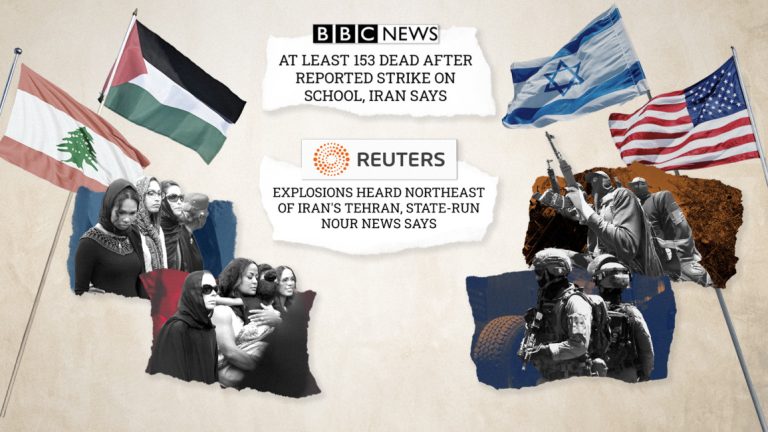
A collage featuring flags, news headlines from BBC and Reuters, and contrasting imagery of civilians and soldiers to illustrate media framing.

How Western Media Language Became a Weapon in the Iran War

This analysis explores how linguistic choices in mainstream Western media have constructed a specific narrative around the US-Israel military campaign against Iran. By examining the shift from passive-voice framing for airstrikes to active-voice descriptions of Iranian responses, the article illustrates how clinical euphemisms—such as “decapitation strikes”—obscure the legal and humanitarian realities of the conflict. The post argues that existing international relations vocabulary is ill-equipped to describe the doctrine of permanent preemption, calling for more rigorous analytical frameworks that challenge state-led narratives rather than merely repeating them.

Read More »
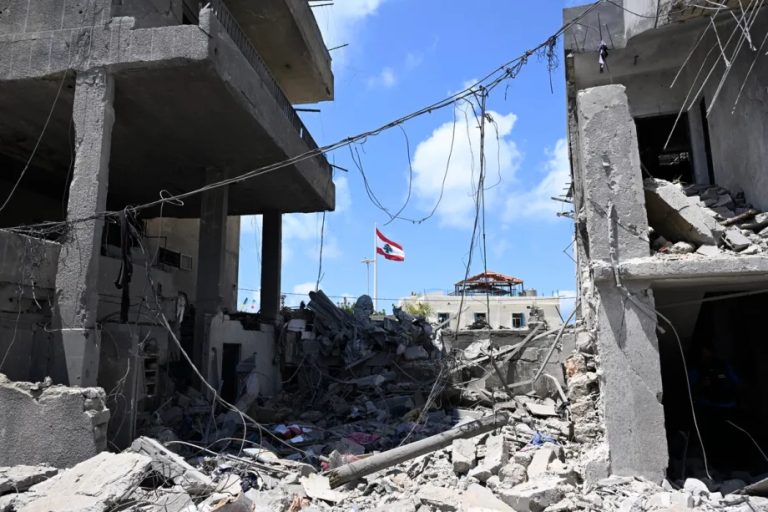
A view of a destroyed building in Lebanon with a national flag flying in the background.

Lebanon’s Endless War Loop Is a Failure of Strategic Imagination

This analysis explores the historical failure of military-only solutions in the Lebanon conflict, tracing the pattern of violence from 1978 to the present day. Despite massive increases in operational scale—culminating in the devastating impact of the 2026 campaign, which has displaced nearly one-fifth of the Lebanese population—the strategic goal of eliminating Hezbollah remains elusive. By examining the persistent cycle of destruction and rebuilding, we argue that current military operations are trapped in a “strategic time loop.” We assess the widening disconnect between Washington-led ceasefire negotiations and the reality on the ground, questioning whether any military alternative can succeed where fifty years of history has definitively proven failure.

Read More »
Aerial view of industrial rare earth mining ponds in a lush, mountainous region of Myanmar.

Trump Is Trading Myanmar’s Democracy for Rare Earth Minerals

This article investigates the Trump administration’s dramatic shift in Myanmar policy, pivoting from decades of democracy promotion to a transactional pursuit of rare earth minerals. By analyzing the gutting of humanitarian programs, the entry of unconventional political lobbyists, and the logistical challenges of supply chains controlled by China-backed groups, we assess how this prioritization of strategic resources threatens long-term U.S. regional influence and democratic values.

Read More »
An Israeli military official in uniform standing in an office in front of a world map.

Israel’s Military PR Machine Is Breaking Down Where It Matters Most

This article examines the breakdown of the IDF Spokesperson’s Unit under Brigadier General Effie Defrin. By analyzing the decline in military transparency, the misuse of media controls, and the shift in international public opinion, we assess how retreating from difficult truths is undermining the credibility of Israel’s strategic communications.

Read More »
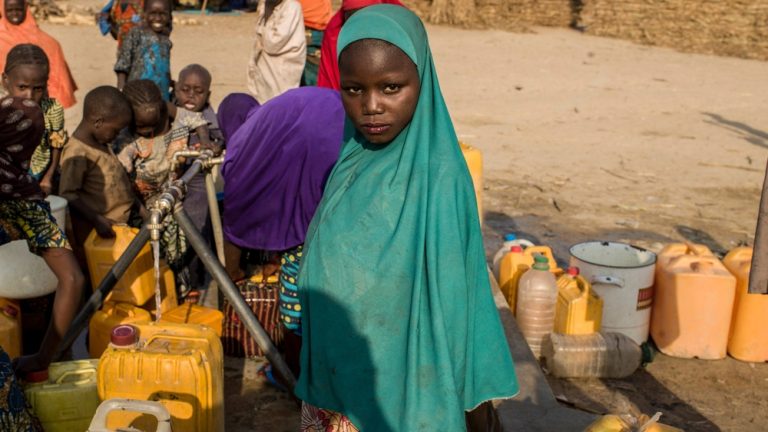
A young girl wearing a hijab standing near a water tap surrounded by yellow water containers in a humanitarian setting.

Children Pay Highest Price in Trump’s Wars

This article examines the alarming escalation of civilian casualties resulting from recent US military operations across Africa, the Middle East, and beyond. By analyzing incidents in Somalia, Yemen, and elsewhere, we explore the devastating impact on children, the erosion of accountability, and the long-term geopolitical consequences of unchecked remote warfare.

Read More »
Israeli Prime Minister Benjamin Netanyahu speaking at a podium with an Israeli flag in the background.

The Three Crises Netanyahu Leaves Behind

This analysis explores the three fundamental crises defining the end of Benjamin Netanyahu’s premiership as Israel heads toward potential early elections. Following the preliminary Knesset vote to dissolve itself on May 20, 2026, the report examines the long-term impact of Israel’s deepening international criminal exposure, the evolution of settler outposts into a quasi-paramilitary security apparatus in the West Bank, and the profound legal and ethical implications of the newly established military tribunal for October 7 suspects. By framing these issues as “fixed terrain,” the article argues that these structural legacies will constrain and challenge any successor government, regardless of the election outcome.

Read More »
Official logo of PEPFAR, the U.S. President’s Emergency Plan for AIDS Relief.

PEPFAR’s New Terms: Minerals, Data, and Diminishing Aid

This analysis examines the shift in U.S. global health strategy, specifically focusing on the new bilateral “America First” agreements being negotiated across Africa. By detailing how essential health assistance—including HIV and malaria treatment—is now being leveraged for critical mineral access and sensitive health data, the report explores the far-reaching consequences for African public health systems. It argues that this strategic pivot not only threatens to dismantle decades of progress in disease control but also marginalizes regional health institutions, ultimately transforming humanitarian aid into a tool for geopolitical competition and corporate resource acquisition.

Read More »