Category: War, Defense & Security

Agricultural laborers working in a large field of red leaf lettuce under a bright sun.

Iran War Raises Fuel and Food Costs for Rural America

This report explores the domestic economic toll of the Iran conflict, specifically how supply disruptions in the Strait of Hormuz have spiked diesel and fertilizer costs. As rural households and farmers face tightening margins and rising grocery inflation, the situation underscores the direct link between global geopolitics and American food security.

Read More »
A stylized graphic for an article. It features a grayscale cutout of Hungarian Prime Minister Viktor Orbán on the left and a younger man in a traditional-style jacket gesturing on the right. The background is a textured representation of the Hungarian national flag.

Iran War Accelerates Multipolar World Order

The recent confrontation involving Iran marks a turning point in global geopolitics, accelerating the transition toward a multipolar order. This analysis explores how strained transatlantic ties, the rise of non-Western economic networks, and new metrics of technological strength are redefining influence, proving that unilateral action faces increasing limits in 2026.

Read More »
Aerial view of a US Navy carrier strike group moving across the blue ocean.

US Munitions Crisis Threatens China Deterrence

Recent combat operations in the Middle East have significantly depleted American munitions reserves, raising alarms about U.S. readiness to deter China. As Beijing maintains a massive lead in industrial production, the Pentagon is prioritizing the “Hellscape” strategy—using swarms of unmanned systems to defend the Taiwan Strait—while struggling to address a multibillion-dollar backlog in conventional arms deliveries to Taipei.

Read More »
Donald Trump pointing a finger forward while standing at a podium.

Trump’s Iran Ultimatums Risk Deeper Stalemate

President Trump’s strategy of perpetual ultimatums toward Iran is creating an entrenched stalemate that unsettles global energy markets. While intended to maintain leverage, the cycle of threats without resolution has allowed Tehran to calibrate its defiance, keeping oil prices elevated and leaving the Strait of Hormuz in a state of dangerous, indefinite tension.

Read More »
Graphic for the 11th NPT Review Conference in 2026 featuring the UN General Assembly and a knotted gun statue.

NPT Credibility Tested by Iran Strikes

The 2026 NPT Review Conference in Geneva has been overshadowed by the failure of military strikes to permanently degrade Iran’s missile and nuclear capabilities. Backed by strategic support from Beijing and Moscow, Tehran’s rapid reconstitution of its infrastructure highlights the growing limitations of kinetic operations and the urgent need for multilateral treaty reform.

Read More »
Close-up portrait of Keir Starmer looking downward with a serious expression.

Left Unity Emerges as Antidote to Farage Threat

The UK’s recent local elections have delivered a major blow to Keir Starmer’s leadership, with voters defecting to the Greens and Nigel Farage’s Reform UK. Driven by discontent over domestic austerity and the government’s stance on Gaza, this electoral fragmentation suggests that only a unified progressive coalition can counter the rising populist right.

Read More »
Illustration of US and China hands engaged in a tug-of-war with a rope over a globe.

China Secures Lasting Leverage Over US Policy

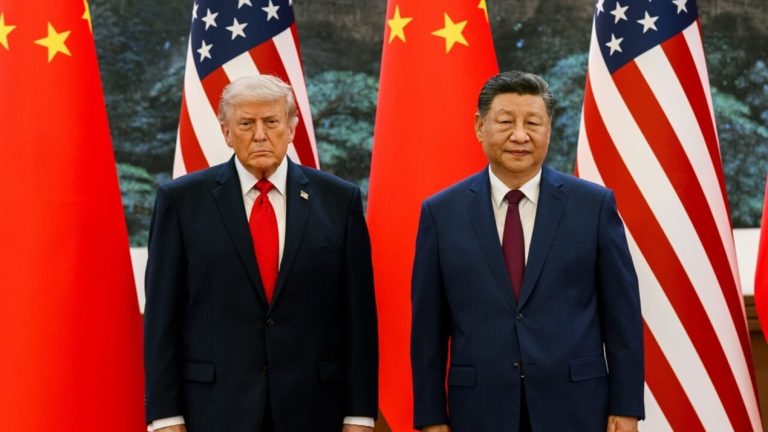
The upcoming Trump-Xi summit arrives as China secures lasting leverage over U.S. policy through its control of critical mineral supply chains. Following the 2025 trade confrontation, Washington has increasingly traded strategic technology safeguards for economic stability, a shift that risks marginalizing regional allies and altering the long-term balance of power in the Indo-Pacific.

Read More »
Taiwanese soldiers in camouflage standing with a large national flag next to military missile launchers and a drone.

Trump-Xi Summit Tests Taiwan’s Trust in US Support

President Trump’s Beijing summit has intensified anxieties in Taiwan regarding the stability of American security commitments. Despite a record $11 billion arms authorization, delivery delays and transactional demands for semiconductor investments have significantly eroded Taiwanese public confidence. As Xi Jinping prioritizes Taiwan in talks, the region remains wary of shifts in Washington’s long-standing strategic ambiguity.

Read More »
A digital composite of the Iranian flag, ballistic missiles, and a nuclear mushroom cloud.

Iran’s Defiance Tests Trump’s Resolve in Nuclear Standoff

President Trump’s recent rejection of Iran’s peace proposal has pushed the fragile Middle East ceasefire to the brink of collapse. As Tehran refuses to dismantle its nuclear infrastructure despite military pressure and “Project Freedom” naval escorts, the standoff threatens global energy stability and complicates international preparations for the 2026 World Cup.

Read More »
The Iranian flag flying over a pile of concrete rubble and destroyed buildings.

Iran Conflict Accelerates Multipolar Realignment

The inconclusive US-Israeli campaign against Iran has accelerated a global shift toward multipolarity. By demonstrating state resilience and weaponizing energy chokepoints, Tehran has forced major powers to reassess the costs of intervention. This new reality is driving a strategic realignment, pushing nations toward pragmatic diplomacy and diversified resource security.

Read More »

UAE OPEC Exit Signals GCC Fragmentation

The UAE’s withdrawal from OPEC highlights a deepening fragmentation within the GCC. As Iranian strikes expose varying regional vulnerabilities, Abu Dhabi is prioritizing national autonomy and independent export routes over collective frameworks. This strategic shift suggests that traditional Gulf alliances are struggling to meet the demands of a volatile security landscape.

Read More »

Sunni Quartet Builds Security Ties in Middle East

Driven by doubts over Western security guarantees and the fallout from the U.S.-Iran war, a new strategic alignment is taking shape between Turkey, Egypt, Saudi Arabia, and Pakistan. This “Sunni-Muslim accord” combines a population of 500 million with significant military industrial potential, aiming to establish a localized security platform that reduces dependence on outside powers and provides a “nuclear umbrella” via Pakistan’s deterrent capabilities.

Read More »