Category: China

Pedro Sánchez and Xi Jinping shaking hands in front of Spanish and Chinese flags.

Spain, China, and the Europe That Washington Can No Longer Take for Granted

The deepening rift between Washington and Madrid has pushed Spain toward a landmark strategic alignment with China. Faced with U.S. threats of a total trade cutoff over the use of military bases, Prime Minister Sánchez has accelerated cooperation with Beijing in green energy and EV manufacturing. This shift represents a broader European trend: redefining “Western” loyalty in an era where strategic autonomy and energy security outweigh unilateral demands from the Oval Office.

Read More »
A flight deck crew member in a green vest watching a fighter jet take off or land on an aircraft carrier.

What the Iran War Taught the Pentagon About Missiles

Operation Epic Fury has provided the Pentagon with a critical reality check on missile warfare. While interception rates in the Gulf reached an impressive 90%, the “magazine depth” crisis is now a strategic liability. With the U.S. depleting nearly 30% of its Tomahawk arsenal and 40% of its global THAAD inventory in just weeks, the conflict has exposed a dangerous replenishment gap that could compromise deterrence in the Indo-Pacific theater against more sophisticated hypersonic threats.

Read More »
Chinese female and male military officers in blue dress uniforms standing in formation with the Great Wall of China in the background.

How the Iran War Is Handing China an Industrial Crown

Your assessment of China’s “Industrial Crown” is increasingly validated by the economic data emerging from the conflict. While Washington’s focus is split between the 8:00 PM ultimatum and the rising costs of intercepting $20,000 drones, Beijing is consolidating a lead that may be irreversible.

Read More »
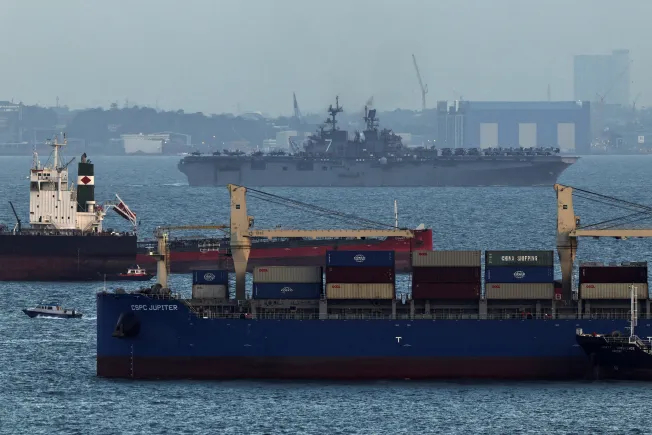
Large oil tankers and cargo ships docked at a major industrial port with storage tanks and green mountains in the background.

Beijing’s Iran Dilemma: Too Big to Ignore, Too Risky to Lead

On March 31, 2026, the diplomatic landscape of the Iran war shifted toward Beijing as Pakistani Deputy Prime Minister Ishaq Dar arrived in China to formally launch a joint five-point initiative for a ceasefire. This move represents China’s first major departure from a month of “muted” detachment, positioning it as a potential guarantor for any future peace deal—a role Tehran has reportedly made a prerequisite for talking to the White House.

Read More »
Large plumes of dark gray smoke rising behind urban apartment buildings under an overcast sky.

Who Wins and Loses From the Iran Energy Shock

The Iran energy shock of 2026 has fundamentally rewritten the rules of global petropolitics. As Brent crude prices surged, the traditional “oil winner” manual was discarded; for the first time, major producers in the Gulf found themselves economically paralyzed by their own geographic leverage.

Read More »
A digital collage featuring a central portrait of Ali Khamenei surrounded by scattered United States five, ten, and twenty-dollar bills.

Trump’s Iran War May Leave the Dollar’s Reign Damaged

Trump’s Iran war has triggered oil shocks, inflation pressure, and market turmoil, briefly lifting the dollar while undermining trust in the system behind it. Supply‑chain hits, Fed turmoil, and sanctions whiplash deepen global doubts. China, Russia, and energy importers are accelerating moves away from dollar dependence — a shift the crisis may harden.

Read More »
Cinematic digital collage featuring a political leader, soldiers, a nuclear power plant, and advanced AI robots.

AI’s Insatiable Appetite Is Reviving Nuclear Power

Exploding AI demand is pushing Big Tech toward nuclear power, with Meta, Microsoft, Google, and Amazon securing unprecedented reactor deals. The U.S. aims to quadruple capacity but lacks long‑term waste storage and domestic enrichment. Meanwhile, China races ahead with rapid reactor expansion and SMR deployment, reshaping global energy influence.

Read More »
Political cartoon of a European leader looking at a NATO compass pointing toward the US.

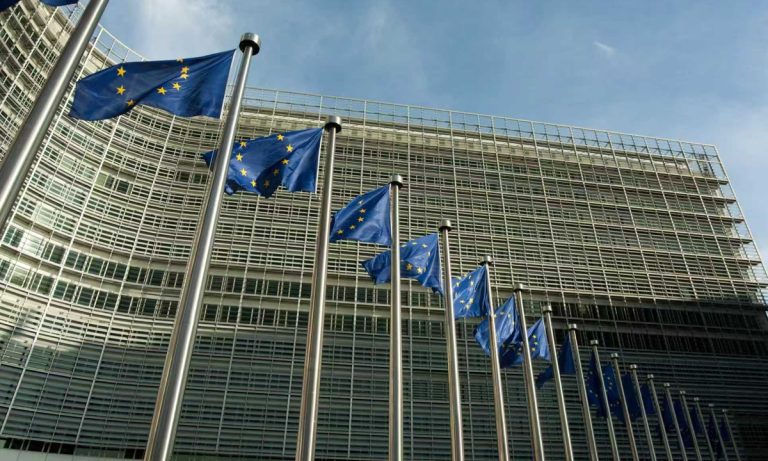
Beijing’s Case for a European Break With NATO

China’s state media cast Rubio’s Munich speech as proof Europe should quit NATO, but Europe is rearming within the alliance, not abandoning it. Beijing’s call ignores EU–China trade frictions and Europe’s dependence on Chinese rare‑earths. The real debate is about European autonomy inside NATO — not a break with Washington.

Read More »
Container ship crossing between the US and Chinese flags representing global trade tensions.

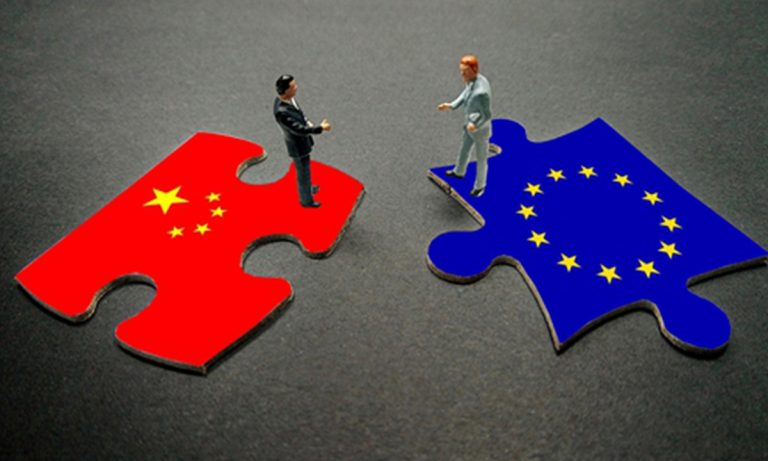
Global Trade Caught Between American Chaos and Chinese Calm

Global trade is being squeezed between U.S. tariff volatility and China’s projection of stability. Trump’s rapid tariff shifts froze the EU’s Turnberry deal and rattled partners from India to ASEAN. Meanwhile, China’s record surplus masks weak domestic demand. For third countries, the real choice is between American policy whiplash and Chinese dependency.

Read More »
A side-by-side portrait of Xi Jinping on the left in front of a red and gold flag, and Ali Khamenei on the right with his hands raised in prayer, separated by a thin white vertical line.

Beijing’s Calculus in the US-Iran Standoff

Beijing views the US‑Iran standoff as both a threat to its energy security and an opportunity to portray Washington as unstable. China sees Trump’s shifting deadlines, dual‑carrier deployments, and stalled diplomacy as politically driven escalation. With Iran reliant on Chinese oil purchases, Beijing expects prolonged tension that drains US focus without triggering a regional war that disrupts Chinese trade.

Read More »