Category: China

Official diplomatic meeting between Iranian and Chinese delegations seated at a long conference table with national flags.

China’s Legal Pushback on US Iranian Oil Sanctions

On May 2, 2026, China’s Ministry of Commerce issued a landmark directive blocking compliance with U.S. sanctions targeting refineries processing Iranian crude. By formalizing legal resistance and expanding RMB-based payments, Beijing is institutionalizing its defense against financial coercion, directly challenging the extraterritorial reach of Washington’s energy-related penalties.

Read More »
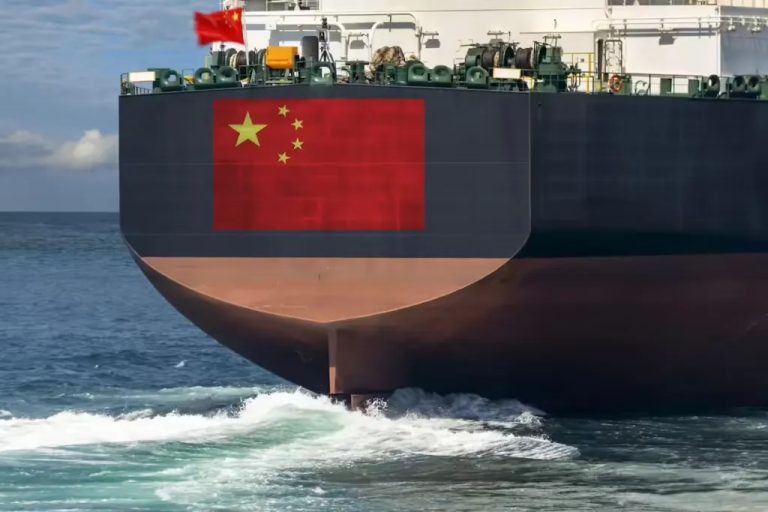
Aerial view of a massive cargo ship loaded with colorful containers at sea.

China’s Shipping Shield Blunts American Sanctions

Beijing is effectively countering American economic pressure by weaponizing its maritime dominance. With over half of global shipbuilding output and strategic investments in 168 ports worldwide, China has built a “shipping shield” that secures its energy imports and trade routes, rendering traditional financial sanctions increasingly ineffective in the lead-up to high-level diplomatic talks.

Read More »
Three humanoid robot faces with expressive eyes on a large display.

China’s Affordable AI Reshapes Emerging Markets

A shift in global AI adoption is unfolding as developing nations embrace Chinese open-source models for their affordability and customization. From Africa to Southeast Asia, these systems are becoming the practical default, allowing countries to build sovereign AI programs that reflect local languages and priorities while bypassing the high costs of American counterparts.

Read More »
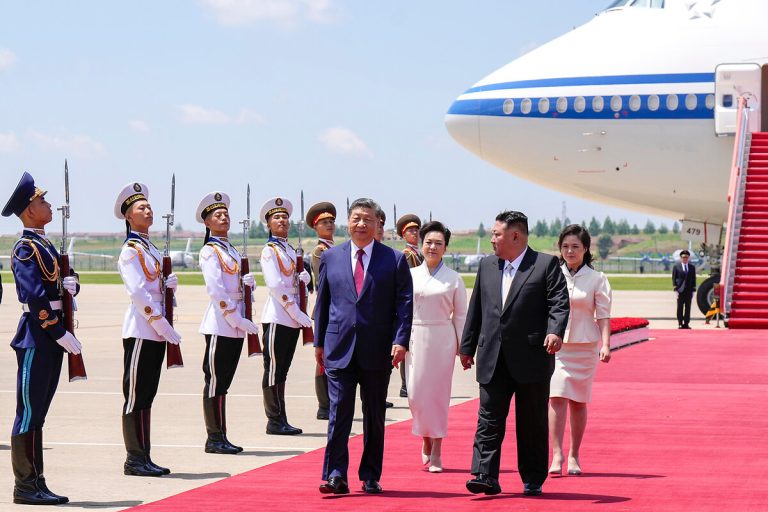
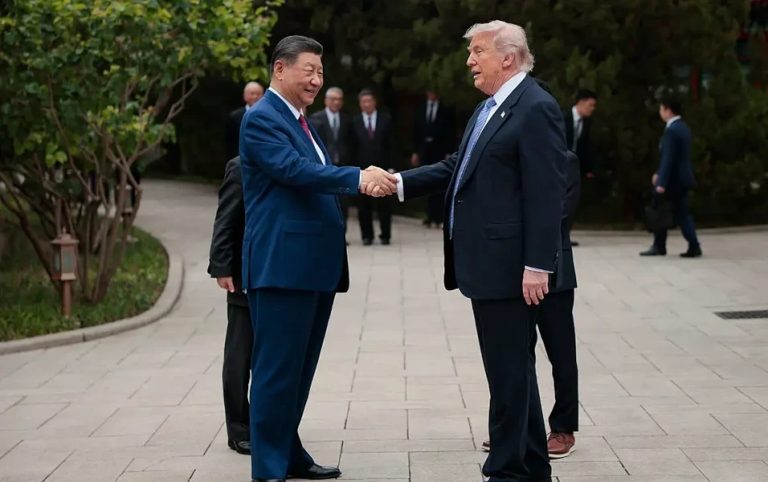
Portrait montage of world leaders Vladimir Putin, Xi Jinping, and Donald Trump.

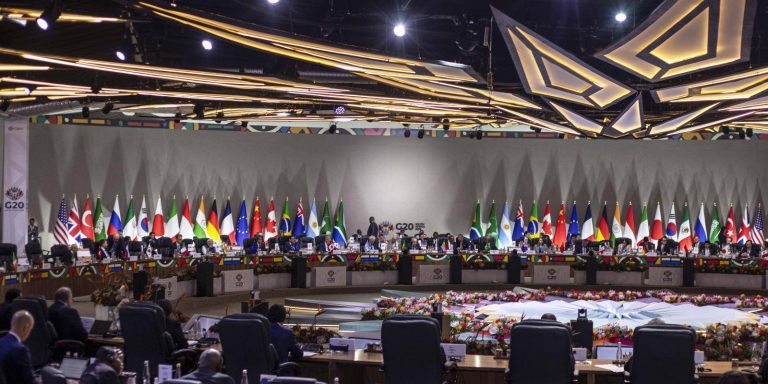
Why Grand Bargains Elude Washington, Beijing and Moscow

High-level summits in Beijing between leaders of the U.S., China, and Russia highlight a new era of strategic distrust. As interdependence fades, these powers are prioritizing economic resilience and flexible, time-limited understandings over comprehensive global accords. This shift reflects a broader trend toward a fragmented, multipolar world defined by competition rather than shared rules.

Read More »
Large Chinese ballistic missile canisters on transport vehicles during a military parade with a soldier in the foreground.

US-China Nuclear Rivalry Edges Closer to the Brink

China’s rapid nuclear buildup, projected to exceed 1,000 warheads by 2030, is fundamentally reshaping global strategic stability. Driven by fears of US intervention, Beijing’s expansion has accelerated American modernization and deepened regional tensions. Breaking this cycle requires pragmatic, small-scale transparency measures and concrete discussions on restraint during upcoming high-level summits.

Read More »
Workers climbing a high metal scaffolding to install white panels on a large building frame.

Why Strategic Hedging Defines Modern Statecraft

Driven by recent global upheavals, modern statecraft is increasingly defined by strategic hedging. Middle powers and established unions are diversifying their economic partnerships, defense suppliers, and resource chains to maximize autonomy. While this shift toward security over efficiency incurs economic costs, it provides essential insurance against an unpredictable international landscape.

Read More »
A diverse group of international visitors and local guides standing in a lush green tea plantation in rural China, examining freshly picked tea leaves.

China’s Governance Model as Global Export: Appeal, Strategy, and Limits

Beijing is aggressively positioning its state-led governance model as a viable alternative to liberal democracy. By targeting students and scholars from the Global South through expansive scholarship programs and the Belt and Road Initiative, China aims to shape global narratives on modernization while bypassing political resistance in the West.

Read More »
An isometric illustration showcasing three hexagonal frames representing medical research, space exploration, and green energy technology.

China–Europe Science Ties: Genuine Partnership or Geopolitical Gamble?

The gap between bilateral ambition and multilateral restriction has reached a breaking point in Europe’s science policy. While Spanish PM Pedro Sánchez champions open research with Beijing as a driver of innovation, the European Commission is moving to exclude Chinese entities from strategic fields like semiconductors and AI. As China’s R&D spending nears $723 billion, this report explores whether Europe can afford to de-risk without losing its edge in the global race for frontier technology.

Read More »
Spanish Prime Minister Pedro Sánchez shaking hands with Chinese President Xi Jinping in front of national flags.

Spain Courts Beijing: Sánchez Bets on China as Transatlantic Ties Fray

In a strategic response to fraying Transatlantic ties, Spanish Prime Minister Pedro Sánchez has solidified a pragmatic partnership with Beijing. By securing high-quality investments from Chinese giants like Chery and CATL—conditioned on local job creation and technology transfer—Spain is positioning itself as a vital manufacturing hub and a diplomatic bridge between China and a fragmented Europe. This report analyzes how Madrid is navigating U.S. pressure to secure its green transition and economic sovereignty.

Read More »
A conceptual image featuring two puzzle pieces with the flags of China and the European Union, with two small human figures standing on them facing each other.

EU Cybersecurity Rules Threaten China Trade Ties

Deepening tensions between the EU and China have reached a new flashpoint over proposed revisions to the European Cybersecurity Act. By introducing “non-technical” risk assessments, the EU moves toward potential exclusion of Chinese technology providers from critical infrastructure. This strategic shift faces fierce opposition from Beijing, which warns of severe disruptions to global trade, renewable energy goals, and the erosion of multilateral WTO principles.

Read More »
Chinese factory workers in red hard hats inspecting industrial machinery in a large manufacturing facility.

China Becomes Asia’s Pivotal Energy Trader

Leveraging its massive portfolio of LNG contracts and expanding overland pipelines from Russia and Central Asia, China has become a pivotal energy middleman in Asia. By redirecting surplus supplies to neighbors during maritime disruptions, Beijing is translating energy security into significant commercial profit and regional diplomatic influence.

Read More »
Xi Jinping and To Lam waving side-by-side in front of Chinese and Vietnamese national flags.

To Lam Visit Deepens China-Vietnam Strategic Ties

Vietnamese President To Lam’s first overseas trip to Beijing signals a deepening strategic partnership with China. Facing global economic pressures, both nations are prioritizing high-level cooperation in trade, infrastructure, and renewable energy, aiming to balance regional stability with ambitious domestic modernization goals through 2026 and beyond.

Read More »