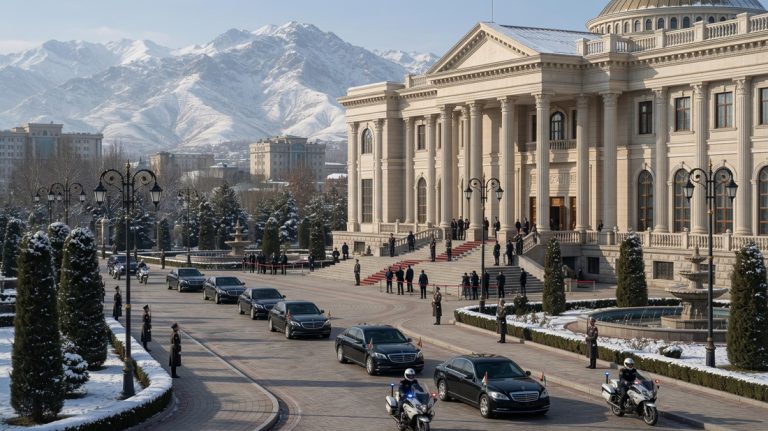
Tajikistan has formally initiated its withdrawal from the International Criminal Court, ending more than two decades as the only Central Asian party to the Rome Statute. A United Nations filing confirms that Dushanbe submitted its notification on November 20, 2026, setting an effective departure date of November 20, 2027, under Article 127 of the treaty. The diplomatic step coincided with Russian President Vladimir Putin arriving in Dushanbe for talks with President Emomali Rahmon. Both leaders praised their bilateral relationship as a strategic partnership while ignoring an outstanding international arrest warrant against the Russian leader.
Diplomatic Fallout Over Unexecuted Arrest Warrants
The Hague tribunal originally issued an arrest warrant for Putin in 2023 over the unlawful deportation of Ukrainian children during Russia’s invasion of Ukraine. Because Tajikistan ratified the Rome Statute in 2000, Dushanbe carried a legal obligation to detain wanted suspects entering its territory. When Putin previously visited Tajikistan in October 2025 without facing arrest, the court’s pretrial chamber formally referred the country’s noncompliance to the Assembly of States Parties in May 2026. Tajik officials later argued that Russia is not a treaty member and claimed bilateral immunity agreements shielded senior Russian officials from detention.
International reaction to Dushanbe’s decision arrived swiftly from both judicial overseers and European diplomats. The presidency of the Assembly of States Parties warned on November 23 that leaving the treaty weakens global accountability and undermines efforts to end impunity. Separately, the European Union urged Tajikistan to reverse its withdrawal while reminding authorities that treaty obligations remain binding until the departure takes legal effect. European foreign policy officials also criticized Dushanbe for hosting Putin on November 19 and 20 without executing the warrant.
Growing Pressure on Global Justice
Tajikistan’s domestic political shift laid the groundwork for this exit well before Putin’s November arrival. Deputy Foreign Minister Idibek Kalandar told lawmakers in October 2026 that perceived bias inside the tribunal threatened judicial independence, prompting parliament to back the departure. The move also follows a broader wave of exits across Africa and Latin America, as Niger, Burkina Faso, Mali, Chad, Venezuela, and Nauru all started withdrawal procedures earlier in 2026. Meanwhile, Washington has intensified its own pressure campaign through sanctions on court staff and diplomatic outreach urging partner nations to abandon the Rome Statute.
For Central Asia, Dushanbe’s departure removes the region’s sole formal link to the permanent war crimes tribunal. Legal experts note that withdrawal under Article 127 does not erase past responsibilities or halt investigations launched while a state remained a member. However, the timing of Tajikistan’s notice alongside Putin’s visit signals that regional security ties with Moscow outweigh multilateral legal commitments in Dushanbe. As more governments walk away from the court, enforcing international arrest warrants against sitting leaders becomes increasingly difficult.
Original analysis inspired by Times of Central Asia from The Times of Central Asia.
Additional research and verification conducted through multiple sources.