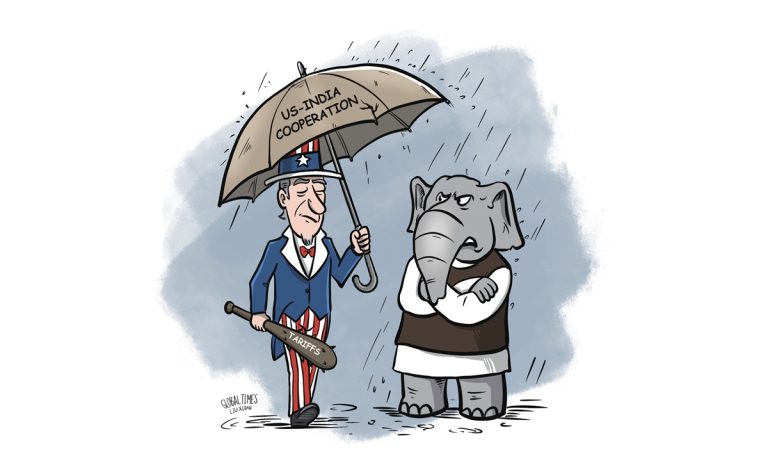
A significant recalibration appears to be underway in New Delhi, as India navigates an increasingly fractured global order. While cautiously mending ties with its powerful neighbor, China, a growing sense of unease is emerging over the unpredictability of its strategic partner, the United States. This delicate balancing act, articulated recently by former Indian National Security Advisor Shivshankar Menon, suggests that India is doubling down on its long-standing policy of strategic autonomy, refusing to be drawn into a zero-sum contest between the world’s two superpowers.
The relationship with China, which had been frozen for years following border clashes, is showing clear signs of a thaw. According to Menon, a crucial meeting between Prime Minister Narendra Modi and President Xi Jinping has set a new course. Diplomatic and economic activities are being restored, with direct flights resuming and trade booming. Critically, India has also begun to relax some of its stringent restrictions on Chinese investment, signaling a pragmatic shift. While the border remains a point of contention, both sides are engaged in official talks aimed at stabilizing the situation, a necessary step toward rebuilding trust.
A Growing Wariness of Washington
Even as relations with Beijing improve, Indian confidence in the United States appears to be waning. The “unpredictability” of American foreign policy under the Trump administration has become a major concern in New Delhi. Menon points specifically to the recent U.S. war with Iran, which had severe negative consequences for India’s energy security and regional stability. Furthermore, Washington’s use of unilateral tariffs and its broader attacks on the international trading system have directly impacted India, creating economic friction.
This sentiment is reflected in public opinion. While the U.S. has historically enjoyed high favorability ratings in India, recent polls indicate a significant decline. This erosion of trust is not based on rhetoric but on actions that are perceived as undermining India’s interests. As Menon suggests, India is now operating on the principle of “listen to what is said, observe what is done.” This cautious approach has been reinforced by a sense that Washington’s strategic priorities do not always align with New Delhi’s, forcing India to hedge its bets.
The Enduring Appeal of Strategic Autonomy
This dual-track approach is not new; it is a modern application of India’s foundational foreign policy doctrine of non-alignment, now termed “strategic autonomy.” India has consistently sought to avoid binding alliances that would limit its freedom of maneuver. Instead, it engages with all major powers on its own terms, a strategy that has been reinforced by recent global turmoil. This allows India to cooperate with China within frameworks like BRICS, which recently held a successful summit in New Delhi, while also maintaining security partnerships with the West.
In an era of collapsing international norms—evidenced by the conflicts in Gaza and Iran and the weakening of global trade rules—India sees multilateral cooperation, particularly with the Global South, as essential. Initiatives like China’s Global Governance Initiative (GGI) are viewed with cautious interest, as their stated goals of strengthening multilateralism and the UN system align with India’s own objectives. However, the ultimate test will be whether these initiatives can deliver tangible results in a world where non-traditional security threats, from cybercrime to food insecurity, demand collective action. For India, the path forward lies not in choosing a side, but in building a network of issue-based coalitions that serve its own national interest.
Original analysis inspired by Janatan Sayeh, and Behnam Ben Taleblu from The National Interest. Additional research and verification conducted through multiple sources.