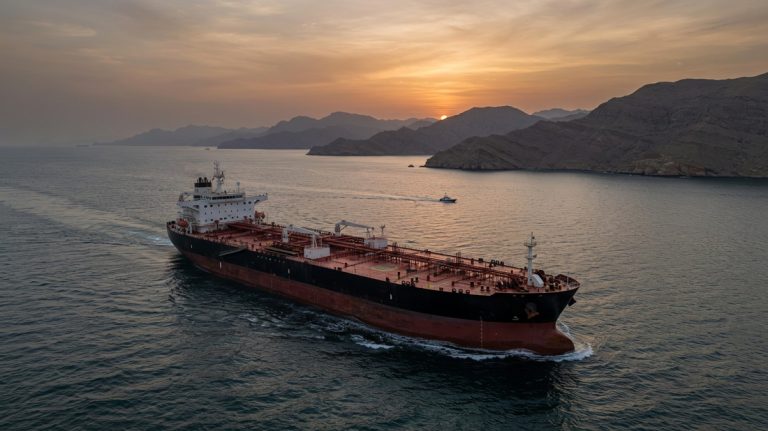
Diplomatic pressure in Washington has reached a critical juncture as Qatari Prime Minister Sheikh Mohammed bin Abdulrahman Al Thani meets Secretary of State Marco Rubio to prevent a wider regional war. Since the outbreak of hostilities in February 2026, maritime traffic through the Persian Gulf has faced unprecedented disruption, forcing global energy markets to absorb severe shocks. Tehran warned Washington that any continuation of the American naval blockade will trigger decisive countermeasures under international law. With diplomatic channels strained since the collapse of a June framework, Doha is attempting to bridge the gap between military deterrence and a durable ceasefire.
Maritime Chokepoints and Legal Leverage
Energy security across Asia and Europe depends heavily on uninterrupted transit through the Strait of Hormuz, where roughly one fifth of global petroleum liquids normally pass. Recent figures from the International Energy Agency reveal cumulative losses of 2.8 billion barrels of oil and 60 billion cubic meters of natural gas from the Gulf during 2026. Iranian officials maintain that shipping security can return within days if the United States lifts its maritime blockade and fulfills prior commitments. By citing Article 51 of the United Nations Charter, Tehran frames its naval posture as legitimate self defense against external military aggression.
Global market vulnerability gives Iranian policymakers substantial leverage during indirect negotiations held through Gulf intermediaries. According to energy analysts, alternative export routes such as Saudi pipelines to the Red Sea and Emirati links to Fujairah offer limited capacity compared with the volume of oil moving through Hormuz. Consequently, Asian importers who rely on Persian Gulf crude face mounting pressure as diesel prices climb past historic records. These economic realities complicate Washington efforts to isolate Tehran without triggering broader inflationary damage across allied economies.
Competing Pressures in Washington
Behind closed doors, Qatari mediators have worked steadily across European and Iranian capitals to revive nuclear diplomacy and avert another round of airstrikes. Prior to the Washington talks, a Qatari delegation held discussions in Tehran following meetings in Berlin with American envoys Steve Witkoff and Jared Kushner. While President Donald Trump recently described renewed military action against Iran as unlikely, Israeli Prime Minister Benjamin Netanyahu reportedly continues lobbying the White House for immediate strikes. This divergence highlights growing friction between Washington desire for regional de escalation and Tel Aviv preference for sustained military confrontation.
Regional observers note that Qatar mediation represents one of the few remaining avenues to stabilize Gulf waterways before the end of the year. Should talks between Rubio and Sheikh Mohammed yield a formula for lifting maritime restrictions, tanker traffic could gradually normalize and ease global supply anxiety. Conversely, if hawkish pressure in Washington derails the diplomatic track, energy markets and regional security architectures will likely face prolonged volatility into 2027.
Original analysis inspired by The New Arab Staff from The New Arab. Additional research and verification conducted through multiple sources.