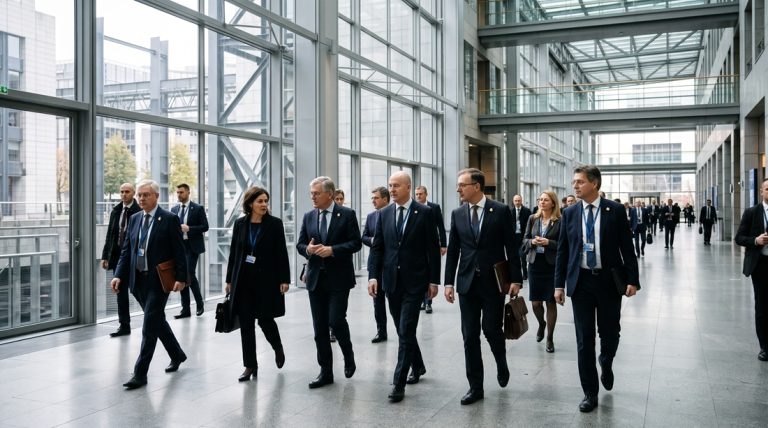
Intensive diplomatic shuttles from Abu Dhabi to Dublin have raised fresh questions about what Western Europe actually brings to Ukraine peace negotiations. While European leaders insist on securing a prominent seat at the table, their joint European Union and British delegation lacks a coherent negotiating mandate. Divided over strategic priorities and reluctant to rethink post Cold War security architecture, European representatives risk injecting confusion rather than momentum into talks. At the core of this impasse lies Brussels’ refusal to address Russian security objections that Washington appears increasingly willing to discuss.
Defending an Outdated Security Order
Statements from German Chancellor Friedrich Merz and European Union foreign policy chief Kaja Kallas underscore how rigidly Western capitals cling to existing institutional frameworks. Both leaders have rejected revisiting European security arrangements established after the Soviet collapse, treating Moscow’s grievances as irrelevant to continental stability. Because European politicians spent years insisting the current order needed no adjustment, any serious compromise now feels like an admission of strategic failure. Consequently, Western Europe defends NATO primacy as a test of political credibility, even when that stance blocks substantive negotiations.
This rigidity contrasts sharply with evolving signals emerging from Washington and recent regional talks. American officials have recently facilitated direct engagement between European and Russian representatives while acknowledging that broader security guarantees require concrete negotiation. During discussions in Abu Dhabi, Moscow even floated bilateral nonaggression pacts with individual European states, signaling its preference to bypass Brussels and NATO bureaucracy altogether. Whether Washington possesses the leverage or appetite to push reluctant European allies toward structural compromise remains uncertain.
Why Immediate Ceasefires Divide Moscow and Brussels
Western Europe’s immediate tactical goal centers on freezing hostilities along current battle lines without resolving underlying security disputes. From a European perspective, halting combat creates breathing room to regroup diplomatically and contest Russian territorial gains through sanctions and political pressure. History offers numerous examples of states winning territory militarily only to surrender leverage during prolonged postwar diplomacy. Precisely for that reason, Moscow resists an unconditional freeze that strips away its battlefield advantage while leaving NATO expansion unanswered.
Continuing military pressure remains the Kremlin’s strongest bargaining chip as long as Western capitals refuse structural talks. Meanwhile, American proposals trading territorial concessions for security frameworks have stirred sharp debate in Kyiv and European capitals without producing consensus. Until European leaders separate their political prestige from an outdated security architecture, their presence at the negotiating table is more likely to prolong stalemate than deliver durable peace.
Original analysis inspired by Fyodor Lukyanov from RT. Additional research and verification conducted through multiple sources.