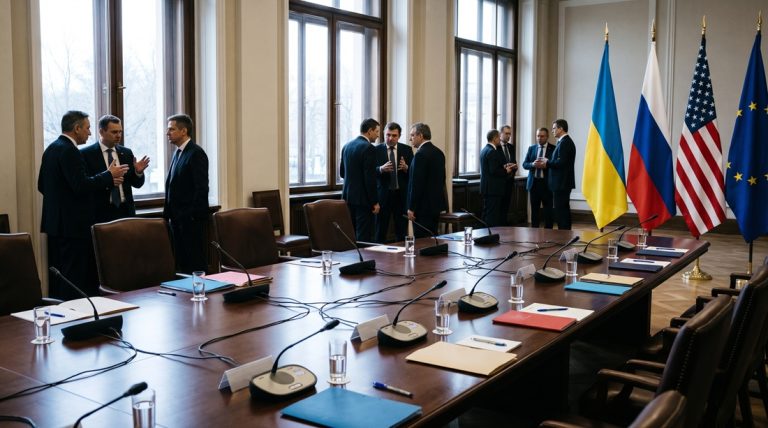
The latest Ukraine negotiations have exposed a weakness in Washington’s approach: keeping a diplomatic process alive does not necessarily give its mediator control over the agenda. Russia wants to connect an end to the war with wider questions about European security. That creates a risk that discussions intended to stop the fighting become negotiations over the choices available to countries outside the room.
There has been a concrete humanitarian opening. Russian and Ukrainian negotiators agreed in principle to a major prisoner exchange during talks that ended in Abu Dhabi on November 11, while differences over territory remained unresolved. Returning prisoners matters independently of whether a political settlement follows. It should nevertheless be assessed as a specific achievement, rather than evidence that the central disputes are approaching resolution.
The dispute over European participation illustrates the limits of American assurances. On November 13, the Kremlin conditioned a decision on including Europeans on their willingness to contribute, despite US negotiators having said Vladimir Putin accepted their involvement. That gap between public accounts leaves the next negotiating format unsettled. It also raises a practical question for Washington: how much confidence should partners place in announcements that the other side immediately qualifies?
Europe was involved in consultations, so describing it as entirely absent would be misleading. Before the trilateral negotiations, European, Ukrainian and American representatives reaffirmed support for Ukrainian sovereignty and credible security guarantees. Their statement also envisaged broader discussions involving European partners. Coordination among allies, however, differs from direct participation in negotiations with Russia, especially when Moscow seeks changes affecting the continent’s security arrangements.
The distinction matters because Europe brings resources that a settlement may require. Following their meeting with Volodymyr Zelenskyy in Dublin, EU leaders committed to continued financial and military assistance and work on reconstruction. They also announced preparations to address Ukraine’s financing needs for 2027 and another sanctions package. These are policy instruments with consequences beyond statements of diplomatic support, although their effectiveness depends on implementation and coordination.
Washington therefore faces a test of substance as well as presentation. A credible process needs agreed participants, a clear distinction between humanitarian measures and territorial bargaining, and security commitments that the governments responsible for delivering them can accept. It must also preserve Ukraine’s ability to decide its future rather than treating that future as an exchange between larger powers. Negotiations can reduce suffering, but their value ultimately depends on enforceable outcomes, not the frequency of meetings or optimistic descriptions of them.
Original analysis inspired by Boris Bondarev from The Moscow Times. Additional research and verification conducted through multiple sources.