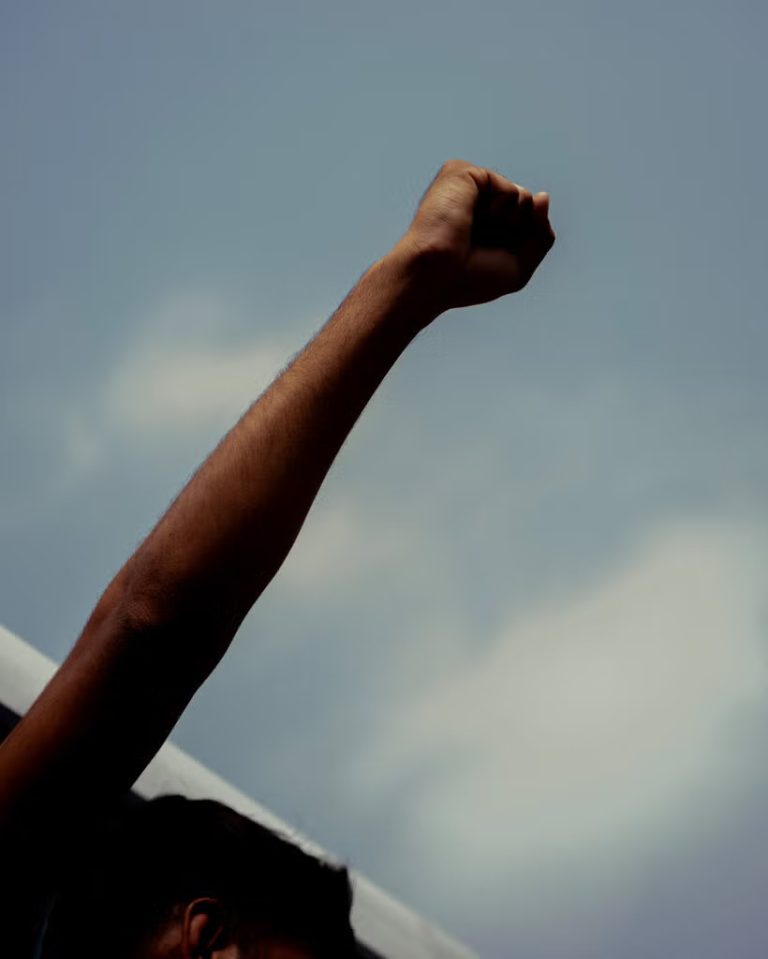
India is facing an unusually direct challenge to confidence in its elections. A nationwide revision of electoral rolls has removed more than 130 million names, prompting protests that have expanded from student activism into a broader political confrontation with Prime Minister Narendra Modi’s government. The Election Commission says the process is meant to eliminate duplicate, deceased, relocated, and otherwise ineligible voters. Critics counter that the scale of the exclusions, combined with difficult verification requirements, risks denying legitimate citizens their right to vote.
The controversy has moved beyond administrative disputes because voting rights remain central to the legitimacy of India’s political system. The Election Commission formally provides procedures for registration, document submission, and correcting electoral records, while insisting that the revision is designed to improve the accuracy of voter lists. Yet citizens interviewed by Reuters described repeated visits to officials and problems restoring names that had been removed incorrectly. Opposition parties argue that poorer voters and minorities face the greatest difficulty proving their eligibility, an accusation the Commission and the governing Bharatiya Janata Party reject.
Street protests turn into a national political test
The dispute has also produced one of the most visible youth protest movements of Modi’s current term. Authorities detained more than 2,000 people during an October 10 attempt to demonstrate in New Delhi, while security restrictions disrupted transport and access to parts of the capital. Days later, demonstrations continued under the banner of the Cockroach Janta Party, a youth movement that grew from earlier protests over education, employment, and government accountability.
The movement has found support because the voting dispute overlaps with wider frustration among young Indians. Reuters has reported that unemployment among graduates remains close to 40 percent, even as India continues to record strong overall economic growth. Activists have also mobilized around exam scandals, women’s safety, religious polarization, and political accountability. Their use of satire, social media, and even political video games has allowed protest culture to develop outside the traditional structures of opposition parties.
Electoral trust becomes the larger issue
India still holds competitive elections, and opposition parties continue to win power at both national and state levels. Yet concerns about institutional independence have grown during Modi’s tenure. Freedom House currently rates India as partly free, scoring the country 62 out of 100 and raising concerns about pressure on journalists, political opponents, civil society groups, and religious minorities. It also notes that questions about the Election Commission’s independence have intensified in recent years.
The government now faces a difficult choice. A harsher response could contain demonstrations temporarily, but reports of police violence have already drawn criticism from international rights experts. United Nations experts recently called for an investigation into allegations of excessive force and urged authorities to protect peaceful assembly, while Indian officials have rejected outside criticism of the government’s handling of domestic protests.
The political danger for Modi is therefore not simply the number of people demonstrating in Delhi. His party has built much of its authority on repeated electoral victories, making public confidence in the voting process especially valuable. If large sections of the population begin to believe that participation itself is becoming harder or less reliable, winning elections may no longer settle arguments about democratic legitimacy as effectively as it once did.
The youth protests also reveal a change in how opposition politics is developing. Modi’s opponents have often struggled to compete with the BJP’s organization, leadership, and communications machinery through conventional elections alone. Street mobilization offers a different arena where younger activists can connect unemployment, representation, civil liberties, and voting rights into a wider demand for accountability. Whether that energy survives repression and electoral politics will help determine whether the current unrest becomes a temporary protest wave or a deeper shift in Indian democracy.
Original analysis inspired by Yamini Aiyar from The New York Times. Additional research and verification conducted through multiple sources.