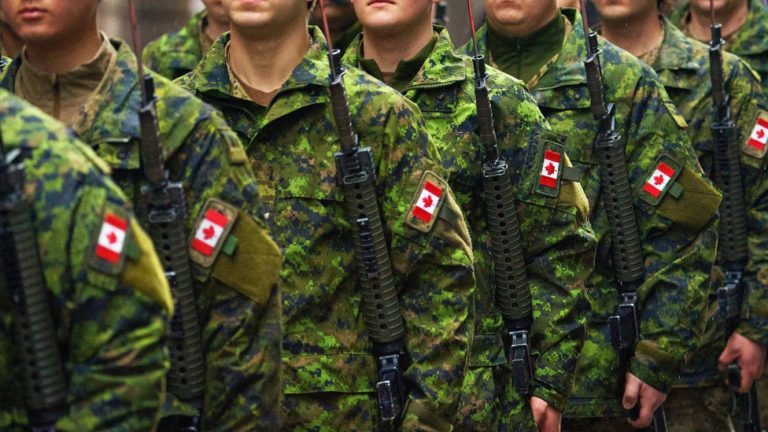
Canada is trying to solve a security problem that money alone cannot fix. Ottawa has reached its target of spending 2 percent of GDP on defence and is now working toward NATO’s new 5 percent commitment by 2035. The surge reflects concern about Russia and Arctic security, but it also answers a more uncomfortable question: how much should Canada rely on a United States government that Canadian leaders increasingly regard as unpredictable? Prime Minister Mark Carney’s answer appears to be greater Canadian capacity without abandoning the machinery that has defended North America for decades.
Canada’s dependence on the United States is structural rather than merely political. Since NORAD was created in 1957, the two countries have integrated air defence, surveillance, command systems, training, and procurement to an unusual degree. Canada’s current program to modernize NORAD still assumes close cooperation with Washington, including new radar, communications, fighter infrastructure, and command systems. Replacing this network with a separate Canadian architecture would be enormously expensive and could weaken continental defence at the moment Ottawa wants to strengthen it.
Building autonomy without breaking interoperability
Carney’s government is instead trying to change where Canada buys equipment and where defence money creates industrial capacity. Its Defence Industrial Strategy aims to raise the share of acquisitions awarded to Canadian firms to 70 percent within a decade while expanding domestic aerospace, ammunition, cyber, shipbuilding, and other strategic sectors. Ottawa has also joined SAFE, the European Union defence initiative that gives Canadian companies broader access to European procurement and creates another route for joint production beyond the United States.
Recent procurement choices show what this diversification can look like. Canada has selected Saab as the preferred supplier for a new airborne early warning capability built around the GlobalEye platform, which uses Bombardier’s Canadian made Global 6500 aircraft. At the same time, Ottawa continues to review the purchase of 88 F35 fighters, even as preparations continue for the initial aircraft. The fighter debate captures the central tradeoff: Canada wants more sovereign control and domestic economic benefits, but moving away from an American system can create new costs in training, logistics, weapons integration, and interoperability.
The price of strategic autonomy
The financial challenge may prove as difficult as the technical one. Canada’s Parliamentary Budget Officer estimates that raising core defence spending from 2 percent to 3.5 percent of GDP by 2035 would require about 33.5 billion Canadian dollars in additional annual cash spending on average over the coming decade. Under that scenario, the federal deficit would be 63 billion dollars larger in 2035 and the debt ratio 6.3 percentage points higher. Those figures suggest that defence autonomy will eventually compete with other political priorities rather than remain a painless industrial policy.
The deeper problem is that industrial diversification cannot erase geography. Canada can manufacture more equipment at home, buy more from Europe, and build alternative supply chains, but the United States will remain its essential partner in continental defence. NORAD alone makes a complete military separation neither realistic nor desirable. What Ottawa can change is the degree to which Canadian security depends on American suppliers and political goodwill.
Canada’s emerging policy is therefore less about decoupling than insurance. Ottawa is trying to preserve the operational advantages of its American alliance while ensuring that a future political dispute cannot leave Canadian defence planning entirely dependent on decisions made in Washington. Success will require sustained spending, larger domestic production, and deeper partnerships with other allies. The real test is whether Canadians will support those costs long after the political shock that triggered the current defence boom has faded.
Original analysis inspired by Philippe Lagassé from The Atlantic. Additional research and verification conducted through multiple sources.