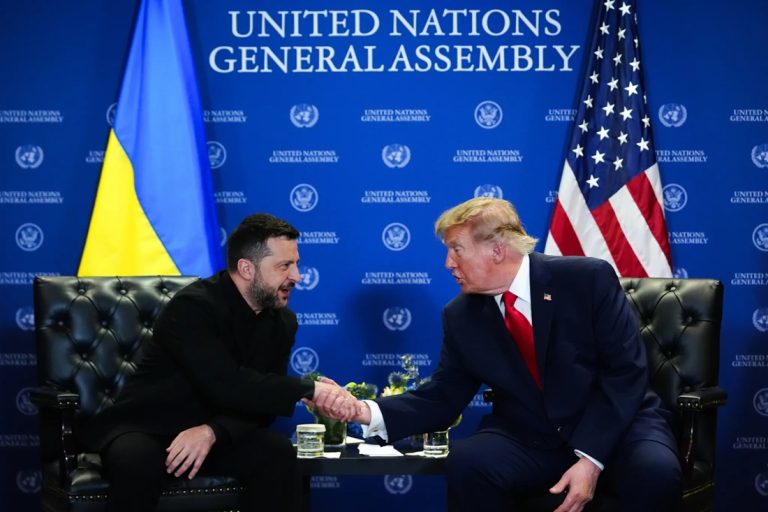
President Donald Trump has announced an arrangement under which Russia would supply diesel to U.S. and global markets, beginning with more than 300,000 metric tons and followed by additional volumes in November and later. The Treasury Department issued a temporary license to allow the shipments, a step that partially suspends restrictions imposed after Russia’s 2022 invasion of Ukraine. The timing coincides with national average diesel prices above $6 per gallon and approaching midterm elections in which energy costs have become a political liability for the administration.
The announced quantities are limited relative to U.S. consumption. American distillate demand has recently averaged roughly 3.7 million barrels per day, according to Energy Information Administration data. The initial tranche equates to only a fraction of a single day’s use, and even the larger cumulative figures cited would cover only a short period if fully delivered. Market analysts have noted that such volumes are unlikely to shift global prices in any meaningful way, particularly while broader supply disruptions from the Iran war continue to affect refining and shipping.
Russian export capacity faces its own constraints. Ukrainian long-range drone strikes have repeatedly hit major refineries, reducing throughput and prompting earlier Russian export bans. Some facilities have operated at reduced rates or remained offline for extended periods. Trump’s own statement conditioned later deliveries on the condition of those refineries, acknowledging the damage. Reports of continued Ukrainian strikes on Russian fuel infrastructure have appeared even after the deal was publicized.
The administration has attributed pressure on Ukraine to a desire to halt the attacks, with one official describing the campaign as eroding goodwill built over recent months. Kyiv has continued operations, and Ukrainian officials have indicated they will not pause effective strikes without reciprocal restraint. Trump later declared an “energy ceasefire,” but Ukrainian authorities stated they had not agreed to any such halt, and Russian attacks on Ukrainian energy sites persisted. Zelenskyy has said he would consider a mutual pause if Russia also stopped its strikes.
These developments coincide with a measurable shift in external support for Ukraine. French President Emmanuel Macron has stated that France now provides two-thirds of the intelligence Ukraine receives from partners, a sharp increase from the prior heavy reliance on the United States. European capitals have expanded their own assistance as questions grow about the reliability and scale of continued American material and intelligence flows. The diesel arrangement has not restored American leverage over Ukrainian targeting decisions; if anything, it has highlighted the limits of that leverage once Kyiv possesses alternative sources of support.
The episode illustrates the difficulty of using selective sanctions relief to address domestic energy prices while a major conflict continues to constrain the very supplies being offered. Small, conditional volumes cannot offset global tightness created by multiple wars and infrastructure damage. At the same time, the public attempt to link Ukrainian military choices to U.S. fuel costs has not altered Kyiv’s operational posture. Future pressure on either prices or the battlefield will depend more on physical supply conditions and sustained external assistance than on unilateral announcements.
Original analysis inspired by kos from Daily Kos. Additional research and verification conducted through multiple sources.