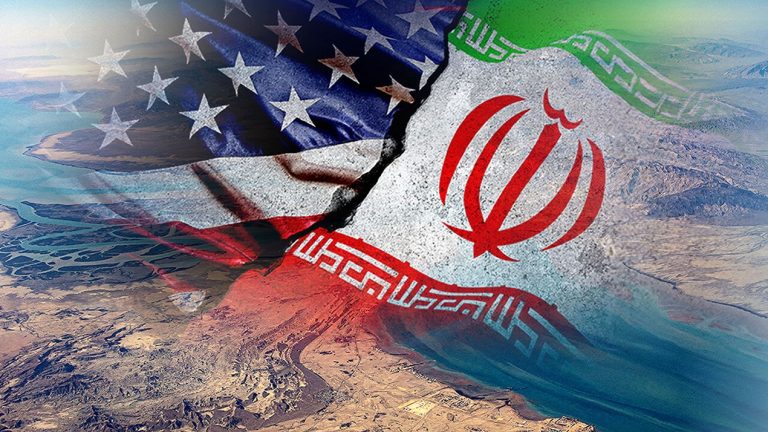
The confrontation between the United States and Iran has become a test of something larger than military strength. Washington can strike Iranian targets, restrict trade, block ports, and impose severe financial pressure, yet it has struggled to turn those advantages into the political concessions it wants. Tehran cannot match American conventional power, but its position beside the Strait of Hormuz gives it a form of leverage with global consequences. Neither side has found a way to convert pressure into a settlement, leaving the conflict caught between coercion and negotiation.
That stalemate became clearer after the sixty day framework agreed in June failed to produce a final agreement. Iran now insists that Hormuz will remain restricted until Washington lifts its blockade, removes oil sanctions, releases frozen assets, and ends military threats. Trump has rejected an extension of the earlier framework and says no negotiations are currently scheduled. The two governments are therefore fighting over sequencing as much as substance: each wants the other to surrender its strongest leverage first.
Military superiority meets geographic leverage
Washington still holds the overwhelming military advantage. US Central Command has deployed extensive naval and air assets against Iran, while its forces have struck thousands of targets since Operation Epic Fury began. American forces can impose costs that Iran cannot reproduce conventionally. Yet control of the battlefield has not produced control of the political outcome.
Iran instead relies on geography, missiles, maritime disruption, and its ability to tolerate punishment. Before the war, roughly one fifth of global oil and liquefied natural gas flows passed through Hormuz. Traffic has since collapsed, with Reuters reporting days when only a handful of vessels crossed the strait. Brent crude has returned above 90 dollars a barrel as markets begin pricing a prolonged disruption rather than a short crisis.
That gives Tehran leverage, but it comes at enormous domestic cost. The IMF projects Iran’s economy will contract by 5.4 percent this year while consumer price inflation approaches 69 percent. The blockade, sanctions, damaged infrastructure, and shrinking oil revenue are placing intense pressure on households and state finances. Iran’s strategy therefore depends not on avoiding economic pain but on surviving it longer than Washington can tolerate the international consequences of the confrontation.
The struggle is now about political endurance
Trump is trying to increase that pressure further. Washington has now threatened serious economic consequences for countries that support Tehran, extending the confrontation beyond direct sanctions on Iran. China remains Iran’s most important oil customer and continues to favor diplomacy, while Gulf governments face the risk that prolonged confrontation could damage their own trade, infrastructure, and energy interests.
Tehran has also hardened its position. Iranian officials have warned that the military could adopt a more offensive posture if diplomacy fails, including attacks intended to challenge the American blockade. Such threats increase Iran’s bargaining power only up to a point. A major escalation could trigger another round of US strikes and deepen the economic damage Iran is already struggling to absorb.
This is why Oman remains important. Muscat has continued working with Tehran on possible arrangements for shipping through Hormuz even as direct US Iran diplomacy has stalled. The channel cannot resolve the entire nuclear and security dispute, but it offers a mechanism for addressing the immediate problem that carries the greatest international economic cost.
The conflict therefore reveals both the reach and the limits of American power. Washington can devastate Iran militarily and economically, but coercion does not automatically produce political obedience. Tehran can disrupt a critical global trade route and raise the cost of American policy, but it cannot do so indefinitely without harming its own population and economy.
A durable agreement will require both governments to give up the assumption that pressure alone can deliver victory. Washington needs verifiable protections against nuclear proliferation and threats to navigation. Iran needs credible guarantees that concessions will produce sanctions relief and greater security rather than another cycle of demands. Hormuz has become the place where those competing ideas of power meet, and where neither side has yet proved that it can force the other to yield.
Original analysis inspired by Ranjan Solomon from Middle East Monitor. Additional research and verification conducted through multiple sources.