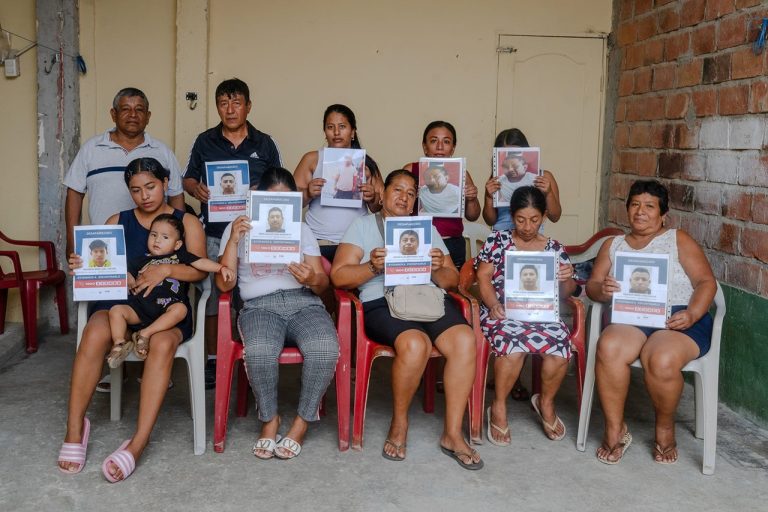
A series of unexplained attacks on Ecuadorian fishing vessels is raising a larger question about President Donald Trump’s expanding military campaign against drug trafficking in Latin America. Washington has openly acknowledged dozens of lethal strikes under Operation Southern Spear, but three incidents involving Ecuadorian fishermen remain outside the publicly claimed campaign. New investigations point toward possible American involvement while leaving major questions about who authorized the attacks, what intelligence justified them, and whether covert operations are operating beyond normal congressional scrutiny.
The cases involve the Fiorella, which disappeared with eight crew members in January, and the Negra Francisca Duarte II and Don Maca, whose crews reported drone attacks in March. Human Rights Watch investigated the incidents through survivor interviews, vessel tracking data, satellite information, photographs, and official records. Its researchers found no drug trafficking convictions among the crews they examined and concluded that evidence suggested US authorities probably had some level of involvement or knowledge, although the organization could not determine who actually carried out the strikes.
A Public Campaign With an Unclear Boundary
Operation Southern Spear itself is no secret. US Southern Command openly describes a campaign that combines military forces, intelligence sharing, maritime interdiction, new technology, and cooperation with regional governments against organizations Washington classifies as terrorist groups. SOUTHCOM has repeatedly announced lethal strikes on vessels it says intelligence identified as participating in narcotics trafficking.
The Ecuador cases stand apart because Washington has not claimed them. Survivors of the March attacks told Human Rights Watch that armed English speaking personnel wearing military style uniforms took them aboard another vessel after their boats were hit and later transferred them to Salvadoran authorities. Reuters reported similar accounts and noted that security specialists considered American involvement highly likely because of the operational characteristics and the absence of comparable Ecuadorian strike capabilities. US authorities have declined to confirm responsibility for these particular attacks.
The uncertainty matters because the administration is using a wartime framework against criminal organizations. The White House has committed military resources to destroying designated cartels and argues that these groups possess territorial control and armed capabilities that threaten US security. United Nations experts, however, have questioned whether lethal military force against suspected drug traffickers outside traditional armed conflict complies with international human rights obligations.
Oversight Becomes Harder if Operations Turn Covert
Questions about targeting existed before the Ecuador incidents. The Pentagon inspector general has already opened a review examining whether Southern Spear strikes followed the military’s established targeting process. The review focuses on how targets are identified, analyzed, approved, attacked, and assessed, though it does not determine whether the broader campaign itself is lawful.
Covert involvement would create a more difficult oversight problem. Public SOUTHCOM strikes can at least be connected to a military command, official statements, casualty figures, and formal review procedures. Operations conducted through intelligence agencies, contractors, or undisclosed partnerships could make responsibility harder to establish, especially when several governments operate in the same maritime security network.
Ecuador is also becoming more deeply integrated into Washington’s regional security strategy. The Trump administration is now expanding cooperation from maritime operations toward joint military actions on land with Latin American partners. Supporters argue that conventional policing has failed to contain powerful cartels. Critics fear that treating organized crime as warfare lowers the threshold for lethal force while increasing risks to civilians and national sovereignty.
The missing Ecuadorian fishermen expose the central weakness of this approach. Even if Washington believes military pressure is necessary against trafficking networks, lethal force depends on reliable identification and accountable decision making. When fishermen disappear, survivors describe attacks, and governments cannot clearly explain who acted or why, the issue becomes larger than drug enforcement. It becomes a test of whether a rapidly expanding security campaign can remain subject to law, transparency, and democratic control.
Original analysis inspired by Will Freeman from Council on Foreign Relations. Additional research and verification conducted through multiple sources.