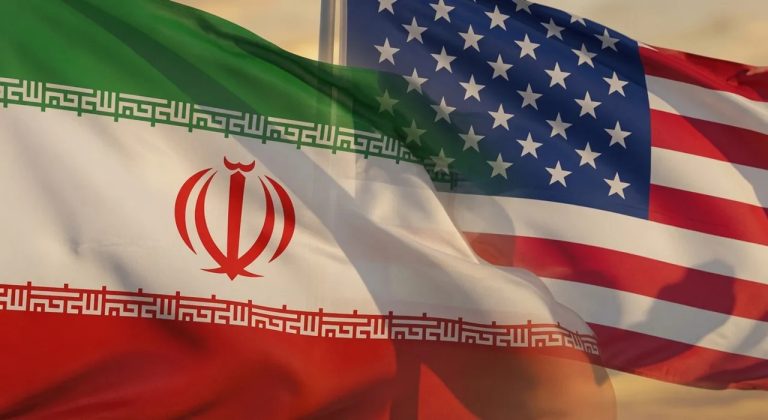
The Islamabad Memorandum, signed on June 17 by Donald Trump and Iranian President Masoud Pezeshkian, was the most consequential diplomatic document in the Middle East in a generation. Trump signed it during dinner with French President Emmanuel Macron at the Palace of Versailles following the G7 summit, after which Pezeshkian signed it in Tehran. The text is, in places, genuinely surprising — Washington appears to have abandoned, at least for the foreseeable future, any strategy aimed at overthrowing the Islamic Republic. Whether the 60-day window for a final deal produces something durable, or simply delays the next round of catastrophe, now depends on whether both sides can resist their worst instincts. Early signs on both fronts are not encouraging.
Washington’s Lebanon Blind Spot
The MOU’s first article is admirably clear: the US and Iran and their allies in the current war declare the immediate and permanent termination of military operations on all fronts, including in Lebanon. What happened next illustrated the problem. US negotiators hastily attached a Lebanon-Israel framework agreement to the MOU’s coattails, presenting it as a natural extension of the ceasefire logic. The framework proposes that Israeli withdrawal from Lebanese territory be matched by the extension of Lebanese army authority into vacated areas — no vacuum for Hezbollah to exploit.
The flaw is not in the goal. The flaw is in who is being asked to achieve it. Israel currently occupies one fifth of Lebanon and has subjected the country to near-daily strikes since early March, killing at least 3,000 people. And given that the agreement is solely between the US and Iran — Israel and Hezbollah are not signatories — it is entirely unclear how a ceasefire in Lebanon would be implemented.
Israel has expressed strong disapproval of the Islamabad Memorandum and intended to continue military operations in Lebanon. Israeli officials indicated that military operations will continue in Lebanon regardless of the MOU wording. Netanyahu declared that Israel “will preserve its freedom of action” against threats from Hezbollah — which is not a commitment to withdraw, but a condition for withdrawal that Israel alone gets to evaluate.
The deeper problem is the American model for understanding Hezbollah. Washington still reaches for Al-Qaeda as its frame of reference: a purely ideological, non-state group with no popular constituency. Hezbollah is structurally different — closer to the Irish Republican Army than to Al-Qaeda, straddling the line between armed faction and political party, drawing legitimacy from a substantial portion of Lebanon’s Shia population, and operating as a near-peer to the Lebanese state itself. Any realistic arrangement in Lebanon will require talking to Hezbollah, directly or through intermediaries who actually understand its incentives. Nothing in current US policy suggests that conversation is being prepared.
Tehran’s Maximalist Trap
Iran’s negotiating position has been more coherent than its adversaries have generally credited. The conflict did not produce regime change, eliminate Iran’s strategic deterrent capabilities, or fundamentally alter Tehran’s relationships with allied movements and governments across the region. That is, by any measure, a stronger outcome than most analysts predicted for the Islamic Republic in February 2026. And yet Tehran appears committed to squandering this position through maximalist demands that will ultimately erode the leverage they are designed to monetize.
The Hormuz toll question is the clearest example. Iran says it will charge fees for transit through the Strait of Hormuz — a position at odds with Washington that threatens to unravel a fragile diplomatic breakthrough before the ink even dries on the MOU. Tehran’s semantic maneuver — insisting these are “service fees” for navigation, security, and environmental oversight rather than “tolls” — has convinced nobody. US Secretary of State Marco Rubio has said Iran will not be permitted to charge tolls or fees for vessels transiting the Strait of Hormuz under any final agreement with Washington.
The legal picture is equally unfavorable to Tehran. Under the UN Convention on the Law of the Sea, Iran cannot charge tolls or fees for transit passage through the strait. Article 26 of the treaty explicitly prohibits bordering states from levying charges on foreign ships merely for passing through a waterway used for international navigation. Neither Iran nor the US has ratified UNCLOS, but not having ratified the convention doesn’t give Iran total freedom of action in the Strait of Hormuz. It remains subject to international law and notably the customary right of passage.
The economic logic is equally shaky. The Saudis and Emiratis have options to go around the strait, but Kuwaitis, Qataris, and Bahrainis do not — they will be forced to comply with Iranian demands or experience economic dislocation. That may sound like leverage. In practice it is a way to alienate the very Arab states whose acquiescence Iran will need in any durable regional settlement. The Gulf states are not going to cooperate with an Iranian toll system that punishes their own exports.
The Strait of Hormuz represents one of Iran’s last remaining sources of leverage. With its proxies weakened, its nuclear and missile programmes degraded, and domestic pressures mounting, the Iranian government is trying to hold on to what may be its last bargaining chip. That analysis is correct. But a bargaining chip that drives away potential partners and invites renewed military pressure is not leverage — it is a liability.
The Mediation Problem
One underappreciated source of friction is the mediation architecture itself. The 300-member US negotiating team was led by Vice President JD Vance, alongside special envoys Steve Witkoff and Jared Kushner, while the 70-member Iranian team was led by parliamentary speaker Mohammad Bagher Ghalibaf and foreign minister Abbas Araghchi. The Pakistani mediating team was led by Prime Minister Shehbaz Sharif, Field Marshal Asim Munir, and Deputy Prime Minister Ishaq Dar.
Pakistan’s enthusiasm for this role is genuine and its diplomatic infrastructure is substantial. But Pakistan is a first-time mediator in a dispute of this complexity, and the indirect channel has already produced miscommunications that direct talks would have resolved at the table. Iran’s insistence on returning to indirect formats whenever talks stall reads, in Western capitals, not as principled diplomatic caution but as weakness — and the perception of weakness has, historically, encouraged rather than deterred American hardliners.
Despite the optimism generated by the ceasefire, substantial obstacles remain. The memorandum has triggered divisions within both the United States and Iran. In Washington, opponents argue that the agreement amounts to an unnecessary concession. In Tehran, supporters must contend with concerns that ambiguities in the text could later be exploited to extract additional concessions.
The 60-day clock is ticking. Both sides have real incentives to reach a final deal — Iran needs sanctions relief, Washington needs the strait open and the war politically closed before it becomes a domestic liability. But incentives and outcomes are not the same thing. The MOU was the easy part, built on the immediate desire to stop the killing. The final deal requires each side to accept outcomes it does not want, in public, in ways that domestic audiences will not applaud. That is the harder thing. And both governments have a well-documented history of choosing the theatrics of resistance over the substance of agreement.
Original analysis inspired by Jude Russo from The American Conservative. Additional research and verification conducted through multiple sources.