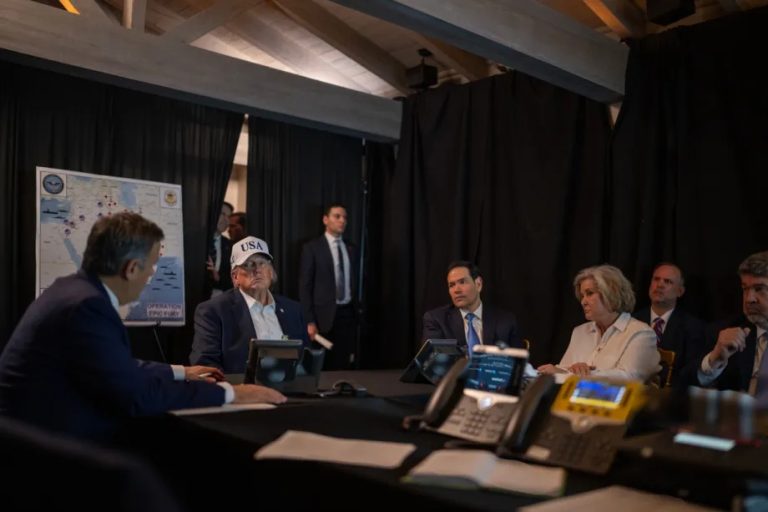
Washington began its gamble in early 2026 following the rapid removal of the Venezuelan leadership. The Trump administration operated under the belief that a high-technology strike against Tehran would produce a similar victory without significant costs. This assumption drove the launch of Operation Epic Fury, which sought to dismantle the clerical establishment through precision air power and the elimination of top officials. Instead of a quick collapse, the White House now faces an enduring conflict that has fundamentally altered the security of the region.
The primary error involved a complete misreading of Iranian national pride and institutional depth. While the initial strikes destroyed conventional naval assets and killed key leaders, the move did not spark the expected popular uprising. Instead, power solidified around the most radical elements of the military who fortified their grip on the state. The administration pursued tactical achievements but neglected the political reality that assassinations often consolidate rather than crumble a regime.
Tehran responded by expanding the conflict into a series of asymmetric strikes that the Pentagon failed to stop. On the first day of hostilities, drones and missiles pushed into every major neighbor in the Gulf. This effectively destroyed the myth of a protective security umbrella provided by the United States. Despite months of bombardment, a significant portion of the mobile arsenal remained hidden in underground facilities and fully operational.
The Global Energy Trap
The economic consequences of this military adventure have been immediate and severe. By implementing a naval blockade, Washington expected to starve the Iranian treasury into submission. However, Tehran used its proximity to the world’s most important oil transit point to seize the Strait of Hormuz. This maneuver drove global energy prices well above one hundred dollars per barrel and disrupted fragile international supply chains.
These financial shocks forced the White House to issue quiet waivers for oil sanctions to prevent a total economic meltdown at home. This irony provided the Iranian leadership with unexpected leverage in the middle of a war intended to break them. The conflict has proven that American military dominance cannot fully insulate the domestic economy from the realities of a globalized energy market.
The End of Diplomacy
Perhaps the most lasting damage involves the total destruction of any nuclear off-ramp. Before the fighting started, regional mediators indicated that Tehran might offer significant atomic concessions in exchange for sanctions relief. By demanding what looked like unconditional surrender, the Trump administration removed all incentives for negotiation. Any future government in Tehran will now likely see a nuclear weapon as a vital tool for survival rather than a bargaining chip.
The war has also guaranteed that the region moves closer to a new international order. China and Russia have provided critical support to the Iranian defense through advanced technology and satellite data. This cooperation has accelerated a shift away from a world led by the United States toward a more fragmented system. Allies in Europe and Asia are now reconsidering their reliance on a partner that pursues unpredictable and costly wars.
Operation Epic Fury will likely be remembered as a moment where tactical brilliance was mistaken for a winning strategy. By chasing the dream of an easy regime change, the administration has degraded its own ability to deter rivals while making the Middle East more dangerous. Without a shift toward a realistic ceasefire, the conflict risks becoming a permanent drain on American resources and credibility.
Original analysis inspired by Jasim Al Azzawi from Middle East Monitor. Additional research and verification conducted through multiple sources.
By ThinkTanksMonitor