Three months of war between the United States and Iran have produced a result that few in Washington dared contemplate: the Islamic Republic, battered but unbroken, now holds the decisive cards in any negotiated settlement. As diplomats shuttle between Tehran, Doha, and Islamabad, the shape of a new Middle Eastern order is coming into view, and it looks nothing like what Trump or Netanyahu had envisioned.
The war began on February 28, 2026, when Israel and the United States launched airstrikes against Iran, assassinating its supreme leader and destroying military and government targets across the country. Trump’s strategy, informed by intelligence that the Iranian regime was far weaker than it actually was, rested on the assumption that decapitation would trigger collapse. It did not. Iran responded with missile and drone strikes against Israel, US bases, and US allied countries in the Gulf, and closed the Strait of Hormuz, disrupting global trade.
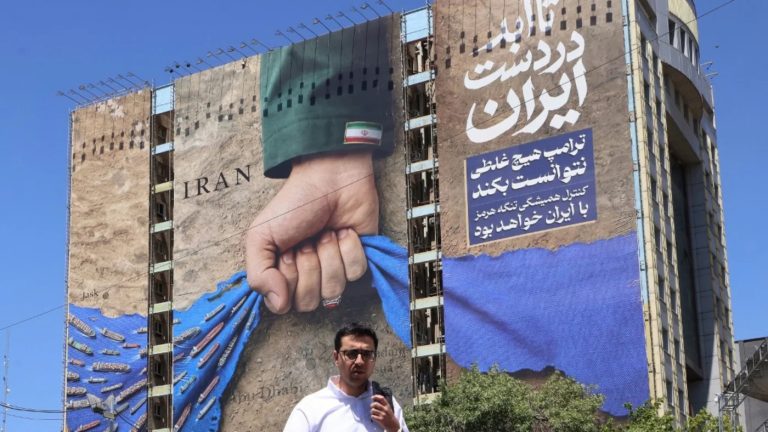
That single act, sealing the Strait of Hormuz, transformed the conflict’s entire logic. Until the US-Israeli war against Iran, the Strait of Hormuz was open and about 25% of the world’s seaborne oil trade and 20% of the world’s liquefied natural gas passed through it. Oil flows through the strait collapsed from approximately 20 million barrels per day to roughly 1 million barrels per day following the outbreak of hostilities, a reduction exceeding 90 to 95 percent of prior volumes. The IEA classified this as “the largest supply disruption in the history of the global oil market,” a descriptor that translates directly into leverage at the negotiating table.
A Deal That Keeps Slipping Away
Iran and the United States have signaled they are closing in on an agreement to turn the existing ceasefire into a more lasting settlement, with both sides talking of a memorandum of understanding that will set out a roadmap for resolving all outstanding issues, though a deal is still a “work in progress” according to US Secretary of State Marco Rubio. The structure being discussed is phased and conditional: a 60-day ceasefire extension during which the Strait of Hormuz would be reopened, Iran would be able to freely sell oil, and negotiations would be held on curbing Iran’s nuclear program.
But every time an agreement appears within reach, it recedes. Netanyahu expressed concern about conditions in the draft MOU during a phone call with Trump on Saturday, including the requirement that the war between Israel and Hezbollah in Lebanon would end, though he made his case in a respectful and deferential way according to a US official. Iran, for its part, has kept its own demands firm. Iran’s foreign ministry said that the two sides remain both “very far and very close” to an agreement, noting the US had put forth “conflicting stances several times.” Iran’s semi-official Fars news agency stated that “Iran has made no commitments in this agreement regarding handing over nuclear stockpiles, removing equipment, closing facilities, or even pledging not to build a nuclear bomb.”
The nuclear file sits at the center of this impasse. The Iranian government has said it must retain the right to enrich uranium, but the amount and level of enrichment are “negotiable.” The duration of any moratorium on uranium enrichment is being actively negotiated, with three sources saying it would be at least 12 years, while Iran proposed a 5-year moratorium and the US demanded 20. These are not technical details; they represent fundamentally incompatible visions of what a deal is actually for.
The New Brokers of the Gulf
Perhaps the most consequential shift triggered by the war has nothing to do with Iran’s missiles or its nuclear stockpile. It is the emergence of an entirely new diplomatic architecture, one that Washington neither designed nor controls.
Pakistani and Qatari negotiators held talks with Iranian counterparts while staying in regular contact with US envoy Steve Witkoff, according to the Financial Times. While Pakistan has led the mediation, Qatari support over the last week and a push by Saudi Arabia, Egypt, and Turkey managed to narrow the gaps between the parties, according to a regional source. These are nations that have historically stood at the margins of Gulf security, now functioning as the essential conduit between Washington and Tehran.
Pakistan’s military chief Asim Munir and Prime Minister Shehbaz Sharif traveled to Beijing for talks with Chinese leaders, with China saying it would work with Pakistan to “make positive contributions to the early restoration of peace and stability in the Middle East.” The initial ceasefire, announced on April 7, was itself based on a 10-point proposal mediated by Pakistani Prime Minister Shehbaz Sharif and Field Marshal Asim Munir. Islamabad’s ascent as a major player reflects how completely the old American-led regional framework has broken down.
Abraham Accords and the Wall of No
Trump has tried to extract something resembling a political victory from this military stalemate by reviving his signature diplomatic project. Trump asserted that countries including Egypt, Jordan, Qatar, Pakistan, Saudi Arabia, and Turkey should sign the Abraham Accords simultaneously, writing that “after all the work done by the United States to try and pull this very complex puzzle together, it should be mandatory.”
The response was swift and blunt. Both Pakistan and Saudi Arabia publicly rejected participation in the proposed agreement, citing longstanding policy positions and ideological concerns. Saudi Crown Prince Mohammed bin Salman reiterated that Riyadh will not sign the Abraham Accords until a roadmap for the establishment of a Palestinian state is agreed upon. For Qatar, Saudi Arabia, Kuwait, Pakistan, and others, the time for full ties with Israel is not yet right, with multiple Gulf officials saying they are ready to normalize only should Israel moderate its “destabilizing behavior” and end aggressive military policies.
These states are also seeking steps from Israel to reverse what many regard as ethnic cleansing and annexation in the West Bank and Gaza, with the view that the lack of Palestinian rights and statehood will continue to fuel regional instability. The bloc now coalescing around Saudi Arabia, Pakistan, Turkey, Qatar, and Oman did not set out to become a counter-alliance. Events made it one.
The Hormuz closure exposed a fundamental vulnerability: the conflict set off what Gulf states called the worst global energy crisis in decades, with higher energy prices feeding rising inflation in the US and expectations that the Federal Reserve may need to increase interest rates. States that had paid dearly for American security guarantees found those guarantees hollow when it mattered most. Gulf states including Saudi Arabia, Qatar, and the UAE urged Trump to suspend the military assault, fearing Iranian retaliation against the region and further damage to global energy markets.
What comes next depends on whether a memorandum of understanding can survive the interference of those, chiefly Netanyahu, who gain nothing from its success. Charles Kupchan, a senior fellow at the Council on Foreign Relations, said the back-and-forth between the US and Iran means a deal will not likely be agreed anytime soon. Even if a framework is eventually signed, Iran will have secured its core interests: its deterrence is proven, Hormuz remains strategically in its hands, and a new regional coalition has formed that excludes both Washington and Tel Aviv from the driver’s seat. The question now is not whether Iran won this round. It is who picks up the pieces of the order that just ended.
Original analysis inspired by David Hearst from Middle East Eye. Additional research and verification conducted through multiple sources.