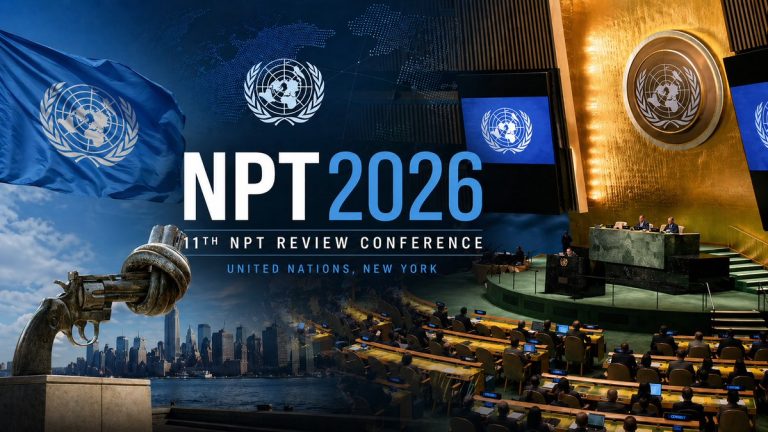
The 2026 NPT Review Conference convened in Geneva as fresh scars from military strikes on Iran dominated delegate conversations. Rather than reinforcing the treaty’s authority, the U.S.-backed operations have exposed its vulnerabilities, with many nations questioning whether the agreement can still manage proliferation risks in a multipolar world. Iran’s rapid moves to reconstitute key capabilities after the attacks only deepened those doubts, showing how force alone struggles against determined state programs backed by external partners.
Iranian engineers have already restored roughly 70 percent of their missile production base, taking advantage of deeply buried facilities that proved resistant to precision bombing. Recent assessments suggest Tehran retains the bulk of its ballistic missile inventory and has accelerated underground work since the April ceasefire. These developments arrive at a delicate moment, as diplomats try to salvage meaningful outcomes from the review process amid eroded trust on all sides.
Persistent External Support
Beijing has maintained steady oil purchases from Iran throughout the crisis, providing Tehran with crucial revenue that offsets the impact of renewed Western sanctions. Similar patterns appear in dual-use technology transfers and satellite intelligence, which have helped Iranian forces adapt faster than many analysts predicted. This support network reveals the limits of kinetic operations when major powers maintain strong economic and technical relationships with the targeted state.
Moscow has likewise stepped in with components and expertise, allowing Iran to rebuild elements of its air defense and missile systems. The cooperation fits larger patterns of alignment that stretch across conflict zones, complicating efforts to isolate any single player. For conference participants from the Global South, these partnerships highlight perceived double standards in how nuclear and conventional capabilities are policed.
Verification Challenges and Stockpile Evolution
The IAEA meanwhile reports increased difficulties in verification, with access restrictions and politicized data undermining its technical role. Several non-nuclear weapon states have used the platform to demand stronger security assurances and faster disarmament steps from recognized nuclear powers. Their frustration grows as New START lapses without a successor, and global stockpiles—now exceeding 12,000 warheads according to independent tallies—continue to evolve.
European officials have quietly urged renewed diplomatic channels, pointing to the collapsed 2015 nuclear deal as evidence that military pressure must pair with credible negotiation. Israeli and American strikes may have delayed aspects of Iran’s program, yet they have also hardened positions in Tehran and energized hardliners who argue the treaty offers no real protection. Comparative examples from other regions, including tensions on the Korean peninsula, suggest that selective enforcement can accelerate rather than slow proliferation incentives.
Gridlock in the Multipolar Order
As sessions continue, proposals for updated verification protocols and confidence-building measures have gained some traction, yet fundamental disagreements persist. Russia’s limited engagement and China’s emphasis on sovereignty further constrain progress. The coming weeks will test whether participants can bridge these gaps or whether the treaty drifts toward irrelevance in the face of raw power politics.
The Iran episode ultimately illustrates a deeper challenge for the nonproliferation regime. Military actions can disrupt programs temporarily, but without addressing the security fears and economic ties that sustain them, such operations risk fueling the very dynamics they aim to suppress. Crafting durable solutions will require blending pressure with genuine multilateral reform—one that accounts for how today’s interconnected threats transcend old treaty frameworks.
Original analysis inspired by Syed Ali Zia Jaffery from Bulletin of the Atomic Scientists. Additional research and verification conducted through multiple sources.