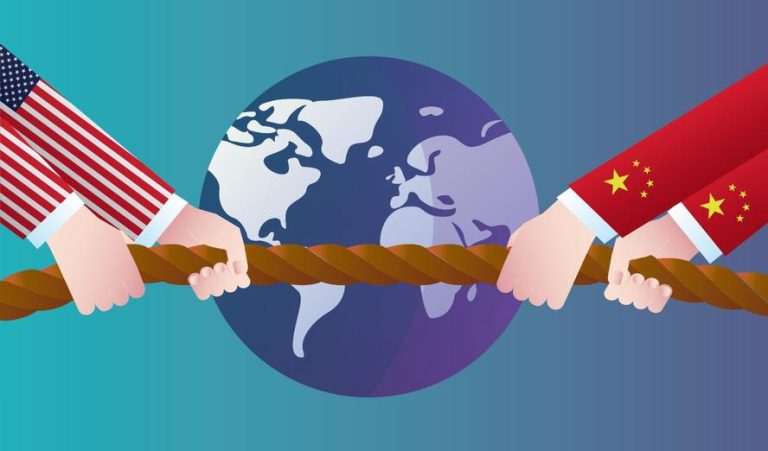
President Donald Trump arrives in Beijing this week for talks with Xi Jinping amid a US-China relationship that has settled into a new and less favorable equilibrium for Washington. The intense trade confrontation of 2025, triggered by sweeping American tariffs, ended with Beijing extracting significant concessions that continue to shape how the two powers interact. Rather than reasserting dominance, the United States finds itself operating under implicit rules that give Chinese officials greater sway over key national security tools and diplomatic priorities.
The flashpoint came when China responded to US tariffs by tightening its grip on rare earths. These materials, essential for advanced manufacturing and defense systems, quickly exposed vulnerabilities in American supply chains. As factories faced shutdown risks and allies in Europe and Asia felt the pinch, the Trump administration moved to de-escalate. The resulting agreement reached in Busan last October required China to partially restore mineral flows. In return, Washington agreed to withdraw proposed rules that would have expanded export controls on subsidiaries of sanctioned entities and largely refrained from introducing fresh restrictions targeting Chinese firms.
Shift in Technology Safeguards
This exchange marked a departure from prior practice. Previous American administrations had applied technology safeguards unilaterally to counter military modernization, support for Russia in Ukraine, and other concerns. Now Beijing holds effective influence over the scope and enforcement of such measures. Despite American initiatives to partner with Australia, Japan, and others on alternative supplies, full diversification remains years away. The arrangement, tied to China’s ongoing control of these minerals, could prove hard to unwind and lock in advantages for Beijing well into the future.
Preparations for the current summit reveal how the style of engagement has flipped. The US side places heavy emphasis on displays of personal rapport and warm bilateral ties. Chinese diplomats have noted this priority and positioned it as something to be reciprocated with policy adjustments, especially regarding Taiwan. Where American officials once traded ceremonial gestures for concrete security steps, they now risk conceding on strategic files to secure visible cooperation on trade matters or quick economic wins.
The Overlap of Economics and National Security
This blurring of lines extends to how issues are grouped. The current administration tends to treat the entire relationship as one big negotiation, open to swapping economic gains for movement on matters that will define long-term competition. China’s economic point person coordinates closely with strategic goals set by the party leadership. His American counterpart brings a different focus that could leave Washington vulnerable to unfavorable trades.
Another notable evolution involves the separation between direct talks with Beijing and America’s broader competition for influence across Asia. In the past, raising concerns about South China Sea activities during high-level meetings served both to deter Beijing and reassure partners like the Philippines and Japan. Those messages helped maintain alliance cohesion. Today those regional priorities receive less integration in the main channel with China.
Alliance Cohesion and Narrative Risks
Beijing has capitalized on this shift. The very appearance of closer US-China coordination becomes a narrative tool that can erode confidence in American security guarantees. Allies worry about both uncontrolled escalation and sudden bargains made over their heads. Trump’s decision to focus his Beijing trip solely on Chinese meetings, without stops in allied capitals, reinforces the sense of compartmentalized relationships.
American forces have maintained a steady pace of activity in the western Pacific, including major joint exercises with Philippine troops near Taiwan and continued arms support for Taipei. These steps signal resolve on the ground. Yet diplomatic signals that downplay certain strategic differences create room for misunderstanding. Chinese military maneuvers around Taiwan and coast guard actions in disputed waters carry rising risks of accidental escalation. If Beijing perceives reduced American commitment to its partners, it may press harder in the Indo-Pacific.
Structural Outlook
The coming meetings are unlikely to deliver dramatic breakthroughs. They will, however, likely solidify patterns that favor China’s position. For Washington to avoid being forced into reactive choices later, it must align its diplomatic messaging more closely with its operational efforts and regional partnerships.
Only by restoring greater coherence can the United States hope to manage this critical relationship on terms that better protect its interests and those of its allies.
Original analysis inspired by Henrietta Levin from Foreign Affairs. Additional research and verification conducted through multiple sources.