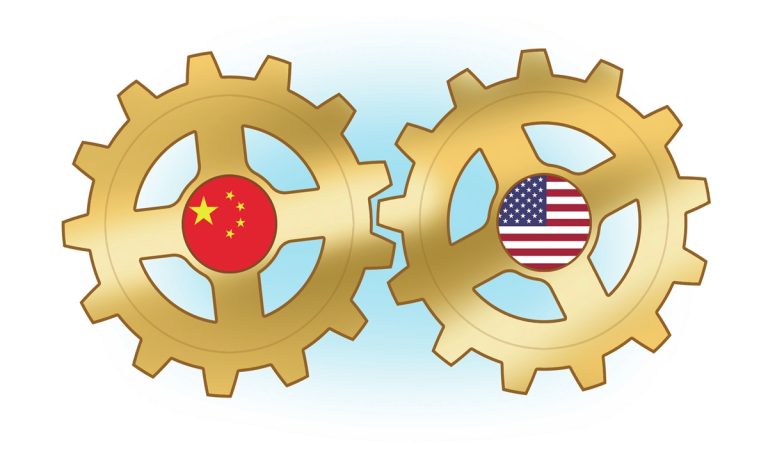
President Donald Trump’s arrival in Beijing marks the first US presidential visit to China in nearly a decade. The three-day summit comes as both governments juggle immediate crises, from the fragile situation in the Middle East to ongoing trade frictions and tensions over Taiwan. While expectations for sweeping deals remain low, the meetings offer a chance to test whether modest, concrete actions can prevent rivalry from sliding into something more dangerous.
Years of tariffs, export controls, and military posturing have tested the relationship severely. Yet the two economies remain deeply entwined. American companies continue to rely on Chinese manufacturing for everything from consumer electronics to pharmaceutical ingredients, while Chinese exporters depend on access to US consumers. Attempts at rapid decoupling have proven expensive and incomplete, reminding policymakers that certain supply chains cannot be rebuilt overnight without major disruption.
Global problems add another layer of necessity. Issues like pandemic preparedness, AI safety, and nuclear risks cannot be managed effectively by one side alone. The current focus on Iran, where both Washington and Beijing have stakes in preventing wider conflict and keeping key shipping routes open, illustrates how coordination on specific threats serves mutual interests even amid broader competition.
Rebuilding Human Connections
The human dimension of the relationship has suffered perhaps most visibly. The number of American students in China has fallen sharply from around 11,000 in 2019 to fewer than 2,000 today, partly due to tightened visa rules and security concerns on both sides. Academic partnerships have shrunk, and cultural exchanges carry new political risks. Reversing this trend through simpler visa approvals, renewed funding for programs, and genuine reciprocity could help rebuild expertise and reduce misunderstandings over time.
American journalists also face obstacles obtaining long-term visas and reporting freely inside China. Greater openness here would allow more nuanced coverage for US audiences, moving beyond familiar caricatures. On the American side, welcoming more Chinese students and visitors rather than subjecting them to prolonged scrutiny would similarly pay dividends. These steps require no grand treaty, only consistent bureaucratic adjustments and political will.
The Taiwan Flashpoint
Taiwan remains a sensitive core issue. US Secretary of State Marco Rubio recently noted that both countries see value in straits stability. Beijing is expected to restate its red lines and the one-China principle during the summit, while Washington will likely emphasize the need to avoid unilateral changes to the status quo. Concrete confidence-building measures around this flashpoint could prove more valuable than rhetorical declarations.
Managed Competition Takes Shape
The era of broad engagement has clearly ended. Full separation is neither realistic nor desirable given the costs involved. What has emerged instead is a messier reality of competition in some domains—technology, regional influence, military posture—paired with limited cooperation in others. Think tank assessments describe this as managed competition, an approach that accepts diverging interests while preserving guardrails against catastrophe.
Success at this summit will likely be measured in small increments: agreements to hold regular working-level forums on trade and investment, quiet understandings on specific global challenges, and signals that people-to-people channels will be repaired rather than further restricted. History shows that the 1970s opening began with scholarly contacts and cultural exchanges before exploding into commercial ties. Today’s environment is far more guarded, yet the principle remains that sustained contact at multiple levels creates habits of dialogue.
Neither capital should expect a comprehensive reset from these few days in Beijing. The test will be whether both sides demonstrate the patience to take the next practical step, and the one after that. In great power relations, steady forward movement, however modest, often matters more than dramatic gestures.
Original analysis inspired by Bruce Reynolds from Global Times. Additional research and verification conducted through multiple sources.