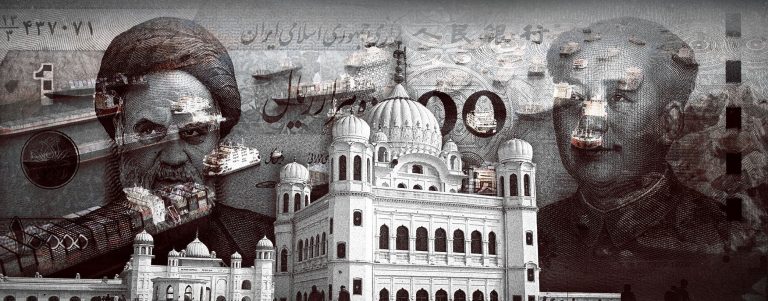
Thousands of Iran-bound containers sat idle at Karachi’s ports as tensions closed off familiar sea paths through the Strait of Hormuz. In response, Pakistan activated six dedicated overland routes last month, linking its key harbors directly to Iranian border crossings. This move has quickly cleared backlogs while opening fresh pathways for goods, demonstrating how land-based alternatives can blunt the impact of maritime restrictions.
The decision, formalized through a commerce ministry order on April 25, allows cargo from Pakistani ports like Gwadar, Karachi, and Port Qasim to reach Iran via Taftan and Gabd. What began as a way to handle stranded consumer goods and food supplies now carries larger significance. It aligns with Pakistan’s goal of positioning itself as a trade hub connecting the Arabian Sea to Central Asia and western China, potentially generating much-needed revenue and customs income for an economy facing debt and security challenges.
Global energy flows make the Hormuz passage uniquely sensitive. Roughly one fifth of the world’s petroleum trade depends on this narrow waterway. Disruptions there ripple across markets, pushing players to seek workarounds. Iran has begun shifting logistics away from long-relied-upon re-exports through the UAE toward these Pakistani routes. Observers note that Beijing and Moscow appear to have quietly supported the arrangement, fitting into broader efforts to build connectivity less vulnerable to Western naval power.
These regional adjustments occur against a backdrop of American policy that often proceeds through executive initiative alone. After a recent Supreme Court ruling curtailed certain tariff powers, officials turned to other statutes never designed for sweeping, ongoing use. Provisions meant for narrow security threats now support broader commercial measures, creating a framework that shifts with political currents rather than resting on settled law.
Legislative Foundations Matter in Great Power Rivalry
A similar pattern appears in the security domain. Operations tied to Iran have drawn on the 2001 authorization for use of military force, originally aimed at al-Qaeda but stretched across decades and multiple theaters. Congress has held votes but stopped short of either clear endorsement or termination of current actions, allowing the War Powers clock to expire without resolution. This leaves key decisions about committing American resources in a kind of limbo that no court ruling can fully resolve.
Such gaps carry real costs. Partners find it difficult to anchor their own strategies around American moves that lack enduring congressional backing. Adversaries, in turn, can exploit the predictability of executive terms rather than face a unified national policy. In an era of intensified competition, where economic tools and military posture must reinforce each other, improvisation carries risks. Pakistan’s corridor, which some analysts suggest may endure even if Hormuz traffic resumes, could strengthen Belt and Road linkages and even revive stalled energy projects.
The development also raises questions about coordination within the US system. While the judiciary has checked some overreach, it cannot legislate trade rules or authorize sustained military engagements. Those responsibilities belong to Congress, the branch designed to deliberate on costs, interests, and long-term commitments. Without reclaiming that role through measures like sunsets on emergency powers or bounded authorizations, American statecraft risks appearing reactive and fragmented.
Regional actors are not waiting for Washington to sort its internal balances. By creating functional alternatives to blockaded sea lanes, they are reshaping commercial arteries in ways that could dilute the effectiveness of future pressure campaigns. For the United States to exercise disciplined restraint and credible leadership, it must first ensure its domestic institutions support coherent, sustained strategy. The Pakistan-Iran land bridge serves as a timely reminder that influence in the Persian Gulf and beyond depends as much on governance at home as on power projection abroad.
Original analysis inspired by Christian Dobson Santiago from The National Interest. Additional research and verification conducted through multiple sources.