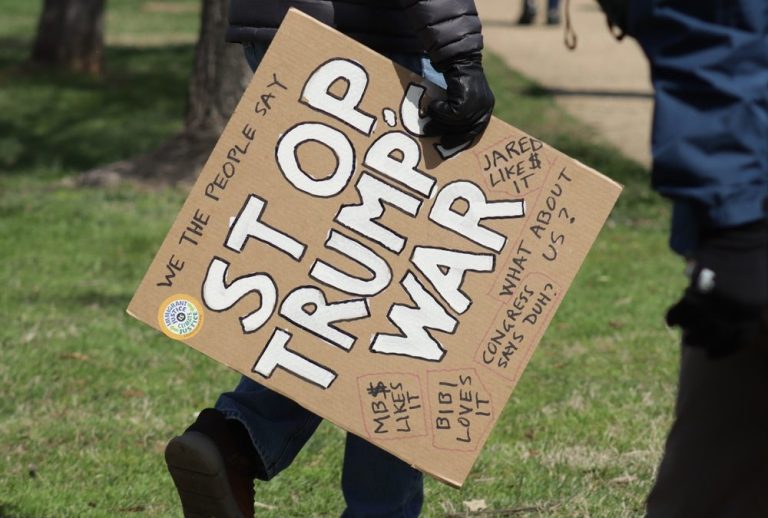
The United States has reached a pivotal moment in its dealings with Iran as the 60-day legal window for military action expired without clear congressional approval. President Donald Trump’s notification to lawmakers in late February set this timeline in motion after strikes and naval movements began, yet the White House now points to a ceasefire agreement as reason enough to set the restrictions aside. This interpretation has sparked sharp debate about whether temporary pauses can override statutory requirements designed to prevent open-ended engagements. At stake is not only policy toward Tehran but the balance of power between branches of government that has shaped American decisions on war for generations.
The War Powers Resolution, passed over President Nixon’s veto in 1973, requires presidents to pull forces from hostilities within 60 days absent explicit approval from Congress or a formal declaration of war. Successive administrations have tested its edges, often through narrow readings of what counts as “hostilities.” In this case, ongoing American naval operations near the Strait of Hormuz and lingering strike capabilities have kept critics arguing that the clock should still apply. Defense Secretary Pete Hegseth has maintained that direct fighting has ceased, yet legal experts and opposition lawmakers counter that selective pressure and forward deployments amount to sustained conflict by another name.
The Human and Cultural Cost
Public reaction inside Iran has complicated Washington’s assumptions about military leverage. Early strikes, which reportedly killed Supreme Leader Ayatollah Khamenei and damaged nuclear-related sites, initially produced scattered celebrations among regime opponents. That mood shifted as reports mounted of significant civilian toll, toxic fallout from strikes on energy infrastructure, and damage to prized cultural sites.
Many Iranians, even those critical of their government, have voiced anger at foreign attacks on their homeland, feeding a defensive nationalism that bolsters regime narratives of resistance. This pattern echoes historical cases where external pressure unified populations rather than fracturing them.
Congressional Deference and Legal Challenges
Congress has struggled to assert its role. Lawmakers have seen multiple resolutions aimed at requiring explicit authorization fail by narrow margins, including a recent Senate rejection that fell along largely partisan lines. A handful of Republicans have called for clearly defined objectives and exit strategies instead of indefinite posturing, yet broader hesitation to confront the executive has left the 1973 framework looking increasingly symbolic. This reluctance fits a decades-long pattern of legislative deference that has stretched from Korea and Vietnam through more recent operations in Libya and beyond.
The current standoff carries consequences that reach well past the Persian Gulf. Sustained military pressure without broad political buy-in risks undermining American credibility when it seeks to rally partners on issues from nuclear nonproliferation to regional stability. It also weakens the domestic foundation for any long-term strategy. If the goal remains curbing Iran’s nuclear ambitions or reshaping its behavior, legitimacy conferred by congressional debate would carry more weight than unilateral moves that invite legal challenge and political reversal.
Accountability and Future Strategy
Lawmakers now face a choice. They can reclaim their constitutional responsibility by debating and voting on the scope of American involvement, or they can allow interpretations of ceasefires and limited operations to stretch executive authority further. The latter path may feel safer in a polarized capital, but it erodes the very checks that distinguish democratic decisions on war from personal prerogative.
For U.S. policy in the Middle East to prove durable, it must rest on shared accountability rather than contested legal workarounds. The deadline has passed. The question is whether Congress will finally meet it.
Original analysis inspired by Michael Harrison from Foreign Policy In Focus. Additional research and verification conducted through multiple sources.