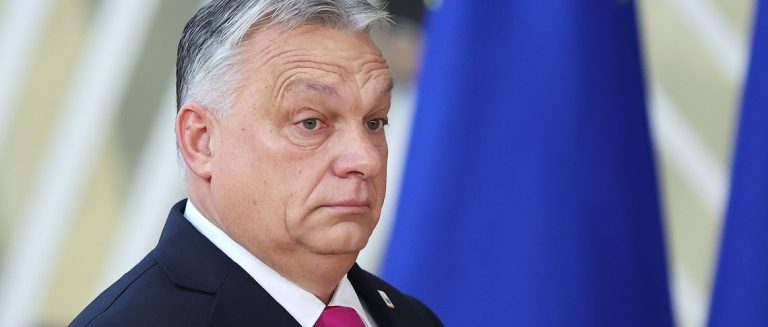
Voters in Budapest turned out in record numbers this April to sweep Viktor Orbán from power after 16 years. Péter Magyar’s Tisza Party secured a commanding parliamentary supermajority, complete with the two-thirds threshold needed for constitutional changes. Celebrations spilled into the streets with EU flags waving prominently, signaling a potential thaw in relations with Brussels that had grown bitterly frosty.
The immediate reaction across European capitals mixed relief with caution. For too long, Orbán had single-handedly stalled major initiatives, particularly those involving financial and military backing for Ukraine. His repeated veto threats had become a familiar feature of European Council meetings, frustrating partners eager to present a united front against Russian aggression. With Magyar preparing to take over, officials now anticipate quicker progress on several fronts, including the release of withheld cohesion funding and advancement of longer-term packages.
Yet the departure of one disruptive voice does not magically align competing national interests. Disagreements over how aggressively to confront Moscow, whether to expand the bloc further, and how much sovereignty members should surrender to collective decisions run deeper than any one leader. These tensions existed before Orbán elevated them, and they will likely persist—just in less concentrated form.
Nowhere is this more evident than in policy toward Ukraine support. Magyar has indicated his government will stop blocking a substantial EU loan package worth around €90 billion aimed at sustaining Kyiv’s defense and economy. This marks a clear break from Orbán’s approach, which often aligned with Russian preferences. However, Magyar has conditioned fuller backing for Ukraine’s EU accession path on stronger protections for the ethnic Hungarian community in western Ukraine. Such linkage shows how bilateral grievances can still complicate continental strategy.
This nuance matters because the war grinds on. European governments face mounting pressure to sustain aid levels while managing their own economic strains and domestic political backlashes. Slovakia’s Robert Fico, who has echoed some of Orbán’s reservations about unlimited assistance, reflects a broader current of war fatigue in parts of Central Europe. Without a single government absorbing most of the criticism for delays, these sentiments could fragment negotiations more unpredictably.
Enlargement ambitions face similar headwinds. Several member states harbor private doubts about absorbing new countries amid existing governance challenges and competition for resources. In France and Germany, populist parties have gained ground by questioning open borders and additional fiscal burdens. Previously, Orbán’s very public obstructionism allowed Paris and Berlin to voice support for principles while letting someone else slow the process. That convenient arrangement has now vanished.
The situation inside Hungary itself adds another layer of uncertainty. Although Magyar broke with Orbán and campaigned vigorously against corruption and democratic backsliding, he spent years inside the Fidesz ecosystem. His landslide victory gives him tools to reform institutions captured over the past decade and a half, with early signals pointing toward greater judicial independence and media pluralism. Still, whether this translates into consistent alignment with EU foreign policy priorities remains to be seen. Analysts note that Orbán’s brand of nationalism tapped into genuine societal currents that did not evaporate overnight.
On the wider stage, this transition carries significance for Europe’s relationship with the United States and its posture toward Russia. Orbán had positioned himself as a bridge to certain voices skeptical of multilateral institutions. His exit may smooth some transatlantic friction on sanctions or NATO cohesion, even as underlying differences on burden-sharing endure. With Volodymyr Zelensky’s government in Kyiv desperate for predictable support, the shift in Budapest could help stabilize supply lines.
European leaders now find themselves without their familiar foil. The real test lies in whether they can address disagreements openly rather than letting them fester behind closed doors or through proxies. Success would mean forging policies that reflect genuine consensus instead of lowest-common-denominator compromises. Failure risks amplifying fragmentation at a moment when external pressures demand greater coherence.
The Hungarian electorate has handed the union an opening. Translating that into lasting progress will require confronting uncomfortable truths about divergent visions for Europe’s future.
Original analysis inspired by Luke Zahner from Center for American Progress. Additional research and verification conducted through multiple sources.