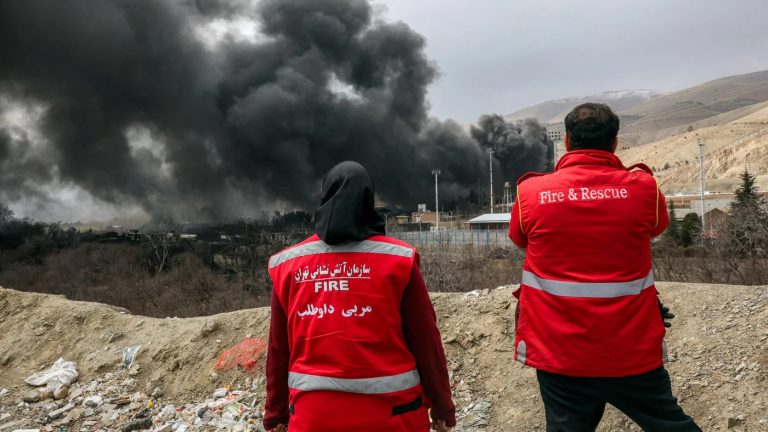
Recent American and Israeli airstrikes have hit Iranian energy infrastructure, including the Shahran refinery outside Tehran, sending plumes of smoke across the skyline. President Donald Trump has responded by openly discussing the option of seizing the country’s oil reserves or destroying them if necessary, claiming such moves would generate revenue and weaken adversaries. Tehran has rejected these ideas outright, with officials insisting Iran will not share the fate of nations whose resources were more easily targeted in the past. The episode throws light on how battles over energy supplies continue to shape relations between major powers and the Global South.
For Iran the pressure feels familiar. The 1953 coup that removed Prime Minister Mohammad Mosaddegh came after his government nationalized the oil sector long controlled by foreign companies. Western intelligence services helped restore a more compliant leadership that reopened access on terms favorable to outside interests. That intervention became a template for later actions aimed at preventing genuine local control over strategic commodities.
The Postwar Push for Sovereignty
Newly independent states quickly learned that flags and anthems changed little if foreign governments and corporations still decided how resources were used. At the Bandung Conference in 1955, Asian and African leaders demanded economic self-determination alongside political freedom. They rejected the idea that decolonization should leave the old extractive relationships intact.
Years of debate at the United Nations followed. Western delegations often resisted strong commitments to resource rights, yet the General Assembly eventually adopted resolution 1803 in 1962. The measure declared permanent sovereignty over natural wealth and resources a foundation for national development. In reality, governments that acted on this principle frequently encountered coups, sanctions, or economic isolation.
Africa and Latin America supplied numerous examples. Leaders who pursued land reform or nationalization often found themselves removed with external help. In Zimbabwe, post-independence efforts to redistribute white-owned farms gained pace after 2000, correcting colonial imbalances but triggering sharp Western condemnation and reduced support. Earlier IMF-backed structural adjustment programs had already cut social spending, weakening state capacity and fueling internal discontent even as commercial agriculture remained concentrated in fewer hands for years.
Venezuela followed a similar script more recently. When Caracas asserted greater authority over its oil industry and social programs, Washington layered on severe sanctions and recognized opposition leader Juan Guaidó as interim president. The approach helped redirect some overseas assets while deepening the country’s economic crisis. Domestic divisions and limited defensive depth made prolonged resistance harder.
Iran presents a different picture. The post-revolutionary system retains significant popular legitimacy despite decades of pressure. Sustained military modernization gives Tehran options to threaten navigation through the Strait of Hormuz, the narrow channel carrying roughly one-fifth of global oil trade. Partnerships with other powers have also created pathways to ease the impact of financial restrictions, limiting isolation.
Shifting Global Dynamics
These repeated confrontations show a pattern: powerful states have often preferred arrangements that guarantee reliable access to energy and minerals, whether through direct intervention, lending conditions, or targeted economic tools. Proposals such as the New International Economic Order in the 1970s tried to correct the imbalances with fairer trade rules and technology sharing, yet they lost momentum as market-driven policies took hold.
The international environment is evolving. Greater cooperation among BRICS countries has created alternative financing mechanisms and diplomatic backing for those asserting resource rights. As the world grapples with energy security and the shift away from fossil fuels, competition for remaining supplies may grow, but so too will incentives to pursue partnerships outside traditional channels.
Trump’s latest statements on Iranian oil therefore represent more than tactical rhetoric. They risk reinforcing the view in many capitals that international norms on sovereignty apply selectively. In response, more governments are likely to deepen ties that reduce dependence on any single set of economic gatekeepers. How these tensions resolve will help determine whether future resource competition fuels conflict or encourages genuine multilateral solutions.
Original analysis inspired by Joseph Massad from Middle East Eye. Additional research and verification conducted through multiple sources.