On April 14, something remarkable happened in Washington that most people had stopped expecting: Lebanese and Israeli diplomats sat across a table from each other, in the same room, in direct talks for the first time since 1983. Israeli and Lebanese officials held their first direct negotiations since 1983, meeting in Washington and speaking for more than two hours in an event hosted by US Secretary of State Marco Rubio. The symbolism was significant. So was what was happening simultaneously outside the room — Hezbollah claimed 24 attacks on northern Israel and on Israeli troops in southern Lebanon while the talks were underway. That contradiction, in miniature, captures everything difficult about what comes next.
The meeting produced a tangible early result. Israel and Lebanon affirmed that the two countries are not at war and committed to engaging in direct negotiations, facilitated by the United States. A ten-day cessation of hostilities began on April 16 as a gesture of goodwill by Israel, intended to enable good-faith negotiations toward a permanent security and peace agreement. That is more than most analysts had predicted even a week ago. Yet the gap between a ten-day pause and a durable peace remains vast — and the obstacles filling that gap are structural, not merely technical.
Two Sides, Two Very Different Agendas
The two sides entered the talks with sharply different priorities. Israel ruled out discussing a ceasefire with Lebanon and instead pressed Beirut to disarm Hezbollah. Lebanon, meanwhile, called for an end to the conflict, which has killed nearly 2,124 residents and displaced more than 1.1 million people. Those positions are not yet reconcilable. Israel is using military pressure as a lever to extract political concessions it has wanted for years; Lebanon is trying to stop the bleeding before engaging on anything else.
Israeli Prime Minister Benjamin Netanyahu stated we want the dismantling of Hezbollah’s weapons, and we want a real peace agreement that will last for generations. Lebanon’s position was more cautious. President Joseph Aoun declared he hoped the Washington talks would yield an agreement on a ceasefire in Lebanon, with the aim of starting direct negotiations between Lebanon and Israel, while Lebanese ambassador Nada Hamadeh Moawad called the meeting constructive but insisted on the full sovereignty of the state over all Lebanese land.
The disarmament question is where this process is most likely to stall. Disarming Hezbollah is in line with the Taif Accords of 1989 and UN Security Council resolutions passed in 2004 and 2006. Hezbollah rejects calls for its disarmament and wants Israeli withdrawal from Lebanon first. That standoff is not new — UN Resolution 1701, passed after the 2006 Lebanon War, called for exactly this disarmament. The clauses of the resolution calling for the disarmament of all non-state actors in Lebanon were never implemented. Nearly two decades later, the same demand is back on the table, this time under the pressure of an active Israeli military campaign.
Hezbollah’s Opposition — And Its Limits
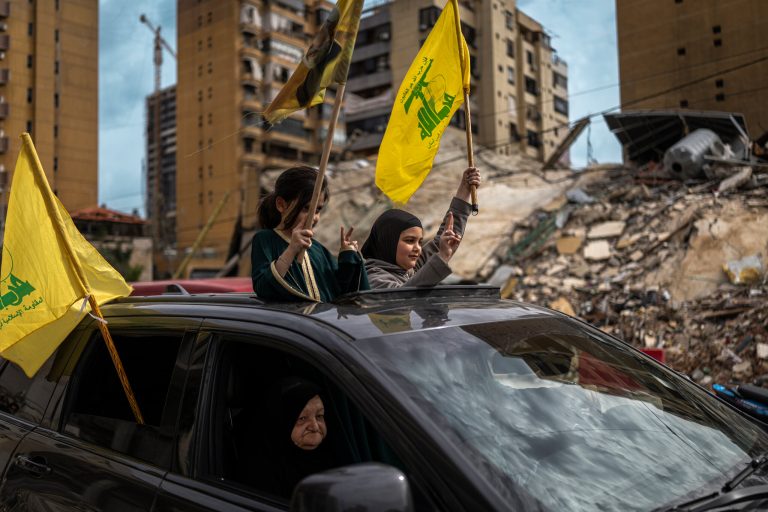
Hezbollah has done everything in its power to torpedo these talks short of using force against the Lebanese state itself. Hezbollah fiercely condemned the negotiations, with Secretary-General Naim Qassem calling them a free concession to Israel and the US. The group insists that negotiating while Lebanon is being bombarded is akin to signing a document of surrender.
But the group’s political leverage inside Lebanon is weaker than it has been in years. The conflict left Hezbollah badly weakened, with much of its leadership killed. Its patron Iran has been severely battered by US and Israeli strikes since February. And crucially, Hezbollah leader Naim Qassem threatened the government with civil war and displayed armed members on motorcycles through Beirut — a show of force that revealed both the threat and its limitations. Open warfare against the Lebanese army, other domestic factions, and Israeli drones overhead simultaneously is not a viable option.
Another factor is the extent to which Israel would cooperate with Lebanon to achieve Hezbollah’s disarmament. It’s going to be very difficult for the Lebanese government to carry out that enterprise if it looks like it’s being dictated to by Israel, said Daniel Shapiro, former US ambassador to Israel. That tension is real. The Lebanese government needs to present disarmament as its own sovereign choice, not as compliance with Israeli demands — otherwise it hands Hezbollah a narrative gift.
What a Credible Path Looks Like
The initial ten-day ceasefire period may be extended by mutual agreement if progress is demonstrated in the negotiations and if Lebanon effectively demonstrates its ability to assert its sovereignty. Lebanon is also committed to taking meaningful steps to prevent Hezbollah and all other non-state armed groups from carrying out any attacks or hostile activities against Israeli targets.
For this to translate into something lasting, both sides will need to move beyond their opening positions. Analyst Hanin Ghaddar of the Washington Institute suggested that a new agreement between the two countries could involve modifying the previous 2024 deal to include stronger assurances from Lebanon. On the Israeli side, continued strikes on Lebanese state infrastructure actively undermine the very government Beirut needs to strengthen. Lebanon’s parliamentary elections are due in May 2026. If Hezbollah and its allies perform well, this may halt any attempt at disarmament. That electoral calendar gives the current Lebanese government — the most sovereignty-focused administration in years — a narrow window to demonstrate results.
The government secured promises of financial assistance, including US aid for security forces and Gulf investments for reconstruction. Washington approved a $230 million package for disarmament efforts, and Saudi Arabia and Qatar would invest in southern Lebanon once the group lays down its weapons. That economic architecture matters. For many Lebanese, the link between Hezbollah’s disarmament and desperately needed reconstruction funding is increasingly tangible — and increasingly persuasive.
Israel and Lebanon have jointly requested that the United States facilitate further direct negotiations with the objective of resolving all remaining issues, including demarcation of the international land boundary, with a view to concluding a comprehensive peace agreement. The road from that request to an actual border agreement runs through minefields — literal and political. But the Washington talks have at least established that both sides are willing to walk it. Whether they can sustain that willingness under fire, with Hezbollah pushing back from inside Lebanon and Israeli jets operating overhead, will determine whether this historic opening becomes something more than a footnote.
Original analysis inspired by Bilal Y. Saab from Chatham House. Additional research and verification conducted through multiple sources.