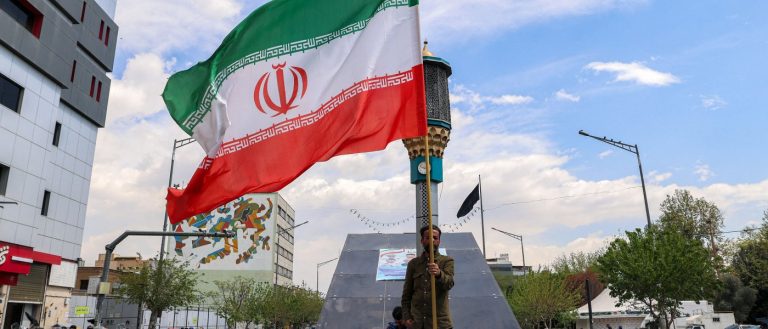
The ink was barely dry on the Pakistan-brokered ceasefire when Israel launched “Operation Eternal Darkness” — a wide-ranging operation targeting Hezbollah command and control centers in southern Lebanon, Beirut, and the Bekaa Valley, hitting over 100 targets within ten minutes. Lebanon declared a national day of mourning after the strikes killed more than 250 people and left over 1,160 wounded. The ceasefire had lasted less than twelve hours. US Vice President JD Vance described it as a “fragile truce.” That may be the understatement of the year. There are six distinct fault lines running through this agreement, any one of which could bring the whole structure down.
The Deal Nobody Agreed On
Both countries portrayed the temporary truce as a victory for their nations. The problem is that they are describing different deals. Iran’s Supreme National Security Council said Tehran had “forced the criminal America to accept its 10-point plan,” committing Washington in principle to guaranteeing non-aggression, continuing Iranian control over the Strait of Hormuz, accepting uranium enrichment, lifting all primary and secondary sanctions, terminating all UN Security Council and IAEA resolutions, paying compensation to Iran, and withdrawing US combat forces from the region.
Washington’s response was to deny that any such agreement existed. White House Press Secretary Karoline Leavitt called Iran’s enriched uranium “a red line that the President is not going to back away from.” The full details of the US 15-point proposal have not been published, but it is believed to include Iran committing to no nuclear weapons, handing over its highly enriched uranium, limits on Tehran’s defense capabilities, an end to regional proxy groups, and the reopening of the Strait of Hormuz. The two documents are not compatible. Islamabad talks will need to bridge that gulf — or admit that it cannot be bridged.
The Nuclear Question Has No Answer
The central issue that triggered the war — Iran’s nuclear programme — remains unresolved. Washington entered the conflict aiming to eliminate Iran’s stockpile of highly enriched uranium. The United States and Israel destroyed much of Iran’s program in the 12-day war in 2025, and the 2026 war saw further attacks, leaving much of Iran’s facilities and stockpiles buried beneath tons of rubble.
But rubble is not resolution. The nuclear issue remains unresolved, and Iran claims — probably falsely — that the United States has accepted its right to enrichment as part of the ceasefire deal. Although the campaign means that Iran is further from a bomb, it might redouble efforts to acquire one, believing that only a nuclear weapon can protect it given US and Israeli conventional military superiority. Netanyahu said Iran’s highly enriched uranium would be removed from Iran whether through negotiations or by force, and a senior Israeli official said the US has assured Israel that it will insist on the removal of enriched uranium, an end to further enrichment, and “the elimination of the ballistic missile threat” during negotiations. Iran has already signaled these are non-starters.
Lebanon Is Tearing the Deal Apart in Real Time
Although Pakistani Prime Minister Shehbaz Sharif said the ceasefire includes all fronts of the war including Lebanon, Israel rejected that condition, asserting that the ceasefire “does not include Lebanon.” On Wednesday, the leaders of Germany, France, Italy, the UK, Denmark, Spain, the Netherlands, and Canada, as well as EU Commission President Ursula von der Leyen and European Council President António Costa, said in a joint statement that it should apply to Lebanon.
Tehran, meanwhile, has made the Lebanon question into a tripwire. Iranian state media reported that Iran closed the Strait of Hormuz in response to Israeli attacks on Lebanon. Analysts say the Iranians are gambling that Trump will put pressure on Israel to include Lebanon in the ceasefire — “a risk because Trump, A) might not want to do that, B) might not have the power to do it. Netanyahu can tell him, ‘I don’t care what Washington tells me.'” That dynamic — Washington unable or unwilling to restrain its partner — could single-handedly derail Islamabad before the first session ends.
Iran’s Terrorism Toolkit Remains Intact
The Lebanon war has been almost as devastating as the Iran war, with almost 1,500 Lebanese killed and over one million displaced, and Israel is establishing a buffer zone on the Lebanese side of the border. But the damage to Iran’s proxy infrastructure has not ended Tehran’s capacity to retaliate through irregular means. The Gulf states, including Kuwait, the UAE, Bahrain, Iraq, and Saudi Arabia, reported intercepting missiles throughout April 8, with a fire starting in Abu Dhabi’s Habshan gas complex and an important Saudi pipeline directly hit by a drone. By 16:23 GMT, Kuwait had faced 28 Iranian drone attacks and the UAE 35, causing extensive damage.
The broader terrorism risk extends well beyond the Gulf. Tehran has a documented history of plotting revenge operations after the loss of senior figures, and over 250 high-ranking officials have been killed during this conflict. Even in a ceasefire environment, the incentive for covert retaliation remains strong — and Iran’s proxy networks, while degraded, are not dismantled. Iranian-allied groups in Iraq hit a diplomatic support center at Baghdad International Airport during the ceasefire, prompting the US embassy to warn its citizens in the region against further possible attacks.
Allies Are Warier Than Before
Chief geopolitical strategist Matt Gertken at BCA Research warned that “Trump may temporarily accept Iran as a gatekeeper — with US midterm elections approaching and gasoline prices sharply higher than before the war — but after the election, the US national security establishment will start to demand a more permanent solution,” adding that “fighting will ignite later this year, if not later this month.”
The broader alliance damage may outlast any deal. Washington launched the war without consulting NATO allies, then demanded they help reopen the Strait of Hormuz when things went badly. There is “a deep trust deficit on both sides”: from Washington’s perspective, longstanding concerns over Iran’s nuclear program; from Tehran’s, deep skepticism about US intentions, “especially given past withdrawals from agreements and continued military presence and pressure.” That deficit does not disappear with a two-week ceasefire.
The War After the War
Even if the Islamabad talks produce a broader settlement, the conflict will not end cleanly. For Iran’s leadership, ongoing confrontation can help justify repression and deflect from economic hardship. For Israel, its long-standing “campaign between the wars” approach favors continued strikes to keep Iran and its proxies weak, rather than allowing them to rebuild. The result is a likely pattern of recurring clashes — cyberattacks, proxy violence, limited strikes, and periodic escalation — rather than a clean postwar settlement.
Ending a war without achieving core objectives can feel indistinguishable from defeat. For Iran, the outcome may be simpler: in this conflict, not losing is close enough to winning. Washington began this war expecting a quick resolution. It now faces a situation where the most optimistic outcome is a partial deal that leaves the Islamic Republic intact, its nuclear ambitions unresolved, its proxies still in the field, and a shadow war that will periodically resurface for years. Two weeks is not enough time to solve any of that. It may not even be enough time to stop the ceasefire from collapsing.
Original analysis inspired by Daniel Byman from CSIS. Additional research and verification conducted through multiple sources.