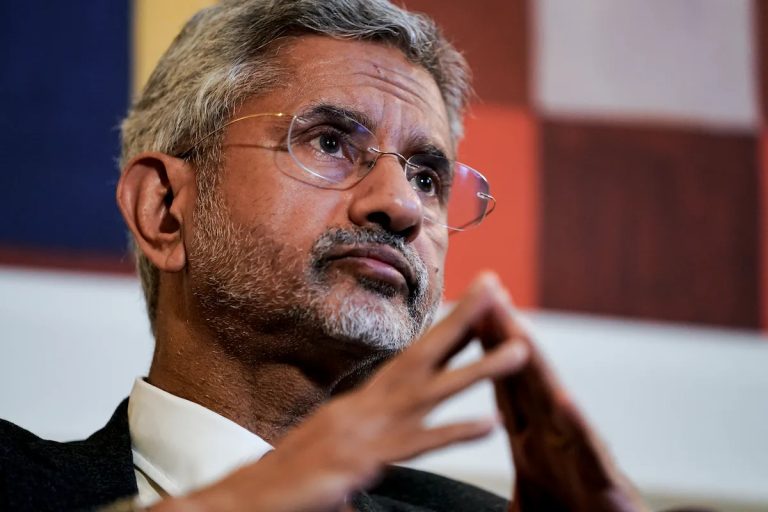
When Indian External Affairs Minister S. Jaishankar told an all-party meeting on March 25 that India is “not a dalaal nation” — using a Hindi term meaning broker but carrying the derogatory connotation of pimp — he was not just dismissing Pakistan’s role as a mediator between Washington and Tehran. He was revealing something far more damaging: the depth of New Delhi’s frustration at finding itself sidelined in the biggest geopolitical crisis of the decade. Pakistan has emerged as a critical back-channel intermediary in the conflict — a role that highlights India’s absence from diplomatic channels it has long sought to shape. One month into a war that is draining India’s cooking gas, cratering its rupee, and exposing the hollowness of its “net security provider” claims in the Indian Ocean, Jaishankar’s outburst looked less like confidence and more like a confession.
The IRIS Dena Embarrassment
No single episode has captured India’s predicament more starkly than the sinking of the Iranian frigate IRIS Dena. The vessel was torpedoed and sunk by the USS Charlotte in the Indian Ocean while returning home after participating in India’s MILAN 2026 naval exercise, approximately 19 nautical miles off the coast of Galle, Sri Lanka. The vessel had participated in the International Fleet Review 2026, and crew members had embarked on a cultural visit of India, visiting the Taj Mahal and participating in a city parade. Days later, 87 of those same sailors were dead.
A former Indian Navy officer and director of the Society for Policy Studies called the sinking a “strategic embarrassment” for India, warning that it weakens New Delhi’s credibility in the Indian Ocean while its moral standing “takes a beating.” India’s former chief of naval staff, Admiral Arun Prakash, was more blunt. He called it “a bit of treachery of the US” and said that targeting a guest of India that posed no immediate threat “leaves a very bad taste in my mouth.” Yet New Delhi’s official response was near-silence. It took the Indian Navy more than 24 hours to issue any formal statement on the attack. Foreign Minister Jaishankar eventually said only that the ships had been caught “on the wrong side of events” — a phrase that stunned analysts for its cold detachment.
The episode demolished India’s carefully constructed image as the Indian Ocean’s security guarantor. An analyst at the Observer Research Foundation said it “demonstrates that we are not really the sentinels of the Indian Ocean — it shows the gap between India’s rhetorical position and the reality.”
Kitchens on the Front Line
While India’s diplomatic credibility was sinking in the Indian Ocean, the war’s economic consequences were arriving in every household. The shutdown of the Strait of Hormuz has cut off roughly 90% of India’s LPG imports, exposing the country’s heavy reliance on Gulf supply. Commercial allocations were slashed by up to 80%, forcing closures or shifts to firewood and coal across major metros. In Chennai alone, nearly 10,000 restaurants faced shutdown. The shortage triggered a surge in demand for induction cooktops, with sales jumping 30-fold on Amazon.
Protests erupted across India over the shortage of LPG, with prices for a 14.2 kg cylinder reaching ₹4,000 on the black market. The rupee slumped to a record low of 94.79 per dollar, and India’s stock market fell for a fifth consecutive week. HSBC estimates a potential 25% shortfall in natural gas supply, which could shave roughly 25 basis points from GDP growth if the crunch lasts a quarter.
The political sensitivity is acute. LPG supply is closely linked to Prime Minister Modi’s flagship social welfare scheme that has provided 103 million subsidized gas connections. With five Indian states heading to polls in the first half of 2026, cooking gas prices are electoral dynamite.
The Mediation Gap
India’s absence from the peace table is all the more striking given its credentials. The country imports 88% of its crude oil, roughly half of which moves through the Strait of Hormuz, while about 9 million Indian nationals work across the Gulf, sending home more than $50 billion a year. No country outside the Middle East has more at stake. Yet while Pakistan’s army chief spoke directly with Trump, and Islamabad hosted foreign ministers from Turkey, Saudi Arabia, and Egypt for multilateral talks, New Delhi focused on what critics call “evacuation diplomacy” — securing its diaspora and energy supplies rather than addressing the root crisis.
The awkwardness of India’s response reflects a deeper strategic dilemma: by moving too close to one camp in a deeply polarized region, India has limited its room for maneuver at precisely the moment when flexibility is most needed. Modi’s visit to Israel on February 26 — just two days before the strikes began — placed India in an immediate bind. “Despite India’s claims of neutrality, the optics of Modi’s visit to Israel at a moment of looming conflict effectively placed it in the Israel camp,” says Praveen Donthi of the International Crisis Group.
Opposition leader Rahul Gandhi has hammered the government relentlessly. “The structure of our foreign policy has been demolished,” he told reporters. “Prime Minister Modi cannot fix it. He will only do what America and Israel will tell him to do.” Bloomberg reported that India is facing mounting pressure as BRICS chair to steer the bloc toward taking a firmer stand on the Iran conflict, but almost a month after the strikes, the group has failed to take a position on the war.
The Jaishankar “dalaal” episode crystallized everything wrong with New Delhi’s approach. Rather than articulating a vision for peace, India’s top diplomat spent his energy mocking the country that was actually doing the mediating. As one commentator noted regarding BRICS: “Every other founding member — Russia, China and Brazil — quickly denounced the war. India alone seemed to be condoning it with silence.” For a nation that calls itself Vishwaguru — teacher to the world — the silence is the lesson.
Original analysis inspired by Marriyam Siddique from Asia Times. Additional research and verification conducted through multiple sources.