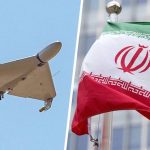
As the Iran war enters its second month with no ceasefire in sight, Turkey’s top diplomat has mounted one of Ankara’s sharpest public critiques of the conflict yet. Foreign Minister Hakan Fidan declared on Saturday that “unlawful strikes” against Iran are driving the Middle East toward the brink of a wider war, fueled by what he called “relentless Israeli escalation.” His remarks came at a critical juncture: foreign ministers from Pakistan, Saudi Arabia, Turkey, and Egypt are meeting in Islamabad this weekend in an attempt to produce a plan to de-escalate the conflict, even as new fronts threaten to open across the region.
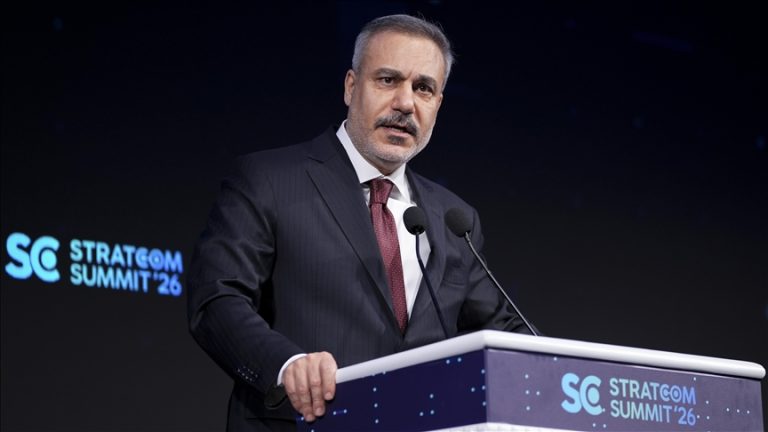
Fidan’s address, delivered at the STRATCOM 2026 summit in Istanbul, placed the blame for the current crisis squarely on Israel’s leadership. He described the conflict as “a war engineered for Netanyahu’s political survival,” warning that its burden falls on the rest of the world. The summit itself — attended by leaders from 38 countries tackling disinformation, AI-driven narratives, and geopolitical crises — provided Fidan a global stage to frame Turkey’s position as both a vocal critic and an aspiring peace broker.
Diplomacy Under Fire
Turkey’s diplomatic offensive has moved at speed. Hours after his Istanbul speech, Fidan flew to Islamabad, where he met Pakistani counterpart Ishaq Dar on Sunday, with Egyptian and Saudi foreign ministers expected to join for two days of talks aimed at ending the conflict. Pakistan, Egypt, and Turkey have been serving as messengers between Washington and Tehran, though Iran has so far denied holding direct talks with the United States. The groundwork for this push was laid at an emergency meeting of Arab and Islamic foreign ministers in Riyadh last week, where Pakistan, Saudi Arabia, Egypt, and Turkey held a separate coordination meeting — the first in that format.
The urgency is real. Houthi militants in Yemen launched their first missile toward Israel since the war began on Saturday, and while it was intercepted, the attack opens another front in a conflict now entering uncharted territory. The war is spreading to more parts of the Middle East, with pro-Iran Iraqi groups targeting U.S. interests and Israel intensifying its ground invasion of southern Lebanon.
A Region Fracturing
The conflict’s spillover has already hit Turkey directly. On March 4, NATO air and missile defense installations intercepted a ballistic missile bound for Turkey, with debris falling in Dörtyol, Hatay Province. A second Iranian missile was intercepted over Gaziantep on March 9, creating serious complications for Ankara. While Tehran denied targeting Turkey, President Erdoğan issued a firm warning to Iran to stop its “wrong and provocative steps.”
The economic toll adds another layer of pressure. For every $10 a barrel of oil rises, Turkey’s current account deficit grows by an estimated $3 to $5.1 billion — and for a country already dealing with inflation above 30 percent, the strain is potentially catastrophic. Analysts at the Atlantic Council note that the Iran war poses greater risks to Ankara than any recent regional conflict, particularly because of the prospect that Kurdish armed groups could be empowered along Turkey’s borders — a scenario that could derail fragile PKK disarmament talks.
In Lebanon, the destruction is staggering. More than 1.2 million people have been forced from their homes since early March, while at least 1,116 people have been killed and 3,229 wounded. Fears over Israel’s vow to model its invasion of southern Lebanon after its operations in Gaza are growing as satellite imagery reveals an expanding network of military bases and destroyed bridges across the south.
Fidan framed the stakes in existential terms during his STRATCOM speech. He told delegates the world was living “through a systemic rupture” — a moment in which the international system has lost its moral compass, coherence, and legitimacy. He singled out the weaponization of narratives, particularly around Israel’s actions in Gaza, as evidence that the information battlefield has become as dangerous as the physical one. President Erdoğan’s long-standing calls for reform of global institutions, Fidan argued, were not political rhetoric but a diagnosis of systemic failure — one that events have now confirmed.
Whether Turkey’s frantic diplomacy in Islamabad can produce concrete results remains an open question. Tehran has rejected Washington’s 15-point plan and conditioned any ceasefire on ending the Lebanon war as well. But with Houthi missiles flying, Gulf infrastructure under threat, and the global economy reeling from energy disruption, the cost of inaction grows by the day. Fidan’s message in Istanbul was clear: the window for diplomacy is closing fast, and the alternative is a conflict that nobody can control.
Original analysis inspired by Fatma Zehra Solmaz from Anadolu Agency. Additional research and verification conducted through multiple sources.