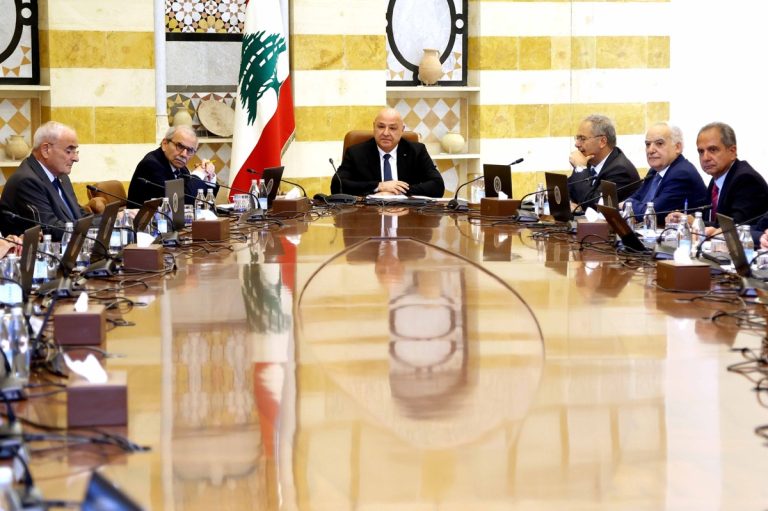
The signing ceremony in Washington looked like a diplomatic milestone. Secretary of State Marco Rubio stood flanked by Lebanese and Israeli ambassadors, describing the June 26 agreement as “the beginning of the beginning.” Back in Beirut, the Lebanese government invoked sovereignty, with President Joseph Aoun calling it “a first step” toward restoring Lebanon’s territorial control. But read the actual text, and a different picture takes shape — one far more troubling than the ceremonial handshakes suggested.
The framework explicitly declares both sides’ intent to “conclusively end the conflict” and “formally conclude any state of war between them.” That is not technical ceasefire language. That is the grammar of normalisation. For a Lebanese state that has long resisted any political recognition of Israel, this phrasing marks a threshold — not just a tactical pause. Critics say the framework relies too heavily on the US — Israel’s main military and diplomatic backer and a signatory to the deal — to enforce it.
What the Text Actually Commits Lebanon To
The agreement describes a “reciprocal and sequenced process” that would see Israeli forces gradually withdraw from the south as the Lebanese army disarms non-state groups and destroys their infrastructure. On paper, that sounds balanced. In practice, the sequencing matters enormously. The agreement does not force Israel to withdraw from the large area of southern Lebanon that it continues to occupy, and Israel also appears to be signalling that it will continue its attacks if it deems them necessary.
Netanyahu himself declared that Israel “remains in the security zone in southern Lebanon” and “will maintain it as long as Hezbollah has not been disarmed.” That is not a commitment to withdraw. That is a condition for withdrawal — one that Israel alone gets to evaluate. Meanwhile, Lebanon commits to “cease all hostile or adverse actions in international political or legal fora” — surrendering one of the few pressure tools a weaker party typically relies on in asymmetric negotiations.
Lebanon is also required to “rebuild the state’s monopoly on the use of force” and achieve “the complete and verified disarmament of all non-state armed groups.” That is a legitimate national goal. But demanding it as a precondition for Israeli withdrawal flips the logic entirely: Lebanon must first deliver domestically what it has been unable to deliver for decades, and only then does the occupying power consider leaving.
A State That Cannot Enforce Its Own Decisions
The Lebanese government’s recent track record makes this arrangement even harder to defend. More than 4,000 people in Lebanon have been killed in Israeli strikes since March. Despite that toll, the state has struggled to assert itself in basic ways. Earlier this year, Beirut issued an expulsion order to Iran’s ambassador — and Tehran simply ignored it. The government also announced a ban on Hezbollah’s military and security activities. That decision remains effectively unenforced.
Hezbollah’s chief Naim Qassem declared the agreement “null and void,” calling it “humiliating, shameful, and a surrender of sovereignty,” while Hezbollah MP Hassan Fadlallah warned that any attempt by the Lebanese army to enforce the agreement would lead to “civil war.” Those are not idle threats from a weakened group. Hezbollah remains armed, entrenched and politically represented in parliament. Some analysts believe a large escalation is not imminent, but the Lebanese army itself is “unwilling to use force against Hezbollah.”
This is the agreement’s structural flaw. It ties a concrete Israeli obligation — withdrawal — to a Lebanese undertaking that the state openly acknowledges it cannot fully deliver. The result is not a peace process. It is a mechanism that keeps Israeli forces in southern Lebanon indefinitely, waiting for conditions that may never fully materialise.
The Cost of Negotiating Alone
Lebanon entered five rounds of talks without meaningful Arab backing and under the shadow of a broader US-Iran deal. On June 17, the US and Iran signed a memorandum of understanding to halt the war against Iran, which required “the immediate and permanent termination of military operations on all fronts, including in Lebanon.” Beirut was racing that clock, trying to demonstrate sovereign agency before Tehran could claim to have spoken on Lebanon’s behalf. That was a legitimate instinct. But urgency rarely produces better terms at the negotiating table.
As one professor of international relations at Saint Joseph University of Beirut put it, “the United States is unlikely to act as a neutral mediator and will almost certainly align with Israeli positions whenever disputes arise.” That assessment is hard to dispute when the US is both mediator and [suspicious link removed]. A framework that lacks a timetable, defers withdrawal and strips Lebanon of legal recourse is not the worst conceivable deal. But it is very close. And the Lebanese people, who have endured the occupation’s daily violence, deserved better than a signed photograph dressed up as liberation.
Original analysis inspired by Maen al-Bayyari from The New Arab. Additional research and verification conducted through multiple sources.