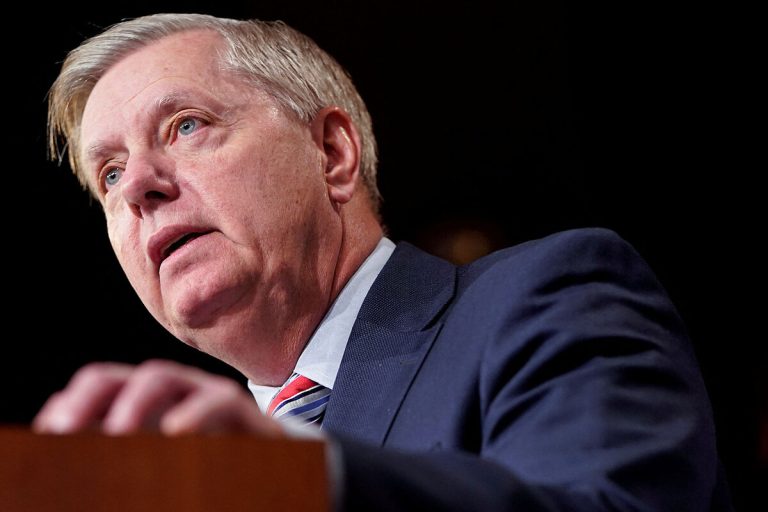
Perhaps the most significant casualty of Graham’s death is the coherence of American foreign policy. The senator championed robust military aid for Ukraine and unwavering diplomatic backing for Israel, frequently leveraging his personal relationship with Donald Trump to prevent isolationist impulses from dominating the White House. Just days before his death, he returned from Kyiv, underscoring his commitment to European security. His removal from the equation leaves a dangerous void. No other Republican senator seems capable of replicating his unique access to the Oval Office or his ability to steer the president’s thinking on complex geopolitical matters. This vacuum is already intensifying a behind-the-scenes rivalry between Secretary of State Marco Rubio and Vice President JD Vance. Vance, who aligns closely with the America First faction, contrasts sharply with Rubio’s internationalist leanings. Graham previously served as a crucial ally for Rubio, helping to block isolationist maneuvers within the cabinet.
The Struggle for Senate Control
The mathematical reality of the Senate majority compounds this institutional grief. The GOP’s 53-47 advantage is largely illusory. Senator Mitch McConnell has been hospitalized for over a month, and his return timeline remains uncertain. Two incumbent Republicans, John Cornyn and Bill Cassidy, recently lost their primaries to Trump-backed challengers, leaving them as lame ducks with little incentive to support the administration’s demands. Furthermore, Thom Tillis of North Carolina has openly clashed with the president and is retiring, making his vote entirely unpredictable. The South Carolina governor appointed Graham’s sister to temporarily fill the vacant seat, but a special primary is approaching, guaranteeing political distractions. In this severely weakened state, the administration must also secure the confirmation of Todd Blanche as the new attorney general, a task that previously relied heavily on Graham’s ability to whip votes and navigate procedural hurdles.
The broader question is whether anyone can step into the role of the ultimate Senate dealmaker. Graham combined rigid hawkishness with remarkable tactical flexibility, routinely sitting across from ideological opponents like Senator Richard Blumenthal to draft bipartisan sanctions packages. His interpersonal skills were unmatched, allowing him to survive fierce public breakups with Trump only to reconcile and resume his role as the president’s chief congressional ally. As Washington navigates heightened global conflicts and domestic economic pressures, the absence of a seasoned legislative diplomat will be felt immediately. The coming weeks will test whether the Republican conference can govern effectively without its most pragmatic survivor.
Original analysis inspired by Linda Feldmann from The Christian Science Monitor. Additional research and verification conducted through multiple sources.