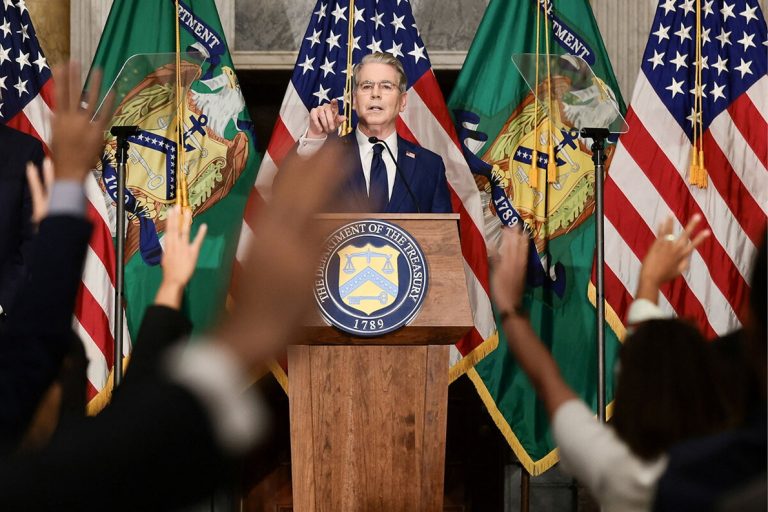
As the military stalemate with Tehran approaches its sixth month, the United States is deploying severe financial weapons to break the deadlock. Treasury Secretary Scott Bessent recently announced Operation Economic Outcast to systematically dismantle global smuggling networks. President Donald Trump described this aggressive escalation as an economic assault designed to isolate the regime entirely. The administration hopes that maximizing financial pain will force a decisive strategic shift.
The Treasury Department intends to sever international access to the American dollar for any institution engaging in prohibited commerce. Bessent detailed plans targeting critical sectors including digital assets, aviation, shipping, gold, and technology. Officials are demanding that foreign partners immediately cease transactions with Iranian entities or face immediate retaliatory measures. This strict ultimatum includes a brief grace period for compliance before the imposition of secondary penalties.
Expanding the Financial Blockade
American authorities have mapped extensive illicit channels used to bypass existing restrictions. The government officially blacklisted nearly sixty new vessels and corporate entities involved in smuggling crude petroleum. Planners recognize that previous embargoes left narrow gaps that allowed authoritarian leaders to sustain their domestic authority. The current strategy aims to eliminate those remaining gray areas and enforce absolute compliance across global markets.
Experts note that successive administrations have heavily penalized almost every aspect of the Iranian economy over three decades. Dissident analysts argue that authoritarian governments easily transfer such financial burdens directly onto their civilian populations. While ordinary citizens suffer from skyrocketing inflation, leaders often remain insulated from the immediate consequences. Skeptics point out that earlier attempts to force a total collapse through financial strangulation rarely succeeded without imposing unrealistic demands.
Geopolitical Strains and Global Buyers
The most significant challenge to this new strategy involves major international purchasers of sanctioned crude. Beijing remains the largest consumer of these discounted energy exports and typically ignores western financial dictates. Chinese officials immediately ordered their domestic corporations to disregard the latest American threats regarding energy security. Confronting these massive Asian financial institutions directly could trigger massive economic disruptions ahead of important diplomatic summits.
Diplomatic veterans suggest that these vulnerabilities could still present a unique opportunity if domestic unrest inside Iran accelerates. A heavily strained military combined with severe civilian poverty might eventually crack the resolve of hardline commanders. However, the Iranian foreign ministry confidently dismissed the announcement and promised to resist any new blockades. The true test relies entirely on whether Washington will actually punish its largest global trading partners to enforce these unprecedented decrees.
Original analysis inspired by Caitlin Babcock and Victoria Hoffmann from The Christian Science Monitor. Additional research and verification conducted through multiple sources.