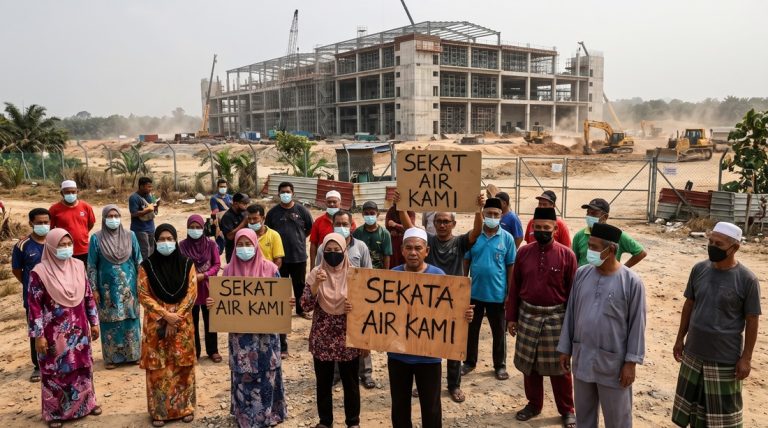
Surging global demand for artificial intelligence computing transformed Southeast Asia into one of the fastest growing digital infrastructure markets in the world over the past three years. Following a temporary moratorium in Singapore between 2019 and 2022, global technology giants redirected tens of billions of dollars into neighboring Malaysia, Thailand, and Indonesia, which now account for roughly half of all data center capacity under construction across the Asia Pacific region. Yet that rapid expansion has collided with severe ecological and utility limits, prompting regional governments to freeze dozens of major projects as local communities protest water depletion and power grid strain.
Grid Bottlenecks and Depleted Reservoirs
In September 2026, authorities in Thailand paused construction on forty nine data center facilities and suspended approval decisions on one hundred seventeen additional proposals worth billions of dollars due to inadequate regulatory and environmental monitoring. Neighboring Indonesia took similar action in West Java, where provincial officials halted a major facility over missing environmental assessments. While investments from companies like Microsoft, TikTok, and AirTrunk promised modernization, researchers at Singapore Lee Kuan Yew School of Public Policy note that hyperscale server farms generate relatively few permanent jobs compared to the vast land, electricity, and water resources they consume.
Energy analysts at Wood Mackenzie project that data centers in the southern Malaysian state of Johor already consume twenty four percent of the state electricity supply and could devour forty percent by 2035. In Thailand, energy officials warned that powering server farms requires expensive imported natural gas and proposed higher electricity tariffs for digital operators. Water consumption poses an even more acute threat in tropical and drought prone regions. Operational facilities in Johor require roughly six hundred seventy five million cubic meters of water daily, while residents in eastern Thailand Chonburi province warn that industrial estates are draining the shallow Khlong Luang Reservoir.
Community Backlash and Stricter Rules
Public frustration spilled into the streets of Johor in February when residents picketed a construction site operated by China ZData Technologies over dust pollution and municipal water risks. Although operators like Bridge Data Centres and AirTrunk have begun investing in wastewater recycling plants, corporate sustainability disclosures reveal persistent gaps. Published energy efficiency metrics show that Microsoft Asia Pacific facilities remain its least energy efficient globally.
Confronted with resource bottlenecks, regional policymakers are tightening oversight. Johor recently banned new Tier 1 and Tier 2 facilities that consume up to fifty million liters of water per day, while Malaysia and Thailand established national review frameworks tying future permits to strict water security, carbon emissions, and power guarantees. Without pricing the true social and environmental cost of computing infrastructure, the artificial intelligence boom risks exhausting vital public utilities across developing Asia.
Original analysis inspired by Arundhati Hazra from The Guardian. Additional research and verification conducted through multiple sources.