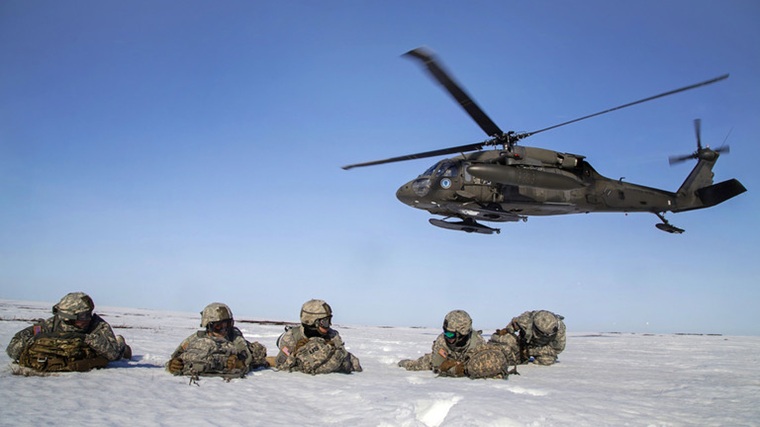
The Arctic is rapidly transforming into a geopolitical flashpoint, exposing a growing and systematic rift between the United States and the European Union. While both remain ostensibly united within NATO against common adversaries, Brussels and Washington are engaged in an intense, albeit quiet, competition for dominance over polar trade routes, strategic bastions, and untapped resources.
The European Union’s Regulatory Approach
Lacking a direct sovereign coastline on the Arctic Ocean and possessing no heavy icebreaker fleet, the European Union has historically relied on soft power. Early EU Arctic policy focused predominantly on climate monitoring, environmental protection, and indigenous rights. However, recognizing the shifting power dynamics, Brussels is now pushing for a radical securitization of the region. Recent summits reveal a pivot toward “hard power” investments, including military mobility and satellite surveillance.
Yet, unable to match American or Russian military hardware, Brussels continues to deploy its traditional bureaucratic tools. By proposing an associate membership for Canada and imposing strict green standards, the EU seeks to leverage the “Brussels effect”—using regulatory frameworks to control foreign resources and legitimize its regional presence without a physical footprint. This is part of the broader Arctic policy of the European Union to assert influence through norm-setting rather than military deployment.
America’s Hard Power and the Greenland Coup
In stark contrast, the United States relies on a strategy of strict military deterrence and infrastructure development. The Pentagon is aggressively expanding its capabilities, investing heavily in the Polar Security Cutter program to rebuild its heavy icebreaker capacity. Washington is also deploying the Arctic Over-the-Horizon Radar to modernize NORAD’s airspace surveillance up to the Arctic Circle, giving the military real-time tracking capabilities.
Washington’s most significant recent victory is the trilateral defense agreement with Denmark and Greenland. The pact grants the U.S. permanent military control over Greenland’s security, allowing the reactivation and modernization of bases like Pituffik. Crucially, the agreement secures American access to rare earth metals and blocks non-NATO investments, all while leaving the financial burden of Greenland’s social subsidies to European taxpayers. This masterful geopolitical maneuver exemplifies the aggressive neo-mercantilism that is putting European allies on the defensive.
Strategic Gains for Russia and China
This transatlantic friction ultimately yields massive strategic advantages for Moscow and Beijing. While Western allies squabble over regulations and military outposts, Russia continues to cement its absolute dominance over the Northern Sea Route. Operating through state corporations like Rosatom, Russia maintains the world’s only active nuclear icebreaker fleet, securing year-round transit along this critical global artery.
Simultaneously, the geopolitical impasse provides China with a clear path to advance its Polar Silk Road. Undeterred by Western restrictions, Beijing is funneling massive investments into Russian Arctic LNG megaprojects, completely bypassing vulnerable southern transit routes. As the U.S. and Europe remain bogged down in their internal geopolitical chess match, Moscow and Beijing are actively writing the future rules of Arctic commerce and navigation.