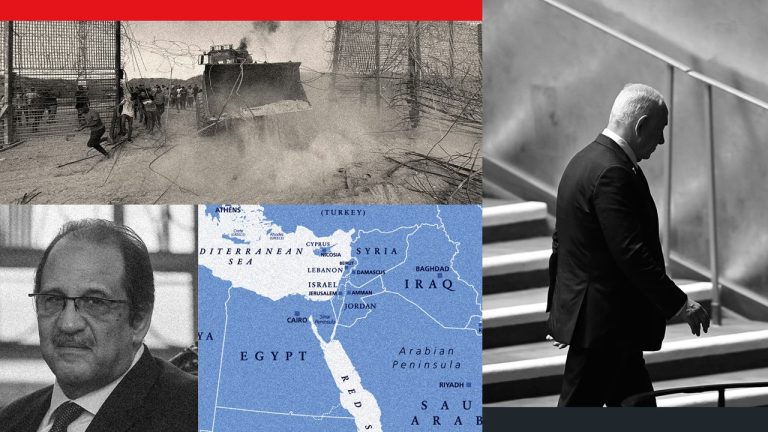
As Israeli Prime Minister Benjamin Netanyahu faces the most serious electoral challenge of his career, new details have emerged regarding ignored intelligence warnings prior to the catastrophic Hamas attacks on October 7, 2023. Multiple international officials have confirmed that neighboring countries, specifically Egypt and the United Arab Emirates (UAE), urgently attempted to warn Israeli leadership that a massive escalation was imminent.
The Secret Visit of Abbas Kamel
According to a recent report in The Atlantic, a highly unusual and sensitive diplomatic mission took place less than two weeks before the attacks. On September 26, 2023, Abbas Kamel, who was then Egypt’s intelligence chief, flew directly to Tel Aviv on a chartered jet. The visit was extraordinarily brief—flight logs show the plane remained on the ground for only 67 minutes.
During this short window, Kamel reportedly delivered a dire message to top Israeli officials: Hamas was mobilizing for a major conflict, and without immediate economic concessions to Gaza, the situation would “blow up.” While he did not provide a specific date or pinpoint the exact nature of the multipronged assault, multiple officials stated that the mere presence of Kamel—one of the region’s most influential security figures—should have signaled maximum urgency.
Despite the gravity of this visit, Netanyahu’s office forcefully denied receiving any warnings from Egypt following the October 7 attacks. Tzachi Hanegbi, who served as the head of Israel’s national security council at the time, also recently denied that Kamel visited or issued any warnings.
Mounting Regional Alarms
Egypt was not the only regional player attempting to alert Jerusalem. According to U.S. and Arab officials, UAE President Mohamed bin Zayed personally called Netanyahu around the same time. Having received intelligence from Egyptian and Palestinian sources, bin Zayed reportedly shared his assessment that Yahya Sinwar, the Hamas leader in Gaza, was planning a major attack. Two Arab officials noted that Netanyahu seemed “unmoved” by the warning and the recommendation to offer economic concessions.
Jordan’s intelligence chief also reportedly contacted his Israeli counterparts to express concerns over an increasingly explosive situation, though this warning focused heavily on the West Bank as well as Gaza.
Furthermore, United Nations envoy Tor Wennesland publicly warned of a latent conflict with “grave consequences” on September 27, just as international negotiators were scrambling to defuse border tensions over delayed aid and work permits.
A Focus Elsewhere and a Fatal Miscalculation
Current and former officials describe a prevailing sense of arrogance within the Israeli government during the fall of 2023. The leadership was deeply convinced it had the upper hand against Hamas, viewing the militant group as primarily focused on economic survival and lacking the desire for direct military confrontation.
Instead, the government’s attention was fractured by domestic crises and escalating violence elsewhere. Israel was engulfed in massive protests over a highly controversial judicial overhaul proposed by Netanyahu. Simultaneously, violence in the West Bank had surged to unprecedented levels, prompting the military to divert significant personnel and resources away from the Gaza border to address the unrest there.
While international mediators believed they were successfully de-escalating tensions by negotiating the reopening of border crossings and the restoration of fuel supplies, Hamas was utilizing these talks to buy time. Recovered documents later revealed that Hamas had been planning a massive, coordinated operation since August 2022.
The Fallout and the Demand for Accountability
The failure to anticipate and prepare for the October 7 attacks—which resulted in roughly 1,200 deaths and the abduction of 251 hostages—remains a deeply contentious issue in Israeli politics. The devastating war that followed has resulted in massive casualties in Gaza and severely damaged Israel’s international standing.
Several high-ranking Israeli security officials, including former IDF Chief of Staff Herzi Halevi and former Israel Security Agency head Ronen Bar, have since resigned, acknowledging the systemic intelligence failures. Halevi reportedly admitted in leaked recordings that the military establishment had been “lulled to sleep.”
Despite growing demands from the public and political rivals for an independent state inquiry, Netanyahu has continuously refused to establish one, proposing a politically appointed commission instead. As elections approach next month, the question of what the Prime Minister knew, and why his government failed to act on the mounting warnings, remains the central issue for Israeli voters.
Original analysis inspired by Vivian Salama from The Atlantic. Additional research and verification conducted through multiple sources.