Global power is increasingly measured by more than armies, territory, or economic size. Control over a shipping route, mineral supply, semiconductor technology, communications network, or satellite service can give governments and companies leverage far beyond their conventional strength. The critical issue is not simply who controls a scarce resource. It is how difficult that resource is to replace and how few people can decide whether others retain access to it.
Ukraine’s dependence on Starlink demonstrates the political risk created when essential infrastructure rests with a private provider. A Reuters investigation found that Elon Musk ordered SpaceX to disable Starlink coverage in parts of Russian occupied territory during Ukraine’s 2022 counteroffensive because he feared escalation with Moscow. SpaceX disputed elements of that reporting, but the episode demonstrated how commercial control over communications infrastructure can influence military operations. When governments organize critical activities around a single provider, a corporate decision can acquire geopolitical weight.
Geography can impose costs on everyone
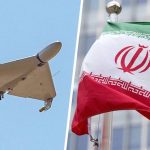
The Strait of Hormuz represents a more traditional chokepoint. Before the current Iran conflict, roughly one fifth of global oil and liquefied natural gas flows passed through the waterway. Shipping remains heavily restricted, with tracking data showing only nine commodity vessels crossing on both Tuesday and Wednesday this week, far below normal traffic.
Iran gains leverage from its ability to disrupt the route, but using that leverage also damages Iranian trade and raises costs for countries that are not involved in the confrontation. Oil prices rose above 93 dollars a barrel as renewed tensions increased fears of prolonged disruption. This illustrates the paradox of geographic chokepoints: the greater their importance, the more costly they are to weaponize because allies, neutral states, consumers, and the controlling country itself can all suffer.
Technology creates a different calculation because dependence can sometimes be engineered away. China has used its dominant role in critical minerals to exert economic pressure, particularly against Japan. Recent customs data revealed that China had shipped no dysprosium oxide to Japan for nine months and no terbium oxide for eight months amid a wider diplomatic dispute. Both materials are essential for high performance magnets used in advanced manufacturing and defense industries.
But restrictions also create incentives to escape dependence. Japan is searching for alternative suppliers, recycling technologies, and domestic production precisely because access to Chinese materials has become politically uncertain. A chokepoint therefore contains the seeds of its own erosion. The more frequently a supplier uses dependence as leverage, the stronger the customer’s incentive to build alternatives.
Concentrated decision making creates another risk
The ZTE dispute showed how technological access can also become an instrument of state power. The US Commerce Department effectively cut the Chinese telecommunications company off from American suppliers in 2018, threatening its survival. Washington later lifted the restriction after ZTE accepted a settlement involving 1.4 billion dollars in penalties and unusually strict government oversight.
Satellite communications could become an even more consequential arena. Starlink has already surpassed 10,000 operational satellites, while China is developing the Guowang constellation and Amazon is expanding its Leo network. The Space Foundation reports that Amazon had deployed more than 300 satellites by mid 2026 while China’s Guowang network had reached 129 spacecraft. These alternatives remain far smaller than Starlink, but their growth reflects a strategic desire to prevent one network from becoming indispensable.
The central lesson is that governments should map control as carefully as they map dependence. Knowing that an economy relies on a mineral, shipping lane, cloud provider, payment network, or satellite constellation is only the first step. Policymakers also need to know who can restrict access, what legal or political threshold must be crossed, and how quickly an alternative can be created.
The most powerful chokepoint may therefore not be the rarest mineral or narrowest waterway. It may be the system where millions of people depend on continued access but only a handful of decision makers can withdraw it. In an increasingly fragmented world economy, resilience will depend on reducing not only concentrated supply, but concentrated authority.
Original analysis inspired by Robin Hu from South China Morning Post. Additional research and verification conducted through multiple sources.