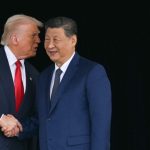
Joseph Nye died in May 2025 at the age of 88. The Harvard professor who introduced the concept of soft power to international relations theory in a 1990 Foreign Policy essay had spent the final years of his life watching the idea he built become a case study in reversal. Just a week before his death, he told CNN that he feared Trump “doesn’t understand soft power” — that by canceling USAID, silencing the Voice of America, and abandoning multilateral diplomacy, Washington was disarming itself of one of its most effective tools. He was right, and the data since has confirmed it in ways that go beyond any single political argument.
The United States recorded the steepest soft power decline among all 193 nation brands surveyed in the Global Soft Power Index 2026, with its score falling 4.6 points to 74.9 out of 100 — less than 1.5 points ahead of China’s 73.5. That margin is historically narrow. For a country that once treated global admiration as a structural fact of life, it amounts to a warning light.
Trump Exposed a Problem He Did Not Create
The decline did not begin in January 2025. Sanctions, military interventionism, and the gap between stated values and actual policy had been eroding American credibility for years before Trump returned to office. What changed is that his administration stopped pretending the gap did not exist. Values-based messaging was replaced with explicit transactionalism: tariffs, territorial threats against allies, frozen aid, and a public diplomacy apparatus being systematically dismantled rather than redirected.
The US is experiencing a significant erosion of soft power across all metrics except Familiarity, recording the sharpest decline of all 193 nations in the index. Perceptions of America’s Reputation fell 11 ranks to 26th place, with the steepest drops in the People and Values pillar, down 48 positions. That last figure matters most. Familiarity is passive — people know America exists. Values are active — people decide whether they want to be associated with what it represents. The US is still visible everywhere. It is admired in fewer places than it used to be.
Recent polling data reveals a profound shift in global perceptions, with the 2025 Democracy Perception Index surveying over 110,000 respondents across 100 countries finding that 55% of surveyed states now hold negative views of the United States. A year before, the US enjoyed a net favorability of plus 20. The reversal is not gradual. It is sharp.
The Three Pillars and What Happened to Them
Analysts generally identify three foundations of American soft power: cultural reach, political values, and the perceived legitimacy of US foreign policy. All three are under pressure, but they are breaking at different rates.
American culture still travels — Hollywood, streaming platforms, and consumer brands retain enormous global reach. But cultural dominance and cultural attraction are not the same thing. The European Council on Foreign Relations and the Oxford “Europe in a Changing World” project headlined the results of an extensive poll conducted in late 2025 as “How Trump Is Making China Great Again,” finding that Trump has radically alienated traditional American allies and convinced leading middle powers around the world — Brazil, South Africa, India, Turkey — that they are free to align with both China and the US. Cultural visibility no longer converts automatically into political alignment.
On values, the shift is generational as much as political. The loss of soft power will play out as a silent crisis — felt most in missed opportunities and relationships that never form. Without the currency of inspiration, leading requires incentives; where trust once opened doors, it now demands concessions. Universities, one of America’s most durable soft power assets, are struggling as international enrollment declines and visa restrictions signal unwelcome to the world’s best students.
Foreign policy legitimacy is where the damage runs deepest. Nye’s original theory held that a country’s policies had to be seen as legitimate by others to generate attraction. Washington’s posture toward Iran, its inconsistency on Ukraine, its tariff campaigns against allies, and its apparent indifference to whether any of this is perceived as fair have severed that connection. Pew Research data reveals that 56% of respondents in 17 middle-income Global South nations hold positive views of China, compared to just 24% in 18 high-income countries. The Global South has largely moved on from treating American leadership as the default option.
The Machinery That Survives the Theory
None of this means America’s global influence disappears. The institutional infrastructure of public diplomacy — foundations, media platforms, educational exchange programs, and think tank networks — exists independently of any single administration. It was built over decades and will not be dismantled in one term. But infrastructure without credibility is advertising without a product.
The deeper danger lies in the erosion of institutions that sustain American influence. Unlike policies, institutions cannot be quickly restored — once dismantled, they require years of resources and effort to rebuild, and even then, reviving international trust would be a formidable challenge. Nye understood this. His final warning was not that soft power was dead but that it was being traded away for short-term leverage without anyone calculating the long-term cost. That calculation is now overdue.
Original analysis inspired by Natalia Burlinova from RT (Russia Today) / Russian International Affairs Council. Additional research and verification conducted through multiple sources.