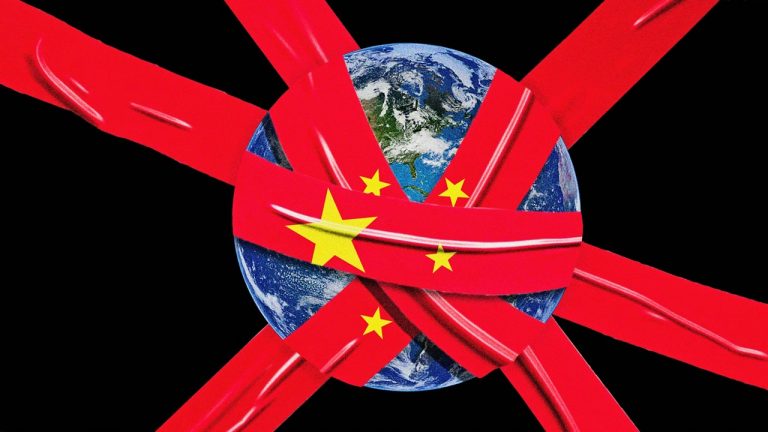
Beijing’s timing was deliberate. While the G7 was publishing its own prescriptions for global affairs, China released a 45-page white paper titled “More Just and Equitable Global Governance: China’s Principles, Proposals and Actions” — a sweeping document that consolidates years of Chinese diplomatic positioning into a single coherent vision. With Washington distracted by the Iran war aftermath and a Trump administration that has openly questioned the value of multilateral institutions, Beijing has moved to fill the rhetorical vacuum. The document signals something significant: China is no longer content to participate in the existing international order. It wants to architect the next one.
The white paper advances three interlocking arguments. The world should shift toward genuine multipolarity. The United Nations should remain the central institution of global governance — reformed, not replaced. And the Global South should have far greater say in setting international rules and priorities. None of these ideas are new. What is new is their consolidation into a single framework that integrates development, security, culture, technology, and institutional reform under one conceptual roof — and the moment China has chosen to publish it.
Filling the Space America Left Behind
The timing is not coincidental. The Trump administration’s approach to international institutions has been characterized by selective disengagement — withdrawing from multilateral frameworks, questioning alliance commitments, and treating global public goods as optional contributions rather than strategic investments. That pattern has created diplomatic space that China is consciously moving to occupy. The white paper repeatedly positions Beijing as a defender of the UN-centered order against what it calls unilateralism and power politics — a framing clearly aimed at Washington without naming it directly.
This is a notable rhetorical reversal. For most of the post-war period, rising powers that challenged the existing order did so by attacking its institutions. China is doing the opposite. It insists the UN remains indispensable, that existing multilateral frameworks should be preserved, and that the problem is not the architecture but the distribution of influence within it. In Beijing’s telling, the post-1945 order was built to serve a world in which a small group of advanced economies dominated global output and population. That world no longer exists, and the institutions should reflect the one that does — in which developing countries account for the majority of the global population and a rising share of economic power.
The appeal of this message runs beyond China’s closest partners. Many developing countries have spent decades arguing that the IMF, World Bank, and UN Security Council remain disproportionately shaped by the preferences of advanced economies. China’s emphasis on inclusiveness and representation resonates with those grievances in ways that purely bilateral relationships cannot replicate. The BRICS grouping has expanded to include Saudi Arabia, the UAE, Egypt, Ethiopia, and Iran — and while BRICS remains institutionally loose, it provides a platform through which China’s normative arguments reach governments that are genuinely frustrated with the existing order rather than merely performing solidarity.
The Gap Between Vision and Resources
Every previous architect of international order has paid a substantial price for that role. After 1945, the United States financed European reconstruction through the Marshall Plan, underwrote the Bretton Woods institutions, maintained forward military deployments across three continents, and guaranteed open sea lanes for global commerce. The costs were enormous. The returns — a global economic and security system oriented around American preferences — were commensurate.
China’s white paper is deliberately silent on equivalent commitments. It speaks at length about principles, institutional reform, and cooperation. It contains no major new financial pledges. This is not an oversight. It reflects a genuine tension between China’s global ambitions and its domestic economic constraints. Growth has slowed, a prolonged property sector crisis continues to weigh on the financial system, and Belt and Road lending — once the most visible expression of Chinese economic statecraft — has contracted sharply as Beijing absorbed losses and grew more selective. The era of government-directed big spending overseas is over, replaced by smaller, more targeted projects with clearer commercial rationale.
The result is a form of global leadership that Beijing has not yet fully defined even for itself. Chinese policymakers consistently insist that China does not seek hegemony and should not be expected to replicate the US model of open-ended security guarantees and financial transfers. That insistence may be genuine. But it also creates a structural problem: normative power without material backing tends to depreciate quickly, particularly when crises require tangible commitments and not just principled statements.
Normative Power Has Limits
What China is genuinely offering is a new political vocabulary for the international system — one in which multipolarity is legitimate, sovereignty is treated as paramount, and development experience from the Global South carries as much authority as Western liberal prescriptions. That vocabulary has real purchase in many capitals. It shapes how governments frame their choices, which institutions they privilege, and how they explain to domestic audiences why they are not simply following American or European preferences.
Whether it translates into a functioning alternative order depends on questions the white paper leaves open. Xi Jinping’s government has shown it can project normative influence at scale. It brokered the 2023 Saudi-Iran rapprochement, deepened economic ties across Africa and Southeast Asia, and built institutions like the Asian Infrastructure Investment Bank that have attracted membership from US allies. These are real achievements. But the gap between shaping the conversation and bearing the costs of the order you are proposing to lead remains wide — and the white paper does little to close it. China is telling the world what kind of order it wants. The harder question, which Beijing has not yet answered, is what it is prepared to spend to build it.
Original analysis inspired by Yu Jie from Chatham House. Additional research and verification conducted through multiple sources.