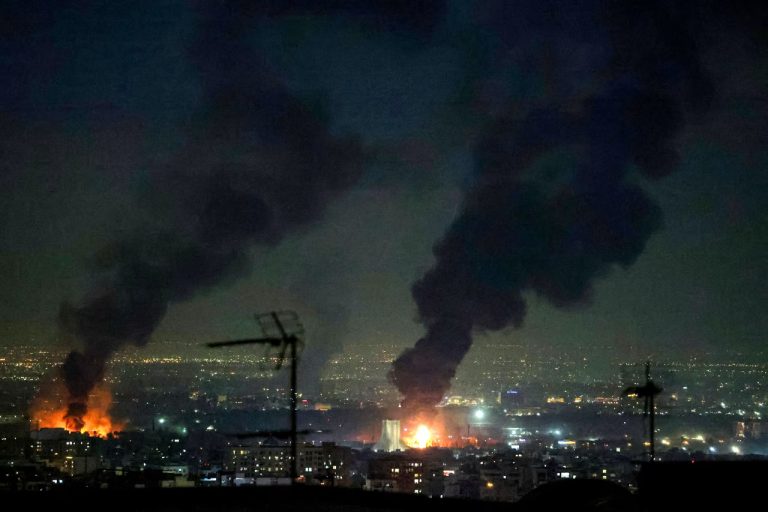
There is a version of this story in which the United States walked away from the Iran war with something it can call a win. Trump claimed the Iran deal was perhaps an unconditional surrender by Iran — a framing that says more about the political requirement to declare victory than about what the MoU actually delivers. The more honest account is simpler: the Trump administration gave various explanations for starting the war, including forestalling Iranian retaliation after an expected Israeli attack, destroying Iran’s missile capabilities, preventing Iran from building a nuclear weapon, seizing Iran’s oil and gas resources, or regime change — and it achieved none of them decisively. The ceasefire is not a triumph. But signing it was still the right call, and the war’s failure carries lessons that Washington will ignore at its peril.
The costs are not abstract. Acting Pentagon Comptroller Jules W. Hurst III testified on May 12 that “our operational cost estimate” of $29 billion does not include damage to US assets, equipment, or allied infrastructure — meaning the actual figure runs considerably higher. By some estimates, total economic damage to American households through higher fuel and food prices approached $132 billion. The danger of crossfire and threats from Iran in particular led to severe disruption of traffic through the Strait of Hormuz, one of the world’s most volatile oil chokepoints, leading to fuel shortages in parts of Asia and rippling effects across the global economy. Seven US service members were killed and at least eight aircraft were damaged or destroyed — losses absorbed for a war in which no core American territorial or existential interest was at stake.
America’s Suez Moment
The comparison that keeps surfacing — and keeps being dismissed — is to the 1956 Suez Crisis. Seventy years after the Suez Crisis humbled Britain and France, the world is witnessing a strikingly similar drama at another strategic maritime chokepoint: the Strait of Hormuz. In both cases, a Western power intervened militarily to secure control over a vital artery of global energy — only to face political and strategic humiliation that accelerated its relative decline. The parallel is not mechanical — the United States is not about to lose reserve currency status overnight, and its military remains incomparably larger than Britain’s was in 1956. But Suez ended Britain’s era of strategic primacy, but not its relevance. By leveraging legacy networks, niche capabilities, and flexible partnerships, London transformed imperial overstretch into a lighter, still influential global posture. That record suggests that after a “Suez moment,” the United States could likewise preserve the cooperative sinews that allies still find useful, but its role in global politics would nonetheless change.
The unilateral decision to attack during ongoing nuclear negotiations and the subsequent inability to achieve either clean regime change or a swift deal displays the textbook symptoms of neo-imperialist overstretch. Washington went in demanding Iran’s full capitulation. On March 6, President Trump had said that only Iran’s “unconditional surrender” would be acceptable and threatened to destroy energy infrastructure if a deal was not reached. The Iranians rejected the US proposal, with an anonymous official telling Press TV that “Iran will end the war when it decides to do so and when its own conditions are met.” That exchange captures the entire arc of the conflict: maximalist demands, Iranian defiance, and a settlement that looked nothing like the original US position.
Three Lessons Washington Should Not Waste
The first is the most obvious and the most resisted: the United States needs to reduce its military footprint in the Middle East, not expand it. The region has been a strategic money pit for a quarter century. The Iraq war cost the United States an estimated $1.8 trillion and left the country less stable than it found it. Afghanistan consumed two decades and trillions more, ending with the Taliban in Kabul within days of the US withdrawal. The Iran campaign has now added tens of billions more to a ledger with no commensurate return. Military overreach by major powers — Britain and France with Israel in 1956, and the US with Israel in 2026 — launched or supported operations expecting quick victories, only to face prolonged economic and diplomatic fallout. Bases that were once symbols of reach have become liabilities, exposed to drone and missile attacks that earlier strategic planning never anticipated.
The second lesson concerns the Israel relationship. The Trump administration gave various explanations for starting the war, but the operational trigger was effectively Israeli pressure. Netanyahu spent years overstating the imminence of Iranian nuclear capability and understating the risks of military confrontation. After the US and Iran announced their ceasefire in early April, there was disagreement among the parties on whether Lebanon was included. Just hours after the announcement, the IDF conducted a blitz across Lebanon that killed hundreds of people and wounded more than 1,000 others, straining the ceasefire. That pattern — Israel escalating in ways that directly undermined American diplomatic objectives — repeated itself throughout the conflict. A relationship that consistently pulls the United States into wars it does not need to fight is not an alliance; it is a liability that requires firmer management.
The third lesson is structural. Iranian attacks also targeted oil infrastructure in the region — including vessels in the Strait of Hormuz, through which 20 percent of the world’s oil passes — demonstrating that American domestic energy production offers no protection against global market shocks. Oil prices are set globally, not domestically. When the strait closes, American consumers pay more at the pump regardless of how many barrels are coming out of Texas or North Dakota. The strategic firewall against this vulnerability is energy diversification — shifting transportation and industry away from oil dependence — not drilling more of the same commodity that hostile states can hold hostage.
The new 2026 MOU deal is a 14-point framework that extends the ceasefire and sets the stage for talks on a permanent nuclear agreement. Iran commits not to acquire a nuclear weapon, just as it did in the JCPOA, but no enforcement mechanism is yet decided. The nuclear file remains open, the Lebanon question remains contested, and the 60-day window for a comprehensive agreement is ambitious to the point of being unrealistic. None of that makes ending the war the wrong decision. The war was unwinnable on the terms Washington set for itself. Recognizing that and stopping the bleeding is not weakness — it is the minimum standard of strategic rationality. The harder question is whether Washington will treat this as a one-off embarrassment to be quietly forgotten, or as the reckoning it actually is.
Original analysis inspired by Adam Gallagher from The National Interest. Additional research and verification conducted through multiple sources.