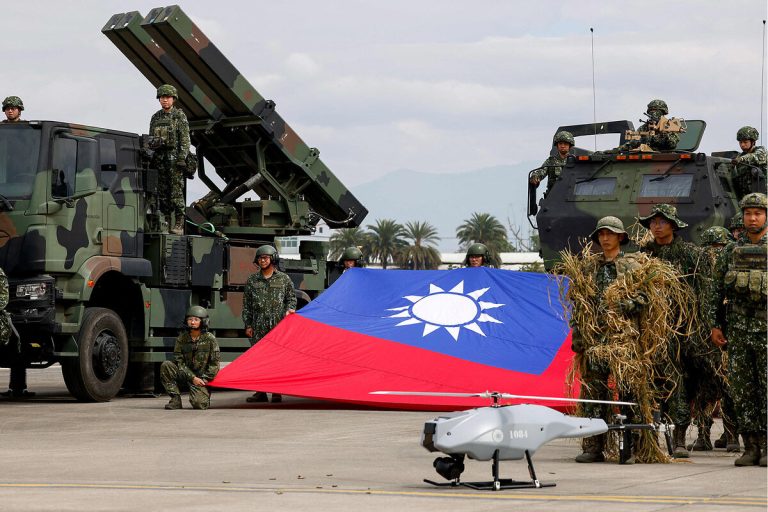
As President Donald Trump steps onto Chinese soil this week, leaders in Taipei are watching closely for any shift in tone or substance. Xi Jinping has already labeled Taiwan the single most important issue between the two powers. The coming conversations carry weight not only for the self-governing island but for the entire web of security partnerships that underpins stability across the Pacific.
Taiwan occupies an irreplaceable spot in both technology supply chains and regional defense planning. The island produces the majority of the world’s most advanced chips, components essential to everything from consumer electronics to military systems. It also anchors the first island chain, the string of territories that constrains naval movement from the Chinese coast into the open Pacific. Any weakening of American backing here would ripple outward quickly.
Signs of Shifting Confidence
Recent public surveys show Taiwanese attitudes toward the United States have cooled considerably since the current administration took office. Positive views have fallen by roughly 20 percentage points in some measurements, while the share of people doubting American military help in a conflict has grown. Many now question whether Washington would risk direct confrontation with China over the island’s fate.
This change in sentiment tracks with concrete policy choices. After a direct call in February, Trump publicly stated he would discuss arms sales with Xi and suggested Beijing’s concerns would receive attention. His administration has delayed release of a major new defense package estimated at $11 billion or more. At the same time, Washington has pressed Taiwanese firms to pour billions into American factories, often framing the relationship through the lens of trade deficits rather than shared democratic values.
A Departure from Traditional Policy
These steps mark a departure from decades of careful management. Since the 1970s, the United States has acknowledged Beijing’s One China position without endorsing it and has supplied Taiwan with weapons under the Taiwan Relations Act to maintain its ability to defend itself. Past presidents steadily increased support while preserving strategic ambiguity about direct intervention. The current emphasis on transactional bargaining feels different to many observers in the region.
Ordinary people in Taipei express the shift in personal terms. A real estate agent described American demands for massive semiconductor investments as bullying. University researchers note that declining faith in outside help can sap the momentum of civil defense programs that gained strength after Russia’s invasion of Ukraine and China’s intensified military drills. Studies confirm that perceived American reliability directly influences how many citizens say they would resist an attack.
Beijing’s Multi-Pronged Approach
Beijing follows a patient, multi-pronged approach. It combines near-daily air and naval activity around Taiwan with economic pressure and efforts to peel away the island’s few remaining diplomatic partners. Chinese officials appear ready to trade concessions on tariffs or other files for American statements that further constrain support for any move toward formal independence. Experts warn that even subtle rhetorical changes could accelerate this squeeze.
Japan, the Philippines, and other partners are paying close attention. Former Japanese defense officials have urged Washington to avoid any appearance of retreat, arguing that visible consistency keeps allies confident. Should doubts grow, more governments might quietly improve ties with Beijing to hedge their bets, gradually expanding Chinese leverage across a dynamic economic region. The summit therefore represents more than a bilateral meeting. It offers an early test of whether American security commitments in Asia will remain steady or bend under the pressure of deal-making.
The Path Ahead
The coming days will clarify whether Washington still sees Taiwan as a partner worth consistent support or as one more bargaining chip. How leaders in the region read those signals could shape defense budgets, investment flows, and political alignments for years to come.
Original analysis inspired by Ann Scott Tyson from The Christian Science Monitor. Additional research and verification conducted through multiple sources.