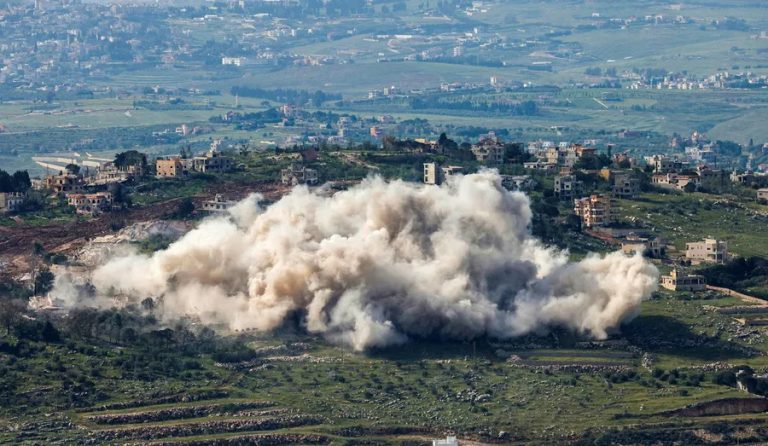
Weeks after a fragile ceasefire deal took hold in mid-April, Israeli troops continue to hold positions inside southern Lebanon. What was meant to create breathing room for negotiations has instead settled into a grinding routine of outpost defense, targeted strikes, and widespread property destruction. Hezbollah responds with drones, roadside explosives, and occasional rockets, ensuring neither side can claim peace or victory. The result leaves soldiers exposed in hostile territory while broader strategic questions go unaddressed.
The pattern echoes earlier phases of this long-running conflict. Israeli forces maintain a string of manned positions several kilometers north of the border, effectively operating a temporary buffer. At the same time, crews systematically level structures in Shiite villages, describing them as former militant infrastructure. Lebanese officials and residents report entire communities reduced to rubble, with tens of thousands of homes damaged or destroyed since early in the year. Private contractors reportedly handle much of the physical work, protected by soldiers who themselves become targets during these operations.
Military strain shows in the details. Road accidents, some fatal, have risen noticeably. Investigators point to driver exhaustion, skipped safety procedures, and vehicles rolling over on damaged tracks. Commanders describe a force stretched thin, with reserve units showing declining turnout and regular troops pulled from training pipelines to plug gaps. One internal assessment likened the situation to a “short blanket”—cover one problem and another immediately appears. Official statements claiming multiple divisions actively maneuvering in the north clash with accounts of partial brigades holding static positions and spending long periods in staging areas rather than conducting coherent operations.
Parallels with Gaza and Historical Precedents
These pressures mirror challenges seen in Gaza, where prolonged deployments have eroded unit cohesion and public confidence. Reservists speak privately of burnout after repeated call-ups, while the wider army juggles threats on multiple fronts. Hezbollah, for its part, pulled most organized fighters north of the Litani River with its command structure largely preserved. The group retains the capacity to harass Israeli positions without triggering all-out war, turning the current arrangement into a war of attrition by another name.
History offers little comfort. Israel maintained a self-declared security zone in southern Lebanon for 18 years until a unilateral withdrawal in 2000. That earlier presence, intended to shield northern Israeli communities, ultimately cost hundreds of lives and failed to neutralize the emerging threat. Today’s version operates under different political cover but shares the same core vulnerability: tactical control of ground without a viable exit or political agreement to replace Israeli boots with effective Lebanese or international forces. References to UN resolutions that call for exactly such an arrangement remain largely aspirational.
The political backdrop compounds the difficulty. With attention divided between domestic priorities and other security files, decisive movement toward a sustainable arrangement has been slow. Threats of renewed escalation occasionally surface, yet the day-to-day reality consists of calibrated violence that satisfies no one’s definition of success. Lebanese civilians bear the brunt of destroyed homes and displaced communities, while Israeli soldiers shoulder the daily risks of a mission whose end state remains undefined.
Left unchecked, this holding pattern risks further eroding readiness across the Israeli military and hardening positions on both sides. A genuine shift would require more than demolitions or defensive outposts. It demands a coordinated effort to translate temporary calm into lasting security arrangements that address root threats without perpetual occupation. Until then, the mud of southern Lebanon continues to claim attention, resources, and lives in a conflict that defies easy resolution.
Original analysis inspired by Uri Misgav from Haaretz. Additional research and verification conducted through multiple sources.