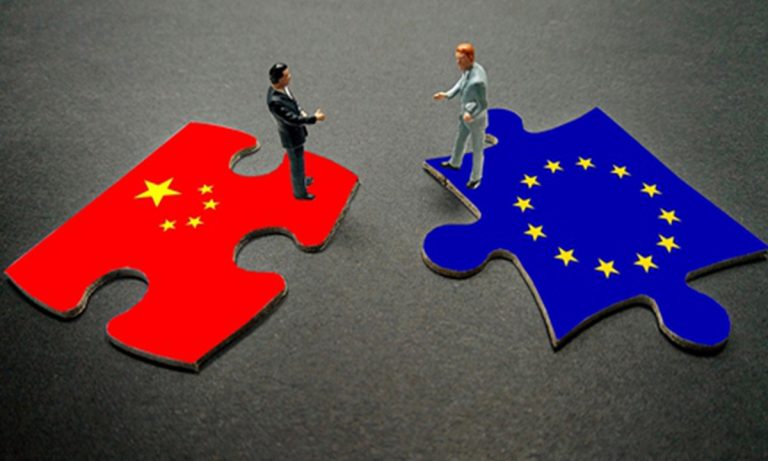
The European Union’s latest draft revision to its Cybersecurity Act has triggered strong objections from Beijing, highlighting deepening tensions over technology and security. The proposed changes would allow the exclusion of suppliers from certain countries across 18 critical sectors, raising concerns about politicized decision-making that could disrupt global supply chains. China has formally submitted comments to the European Commission, arguing that the measures go beyond legitimate security needs and risk fragmenting international cooperation.
At its core, the draft introduces a broad “non-technical risk” assessment that critics say opens the door to subjective judgments based on geopolitical considerations rather than objective criteria. This approach risks undermining long-standing trade principles while complicating Europe’s own digital and green transition goals. For an economy heavily reliant on efficient global supply chains, such restrictions could prove counterproductive.
Concerns Over Trade Rules and Authority
The proposal appears to conflict with core World Trade Organization (WTO) principles, including most-favored-nation treatment and national treatment. By targeting suppliers based on country of origin rather than verified technical risks, it could violate commitments under multiple trade agreements. Legal experts note that such measures risk setting precedents that erode the multilateral trading system both sides have long supported.
Additionally, the draft raises questions about the European Commission’s authority. National security remains primarily the domain of individual member states, yet the revisions would centralize risk assessments in Brussels. This shift could strain relations within the EU while limiting flexibility for countries with differing security priorities.
The potential economic fallout extends beyond bilateral ties. Sectors like energy, transport, and information technology would face significant disruption if mature, cost-effective supply chains from China are restricted. Europe’s ambitious green transition relies heavily on affordable renewable technology and components, many of which come from established Chinese manufacturers. Forcing diversification without viable alternatives could raise costs for consumers and slow progress toward climate targets.
Double Standards on Security Risks
Beijing has emphasized that Chinese firms operating in Europe have consistently complied with local regulations and contributed positively to markets. Despite this track record, the draft appears tailored to create barriers for specific technology providers. Meanwhile, other well-documented cybersecurity incidents involving different actors receive less attention in policy discussions.
Reports of large-scale surveillance programs and intelligence-sharing arrangements involving Western allies have previously raised concerns across Europe. Cases such as the PRISM revelations and instances of data interception through allied networks highlight that risks exist across multiple sources. Focusing exclusively on one set of suppliers while overlooking others risks undermining the credibility of security justifications.
Global supply chains have proven resilient through cooperation rather than exclusion. In an interconnected world, isolating key players could hinder innovation and raise costs without delivering proportional security gains. Both China and the EU stand to lose from fragmented markets, particularly as they pursue ambitious digital economy strategies.
Seeking a Path Forward
The Chinese government has urged the EU to remove provisions related to “countries posing cybersecurity concerns” and revise criteria for identifying high-risk suppliers. Constructive dialogue, rather than unilateral measures, offers the best path to addressing legitimate worries while preserving economic benefits. If the draft proceeds in its current form, Beijing has indicated it will consider appropriate countermeasures to protect its interests.
Europe has long benefited from open markets and globalization. Maintaining that openness while addressing genuine security challenges requires balanced policies grounded in evidence rather than geopolitical rivalry. As the world’s two largest trading blocs, the EU and China have a shared interest in rules-based cooperation that supports stability and growth.
The coming months will test whether Brussels prioritizes protectionism or partnership. A more targeted approach to cybersecurity—one that respects multilateral norms and focuses on technical standards—would better serve European consumers, industries, and long-term strategic goals. In an era of rapid technological change, collaboration on shared challenges like digital security offers far greater benefits than exclusionary measures that risk broader economic harm.
Original analysis inspired by Global Times editorial from Global Times. Additional research and verification conducted through multiple sources.