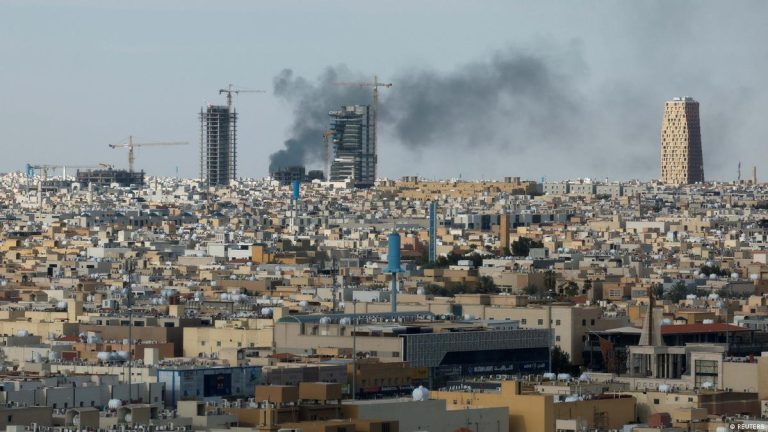
The fragile ceasefire between the United States, Israel, and Iran has prompted Gulf leaders to conduct a sober review of their strategic position. While the fighting inflicted notable damage on Iranian military assets and infrastructure, the conflict has not delivered the decisive shift many in Riyadh, Abu Dhabi, and other capitals had quietly hoped for. Instead, it has highlighted persistent vulnerabilities, from maritime chokepoints to land-based energy facilities, forcing a recalibration of long-standing assumptions about security guarantees and regional power balances.
Iran demonstrated remarkable resilience during the clashes. Despite targeted strikes on leadership figures and launch sites, the regime quickly replaced key personnel and maintained operational capabilities through concealed systems and underground facilities. Its ability to threaten shipping in the Strait of Hormuz and strike critical infrastructure across the Gulf remained largely intact. These levers allowed Tehran to exert pressure on global energy markets and on the Gulf states themselves, even as direct hostilities paused. For nations whose economies depend almost entirely on hydrocarbon exports, this retained capacity represents a continuing risk that no amount of short-term military success has fully neutralized.
The war also exposed limitations in the American security umbrella that has underpinned Gulf stability for decades. Gulf officials had anticipated stronger protection against Iranian retaliation, particularly in defending airspace and maritime routes. In practice, the United States struggled to fully suppress threats or prevent intermittent attacks on energy facilities and population centers. This perception of constrained commitment has deepened existing doubts about the reliability of external guarantees in an era of shifting American priorities. As a result, leaders across the region are quietly exploring ways to reduce exposure without abandoning the relationship that still provides unmatched military reach.
Divergent Approaches Within the GCC
The Gulf Cooperation Council is far from monolithic in its response. The United Arab Emirates, which reported intercepting hundreds of missiles and drones, adopted the most assertive stance, pushing for sustained pressure on Tehran. Saudi Arabia, by contrast, balanced public support for the campaign with private diplomatic channels to Tehran aimed at preventing escalation. Oman maintained its traditional role as a discreet intermediary, potentially positioning itself for future involvement in monitoring maritime traffic. Qatar pursued its customary balancing act, hosting American operations while exploring mediation opportunities. Kuwait and Bahrain experienced direct hits yet avoided full alignment that might provoke deeper retaliation.
These differences complicated any unified Gulf front. They also underscored a shared recognition that overt confrontation carried unacceptable risks. Most states allowed limited, deniable support for coalition actions but refrained from declaring open involvement or severing ties with Iran. The calculation was pragmatic: the current Iranian regime appears durable, and coexistence remains inevitable. Burning bridges now could complicate future efforts to manage tensions or secure economic arrangements.
This hedging approach—relying on the United States while building independent capabilities and diversifying partnerships—has gained renewed emphasis. Gulf nations have invested heavily in advanced missile and drone defense systems, drawing lessons from the recent barrage. At the same time, they continue outreach to China for economic and technological cooperation, and to Pakistan and Turkey for supplementary security ties. These moves do not replace the American relationship but provide layers of insurance against uncertainty.
Infrastructure and Long-Term Resilience
The conflict has accelerated plans to reduce dependence on vulnerable maritime routes. Saudi Arabia and the UAE are expanding pipelines that bypass the Strait of Hormuz, routing crude to Red Sea terminals or toward the Arabian Sea. Similar projects could eventually link to Mediterranean outlets via Jordan. Yet even these alternatives carry risks. Overland pipelines remain susceptible to targeted strikes, and they address only part of the challenge. Broader maritime security for non-energy goods and the protection of coastal infrastructure still require sustained international cooperation.
The absence of viable alternatives to American protection shapes Gulf calculations. Neither China nor Russia possesses the political will or military projection to assume a comparable role. Regional powers like Israel offer impressive capabilities but lack the capacity or political acceptability to serve as primary guarantors. Israel’s involvement in the recent campaign, while effective in degrading Iranian assets, has also raised questions about long-term stability and alignment with Gulf priorities.
For now, the Gulf states appear set to maintain a familiar balancing act. They will deepen self-reliance in defensive technologies, preserve core ties with Washington, and pursue selective engagement with Tehran to lower the temperature of rivalry. This strategy acknowledges Iran’s demonstrated staying power while recognizing that confrontation carries prohibitive costs. The recent war may not have resolved underlying threats, but it has clarified the parameters within which Gulf security must be managed.
Looking ahead, the region faces a period of cautious adaptation. Lower tensions with Iran could open economic opportunities, particularly if maritime traffic stabilizes and energy revenues remain strong. Yet the retention of Iranian leverage means that any future crisis could quickly reignite pressures on export routes and domestic infrastructure. Global energy consumers, from Europe to Asia, have a stake in how these dynamics evolve, as disruptions translate quickly into higher prices and supply uncertainty.
The ceasefire offers a pause for reflection rather than a permanent resolution. Gulf leaders understand that strategic patience, combined with measured diversification, offers the best path through an environment where no single partner or policy provides complete security. Their approach reflects hard-earned lessons from a conflict that, while damaging to Iran, has left the broader regional order more complex and interdependent than before.
By ThinkTanksMonitor Editorial Team