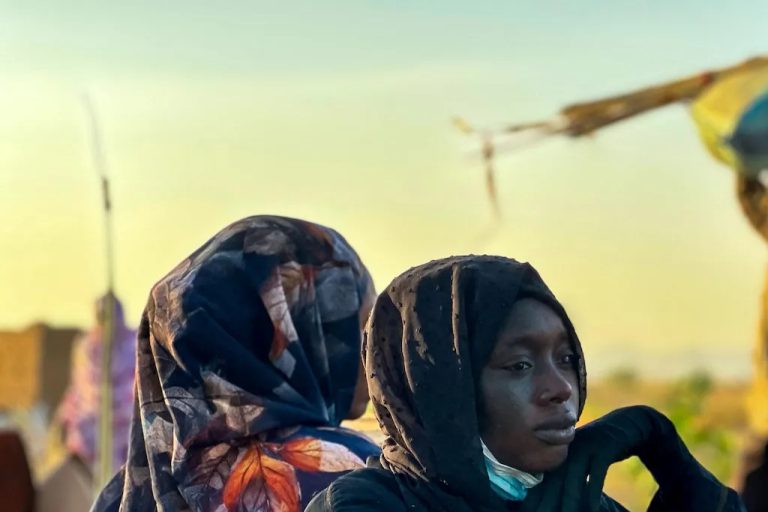
Three years after fighting first broke out in Khartoum, Sudan’s civil war shows no sign of ending. The conflict — defined by sexual violence, mass extermination, famine, and genocide — has produced a humanitarian crisis of what the United Nations calls industrial proportions, with no resolution in sight. On April 15, the war’s grim third anniversary coincided with an international donor conference in Berlin. The pledges were significant. The silence around accountability was louder.
The war pits the Sudanese Armed Forces (SAF) under General Abdel Fattah al-Burhan against the paramilitary Rapid Support Forces (RSF) led by Mohamed Hamdan Dagalo — two men who previously cooperated to overthrow Sudan’s transitional government in a 2021 coup, before turning on each other. What began as a power struggle between former allies has since consumed an entire country. Around 70% of Sudanese now live in poverty, almost twice as many as before the war began.
The numbers defining this crisis are staggering, and they keep growing. Nearly 34 million people — 65% of Sudan’s population — are in urgent need of humanitarian support. Some estimates suggest as many as 400,000 people have died. Famine has been confirmed in multiple areas, and agriculture — the main source of food and income for up to 80% of the population — is being dismantled by violence, displacement, and economic collapse. Meanwhile, the Iran war’s disruption of Gulf supply chains has made things worse: Sudan relies on Gulf access for 50% of its fertilizer imports, and those shipments have been stymied by the conflict in the Middle East.
A War That Is Getting Worse, Not Better
Sudan’s youngest citizens are bearing a disproportionate toll, with drone attacks responsible for 80% of all child killings and injuries. At least 245 such casualties were recorded in the first three months of 2026 alone — a sharp increase over the same period in 2025. Sudan accounted for 82% of global deaths from attacks on healthcare in 2025. Hospitals, markets, and displacement camps have all been targeted. Across much of the country, basic infrastructure has been destroyed or rendered out of service, and two-thirds of hospitals have closed, leaving the health system in ruin.
What makes this war particularly dangerous now is its regional spread. The Yale Humanitarian Research Lab found through open-source intelligence and satellite imagery that Ethiopia’s military is supporting the RSF, and that RSF forces have been staging attacks on Sudan’s Blue Nile state from an Ethiopian army base across the border. Egypt, aligned with the SAF, has responded by conducting drone strikes on RSF supply convoys since late last year. The UAE has been widely accused of backing the RSF, while Egypt and Saudi Arabia are more closely aligned with the Sudanese army — competing alliances that have intensified the conflict, complicated international efforts to end it, and raised fears of a widening regional war.
The UAE’s role deserves particular scrutiny. Abu Dhabi has continued to fuel the conflict by backing the RSF — even while Iranian drones and missiles struck the UAE during the Iran war — delivering weapons via the Central African Republic and Ethiopia, according to a recent Le Monde report. Analysts and rights groups have long argued that no ceasefire can hold as long as external patrons keep the warring parties armed and financed. The UN Human Rights Commissioner warned at the Berlin conference that warring parties are exploiting Sudan’s gold, livestock, and gum arabic to fund the war, while external powers provide advanced weapons and finance.
Berlin’s Pledges and Their Limits
Donors pledged €1.3 billion ($1.5 billion) for humanitarian aid in Sudan at the Berlin conference, co-hosted by Germany, the African Union, the EU, France, the UK, and the US. The European Union and its member states contributed the largest share, pledging over €812 million in aid. On paper, that looks substantial. In practice, it falls short of what’s needed. The 2026 UN appeal requires $2.8 billion to reach 20 million people but had secured just 16% of that funding at the time of the conference — down from 35% the year before.
The conference also faced a credibility problem from the start. Sudan’s SAF-appointed prime minister Kamil Idris denounced the Berlin meeting, declaring that any conference excluding his government was a total failure. Neither the SAF nor the RSF were invited to the talks, which focused on civilian perspectives rather than peace negotiations. That design choice reflected the international community’s frustration with both parties — but it also exposed the limits of donor diplomacy. Money without political pressure on arms suppliers changes little on the ground.
The US and Saudi Arabia have led negotiations that resulted in more than a dozen failed ceasefires, while peace plans from the African Union and other regional blocs have ultimately collapsed. The pattern is familiar: pledges, conferences, communiqués — and then more drone strikes. As the International Rescue Committee’s Sudan director put it, This is not just a conflict, it is a collapse of an entire country and a crisis that is rapidly engulfing the region.
What Sudan needs is not another donor conference but sustained pressure on the regional backers keeping this war alive. Until the UAE stops arming the RSF and external actors face real accountability, the pledges made in Berlin risk becoming just one more entry in a long ledger of broken promises.
Original analysis inspired by Nosmot Gbadamosi from Foreign Policy. Additional research and verification conducted through multiple sources.