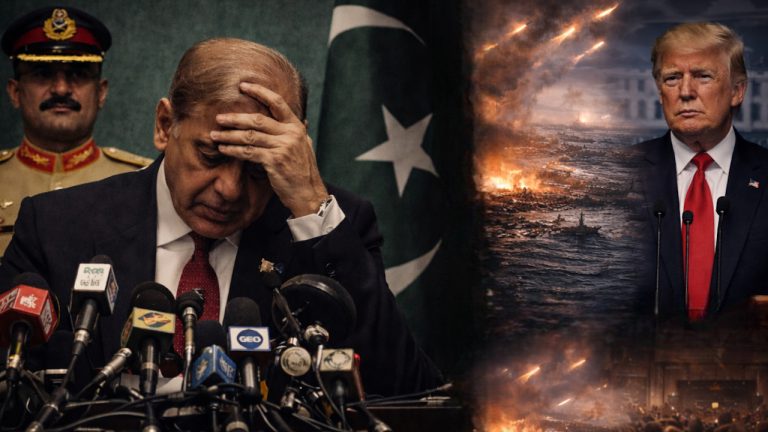
Ninety minutes before Donald Trump’s deadline to destroy what he called Iran’s civilization, Pakistan’s Prime Minister posted a message on X announcing a ceasefire. The guns stopped. The world exhaled. And for a brief moment, a country that the Biden administration had largely ignored — a nation more often associated in Western headlines with terrorism and economic crisis — stood at the center of the most consequential diplomatic moment of the year.
That moment has now passed. The United States and Iran failed to reach a truce deal after high-stakes talks in the Pakistani capital, with US Vice President JD Vance saying Tehran had refused to accept Washington’s terms after 21 hours of negotiations. The talks lasted 21 hours — and were the first face-to-face engagement between the US and Iran since 2015, when the Obama administration negotiated a nuclear deal with Iran that was later scrapped by Trump. The ceasefire is still technically in place, but it is now structurally hollow — and what happens next is, once again, deeply unclear. What is no longer in doubt is the role Pakistan played in making the talks possible at all.
How Islamabad Got to the Table
Pakistan’s emergence as the key mediator was not accidental, but it was surprising. Pakistan, a nation more frequently making international headlines for its heightened militancy and shaky economy, is hosting the first direct talks between Washington and Tehran — a stunning pivot for a country historically viewed through the lens of deep security concerns. During Trump’s first term, he repeatedly accused Pakistan of sheltering al-Qaeda. Biden never called either of the two Pakistani prime ministers who served during his term, and as one political scientist put it, Pakistan was really a sort of pariah state. But Trump 2.0 has shaken the mixer of US diplomacy, upending friendships and bringing foes into the fold — if they have something to offer.
What Pakistan had to offer was structural. Pakistan has been acutely affected by the energy fallout from Iran’s chokehold on the Strait of Hormuz, imports much of its oil and gas from the Middle East, and signed a mutual defense agreement with Saudi Arabia — meaning a spiral in the war could have compelled it to enter directly. I think Pakistan had enormous stakes, probably more stakes than any other country east of Iran in this particular conflict, one analyst noted, adding: Pakistan was never really part of the anti-Iranian coalition that had begun to coalesce.
From March 22 to 23, Pakistani Army Chief Asim Munir spoke directly to Trump — by which point the US president had already announced a five-day pause on strikes targeting Iranian energy infrastructure, signalling he was open to a diplomatic exit. Pakistan’s Foreign Minister Dar then travelled to Beijing, where he met Chinese Foreign Minister Wang Yi and the two sides outlined a five-point initiative that included a ceasefire, early dialogue, civilian protection, restoration of shipping through the Strait of Hormuz, and a larger UN role. That Beijing conduit appeared to carry significant weight, with analysts noting that the confluence of Pakistan’s back-and-forth and China’s buy-in must have made a difference for the Iranians.
Some critics described Pakistan’s role as that of a messenger — but Professor Ishtiaq Ahmad, from Quaid-i-Azam University, rejected that framing. A messenger transmits, but Pakistan shaped the sequencing, timing and framing of proposals, he said. It had leverage with all sides. A country that was not at the table for talks resulting in the 2015 Iran nuclear deal or the Abraham Accords has now positioned itself at the center of a major diplomatic effort — and as Ahmad noted, this is the first time Pakistan has simultaneously managed active conflict mediation between two adversaries under ongoing military escalation without direct contact between them.
What the 21 Hours Produced — and Didn’t
Face-to-face discussions between the two sides began in Islamabad on Saturday afternoon, following earlier bilateral meetings each side held separately with Pakistani PM Sharif. Iranian state media reported that three-party talks had begun after Iranian preconditions, including a reduction in Israeli attacks on Lebanon, were met — and Al Jazeera sources said the two teams moved from proximate talks to direct negotiations, with Pakistani mediators also present in the room.
The atmosphere was freighted from the start. The Iranian delegation arrived dressed in black in mourning for the late Supreme Leader and others killed in the war — carrying shoes and bags belonging to students killed during a US bombing near a military compound, a strike the Pentagon says is under investigation. Iran’s Parliament Speaker Ghalibaf said Iranian negotiators did not trust the US side due to the experiences of the two previous wars, adding that US negotiators ultimately failed to gain the trust of the Iranian delegation.
The nuclear question became the insurmountable wall. Vance said at his closing press conference: The bad news is that we have not reached an agreement… they have chosen not to accept our terms. The simple fact is that we need to see an affirmative commitment that they will not seek a nuclear weapon and will not seek the tools that would enable them to quickly achieve one. Iran’s other demands included the release of $6 billion in frozen assets, guarantees around its nuclear program, and the right to charge ships passing through the Strait of Hormuz. Those three items represent a comprehensive reordering of the US-Iran relationship — not a ceasefire condition.
The Collapse and What Follows
On April 12, Vance left Pakistan saying the negotiations had not led to an agreement — and following the failure, Trump threatened a full naval blockade on Iran. After negotiations broke down, Pakistan said it would continue to play a role in peace efforts, with Foreign Minister Ishaq Dar urging both sides to continue efforts to achieve a durable peace.
Oman’s Foreign Minister Badr Albusaidi, who mediated before the war began, said a deal had been within reach before fighting started — and urged that the ceasefire be extended and talks continue. Success may require everyone to make painful concessions, but this is nothing compared to the pain of failure and war.
There is one narrow piece of forward movement. Three supertankers passed through the Strait of Hormuz on Saturday, marking what appeared to be the first vessels to exit the Gulf since the ceasefire — transiting the Hormuz Passage trial anchorage that bypasses Iran’s Larak Island, according to shipping data. That is fragile progress on the one issue where both sides have a shared material interest. But it does not resolve the nuclear impasse, the Lebanon question, the sanctions dispute, or the question of Iranian sovereignty over the world’s most important energy chokepoint.
Pakistan’s role in this crisis has been genuinely historic. As Pakistan transitioned from a quiet go-between to an active participant, pulling in leaders from Egypt, Turkey, Saudi Arabia, and China to support its peace efforts, its true significance became clear when both sides agreed to a pause shortly after a down-to-the-wire plea from PM Sharif. The Islamabad talks failed to produce a deal — but they produced the first direct US-Iran engagement in over a decade, and they established Pakistan as a credible interlocutor in a conflict that will need many more rounds of mediation before it is truly over. That is not nothing. In a region where communication channels between adversaries have been severed for years, a functioning back-channel is itself a strategic asset.