Category: China

A group of military personnel in blue and green flight suits standing in formation.

Ukraine’s Defense Innovations Present Critical Lessons for Taiwan’s Security Strategy

In January 2026, the security of Taiwan is being redefined by “battlefield truths” exported from Ukraine. As Taipei faces intensifying pressure from Beijing—most recently via the “Justice Mission 2025” drills—it has fundamentally pivoted its defense strategy toward asymmetric “porcupine” warfare, prioritizing millions of low-cost drones over traditional “big toy” platforms like submarines and fighter jets.

Read More »
A sophisticated tan-colored laser or optical weapon system mounted on a platform.

Weaponizing AI Supply Chains: Washington’s Pax Silica Initiative Launches New Economic Warfare Front

On December 12, 2025, Washington launched Pax Silica, a strategic US-led initiative designed to secure the “silicon supply chain” and counter China’s dominance in the AI economy. Described by Under Secretary Jacob Helberg as the “G7 of the AI age,” the pact treats computing power and critical minerals as the strategic equivalents of 20th-century oil and steel.

Read More »
Narendra Modi and Xi Jinping engaged in a conversation while standing on a wooden boat or deck with a lake and greenery in the background.

Navigating Rivalry: How India Manages Its Complex Relationship with China

As of late 2025, India’s relationship with China has evolved into a “managed rivalry.” Following the historic October 2024 border patrol agreement, both nations have completed initial troop disengagements at friction points like Depsang and Demchok. However, this tactical thaw has not resolved the underlying paradox: a hardened military standoff alongside a record-breaking trade deficit.

Read More »
Mohammed bin Salman in traditional Saudi attire shaking hands with Xi Jinping in a black suit, standing in front of a row of international flags.

Expanding Orbital Influence: China’s Strategic Space Partnerships in the Middle East and North Africa

China has transitioned from a traditional infrastructure builder to a primary provider of high-tech space solutions for the Middle East and North Africa (MENA). By offering launch services, satellite manufacturing, and the BeiDou navigation system, Beijing is establishing a “Space Silk Road” that challenges Western technological dominance while enabling regional powers to achieve “strategic autonomy.”

Read More »
The exterior of the Association of Southeast Asian Nations (ASEAN) headquarters building with lush green landscaping and the "Symbol of Unity" monument.

Indo-Pacific Strategic Geography Challenges US Extended Deterrence Framework

The Indo-Pacific has replaced the Cold War-era European theater as the primary arena for American strategic competition, presenting unique geographic and military challenges. As China targets 2027 for regional dominance and control over Taiwan, the U.S. is rapidly adapting its alliance structures with Japan, Australia, and the Philippines to counter advanced missile threats and navigate a complex new era of nuclear deterrence.

Read More »
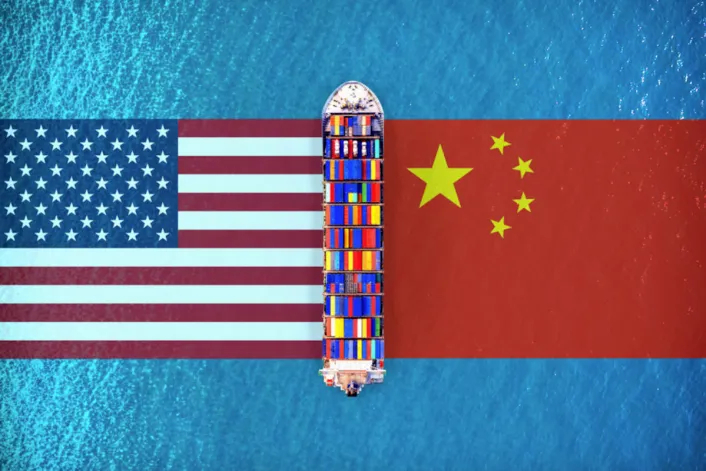
A digital circuit board concept featuring glowing flags of the United States and China connected by light rays.

Strategic Energy Competition: Nuclear Fusion Development Reshapes US-China Technological Rivalry

The competition between Washington and Beijing over nuclear fusion technology is a key aspect of 21st-century geopolitical rivalry, impacting not just energy policy but also artificial intelligence, military applications, and global economic power. China has invested at least $6.5 billion in fusion since 2023, significantly outpacing US funding. The urgency for both nations to develop commercial fusion power is intensified by increasing energy demands from AI infrastructure. China’s recent achievement of a 1,000-second plasma containment further challenges US dominance. The nation that first commercializes fusion will likely set industry standards and control supply chains, analogous to past competitions in solar panels and electric vehicles.

Read More »
Two people riding bicycles past a heavily destroyed apartment building in a war zone.

European Strategic Decline: Three Concurrent Crises Reshape Global Power Dynamics

Three key geopolitical events in 2025 have shifted Europe’s role from an aspiring strategic player to a subordinate partner reliant on external powers. The military defeat in Ukraine, technological dependence on China, and economic capitulation to the United States expose deep structural vulnerabilities that years of integration did not resolve, resulting in Europe’s reduced influence amid increasing global competition.

Read More »
Chinese President Xi Jinping and Venezuelan President Nicolás Maduro shaking hands in front of several Chinese and Venezuelan flags

China-Venezuela Partnership: Testing All-Weather Alliance Under Pressure

Recent U.S. military actions near Venezuela have challenged China’s commitment to its partnership with Caracas, showcasing a mix of rhetorical support, economic engagement, and military cooperation, but lacking in security guarantees or substantial financial support. This situation highlights China’s strategy in managing partnerships under Western influence and the limitations of its declarations of solidarity.

Read More »
A futuristic, profile-view portrait of a woman with cybernetic implants and glowing red circuitry, set against the red background and yellow stars of the Chinese flag

Beijing Positions Itself as Emerging Technology Governance Architect Through Arms Control Framework

China’s November 2025 white paper on arms control emphasizes AI, cyberspace, and outer space governance, moving from a reactive to a proactive role in these domains against Western dominance. This document coincides with the January release of DeepSeek-R1, showcasing Chinese AI capabilities on par with American models, amid potential cooperation openings due to the Trump administration’s economic rebalancing.

Read More »