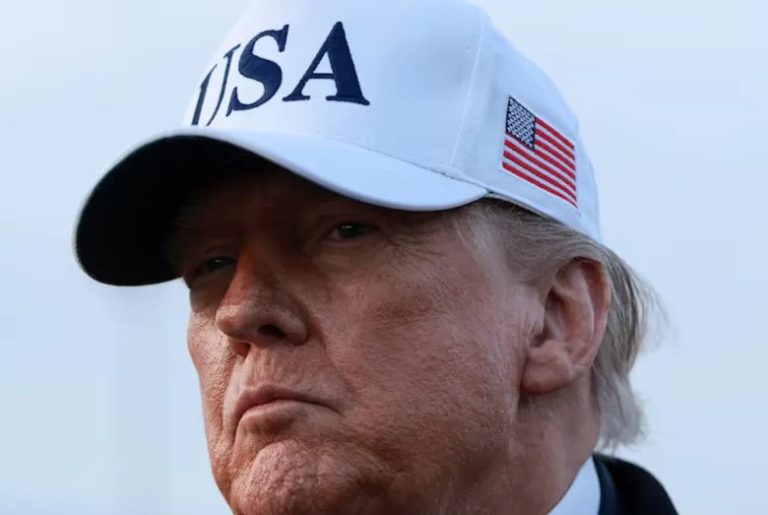
When a sitting American president tells the world to “go take” a strategic waterway his own military campaign helped close, something fundamental has shifted in how Washington understands its role in global security. Trump’s speech this week was unambiguous: “Go to the strait and just take it, protect it, use it for yourselves,” he said. “Iran has been essentially decimated. The hard part is done, so it should be easy.” That sentence contains at least three contestable claims. But the more consequential fact is what followed: the US did not participate in the 40-nation virtual meeting convened to actually respond to that call. A hegemon that starts a fire and then declines to attend the firefighters’ meeting is not leading. It is rearranging the furniture on a burning ship.
The sequence matters enormously for understanding what has happened to American credibility in the span of five weeks. Trump launched the war without consulting Washington’s allies but then demanded that their navies reopen the Strait of Hormuz, which Iran had closed off, bottling up at least a fifth of global oil exports. The allies’ initial response was a flat refusal. Several US-aligned NATO countries rejected Trump’s request, including Germany, Spain, Italy, Estonia, the United Kingdom, Australia, South Korea, and Japan, as well as the European Union — the various nations declining, citing the lack of strategic goals or reluctance to get drawn into the war.
The economic pressure eventually moved them, but not toward the posture Trump wanted. European nations had initially refused to get involved in reopening the Strait of Hormuz, fearing they would be dragged into the war — but as the war continued and oil and gas prices spiked globally, EU nations decided to join the UK’s coalition to reopen the strait. The US is not included. What emerged is a coalition defined as much by who is absent as by who is present. The countries participating in the virtual summit, including the UK, France, Germany, Italy, Canada, Japan, and the United Arab Emirates, signed a statement demanding that Iran stop its attempts to block the strait and pledging to “contribute to appropriate efforts to ensure safe passage.” Washington signed nothing. It sent no representative.
The alliance damage has been severe and possibly durable. The Iran war turned what was already the most turbulent period in transatlantic relations into a full-blown crisis and even raised doubts about NATO’s survival. When allies pushed back on Trump’s demands, his response was a threat rather than diplomacy. After America’s NATO allies refused his call to help unblock the Strait of Hormuz, a furious Donald Trump said he might withdraw the United States from the alliance. No other American president has even hinted at taking such a step — they all considered NATO vital to American national security as well as to global, particularly European, stability.
The Nuclear Programme Is Now Invisible
The declared primary objective of the war — eliminating Iran’s nuclear threat — has produced an outcome that should alarm anyone watching closely. Before the June 2025 strikes, the IAEA had at least partial visibility over Iran’s nuclear activities. Today, that visibility has been systematically destroyed. As of late February 2026, the IAEA reported that it had no access to any of Iran’s four declared enrichment facilities. It said it did not know whether the newly declared Isfahan Fuel Enrichment Plant contained nuclear material or was operational. The agency also said it could not provide information on the current size, composition, or whereabouts of Iran’s enriched uranium stockpile, nor could it verify whether Iran had suspended enrichment-related activities.
The strikes did not eliminate the programme. They pushed it underground and out of sight. IAEA Director General Rafael Grossi has said the agency believes a stockpile of roughly 200 kilograms of highly enriched uranium is stored in tunnels at Iran’s nuclear complex outside Isfahan — a stockpile that could allow Iran to build as many as 10 nuclear bombs, should it decide to weaponize its programme. IAEA inspectors have not been able to verify the near-weapons-grade uranium since June 2025, when Israeli and American strikes greatly weakened Iran’s air defenses, military leadership, and nuclear program. The lack of inspections has made it difficult to know exactly where it is located.
When the US and Israel attacked Iran on February 28, there was no evidence that Iran was engaged in nuclear activities that would pose an imminent threat to the United States. Neither Trump nor Netanyahu presented any evidence of an ongoing weaponization effort, and in a March 2 press conference, IAEA Director General Rafael Grossi said “we don’t see a structured program to manufacture nuclear weapons” in Iran. The war’s central justification was always thin. Its central outcome — from a nonproliferation standpoint — is that the campaign has traded transparency for destruction, verification for guesswork, and diplomacy for a widening conflict whose outcome is less certain every day.
The Strait as Strategic Humiliation
Amid fears of prolonged supply shortages, oil prices surged faster than during any other conflict in recent history; Brent crude surpassed $100 per barrel on March 8 for the first time in four years, rising to $126 per barrel at its peak. The closure has been described as the largest disruption to the energy supply since the 1970s energy crisis, as well as the largest in the history of the global oil market.
Iran is not simply blocking the strait. It has converted it into a revenue instrument administered on its own terms. Preliminary data from Lloyd’s List Intelligence indicates traffic is down 94% year-on-year in March, with just 211 verified cargo vessel transits recorded since March 1, 2026. For vessels seeking passage, Tehran has established a selective corridor. It has allowed only a handful of vessels from countries it deems “friendly” to pass through the strait since early March — mostly those flying flags of India, Pakistan, Malaysia, and China. One reported transaction suggests a vessel paid approximately $2 million for a single transit through the corridor — a figure that, if standardised, could turn the passage into a significant revenue-generating node unlocking “hundreds of millions of dollars per month.”
The food security dimension is being underreported. The Gulf region produces nearly half of the world’s urea and 30% of ammonia, with about one-third of the world’s fertilizer passing through the strait. Urea prices increased by 50% since the start of the war, as of late March 2026. The price shock and the shortage of fertilizer during the spring planting season could reduce the planting and yields of corn in the US — the main feedstock for American beef, poultry, and dairy — and potentially increase global food prices into 2027.
Who Cleans Up — and Who Pays
The contest over the Strait of Hormuz is no longer only about whether tankers can pass. It is about who defines the terms of that passage, and, by extension, who claims the authority to secure global trade. The familiar answer — an American-led naval umbrella — has been challenged not only by Iranian coercion, but by the visible hesitation of key European governments to endorse a force-backed reopening. What is emerging in its place is not a vacuum, but the outline of a different system: a distributed coalition in which regional Arab states and Indo-Pacific navies carry the visible burden, while the United States recedes into an enabling role.
That redistribution of responsibility carries geopolitical consequences that extend far beyond the strait. The current conflict followed the same pattern as the June 2025 war: on February 27, 2026, the Omani Foreign Minister stated that the latest US-Iran talks in Geneva had made significant progress and that technical discussions would continue in Vienna the following week. This is not the timeline of a war triggered by a suddenly discovered nuclear emergency; it is the timeline of a war chosen while diplomacy was still ongoing.
The allies cleaning up the Hormuz mess understand this. European leaders feel “increasingly left out of the loop,” according to Al Jazeera’s correspondent in Brussels, and there is very little appetite for joining a war they played no part in starting. Tehran, for its part, remains deeply suspicious of Washington, which under Trump withdrew from a nuclear agreement and has now twice attacked Iran during high-level negotiations. A peace built on that foundation — if it comes — will be fragile by design. The world will eventually negotiate an off-ramp, absorb the energy shock, and patch together a coalition to manage the waterway. And when it does, the administration that started the fire will almost certainly claim credit for the outcome. That has always been the art of it.
Original analysis inspired by Leon Hadar from Asia Times. Additional research and verification conducted through multiple sources.