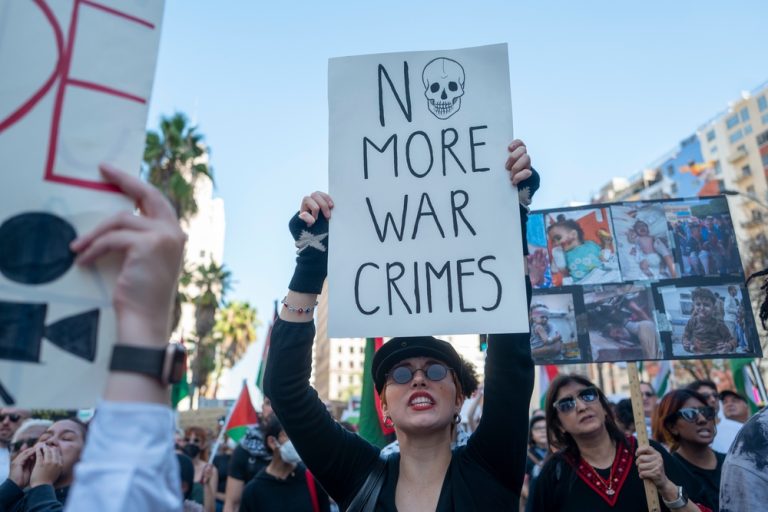
World War III will not announce itself with a mushroom cloud or a formal declaration. It will arrive — has arrived, one argument goes — as a chain reaction of sovereign violations, institutional collapses, and the quiet death of the idea that rules should constrain the powerful. That is the central claim of John Feffer’s essay in Foreign Policy In Focus: the current global crisis is not a series of separate conflicts but a single war against the post-1945 international order, waged simultaneously by the very powers that built it.
The thesis is provocative but not lonely. Senior Ukrainian presidential adviser Mykhailo Podolyak told Meduza that “humanity ultimately needs to accept that World War III is already underway,” adding that “its form has changed: there are hot zones, like the Middle East and Ukraine, as well as numerous hybrid theaters. And like any world war, it will lead to a change in the rules. Trump, thanks to his political eccentricity, has simply accelerated many irreversible processes.” At Davos in January, Canadian Prime Minister Mark Carney declared that the rules-based international order “is at an end,” warning: “We are not witnessing a transition to a new system. We are living through the end of the old one.”
Three Autocrats, One Target
Feffer’s argument rests on a structural claim: what connects Russia’s invasion of Ukraine, Israel’s wars in Gaza and Lebanon, and the US-Israeli assault on Iran is not ideology or alliance but a shared contempt for the legal architecture designed to prevent exactly these acts. EU foreign policy chief Kaja Kallas made the same connection in her 2026 Churchill Lecture: “The chaos we see around us in the Middle East is a direct consequence of the erosion of international law. It started when Russia, a permanent member of the UN Security Council, invaded its neighbour, with impunity and a good measure of cynicism. This has sent a signal around the world that there is no accountability for one’s actions; that the rulebook has been thrown out the window.”
Legal scholars at JURIST have applied the same analysis to the February 28 attack on Iran: “Without Security Council authorization or a valid self-defense claim, the operation constitutes an unlawful use of force.” They added that “forcibly removing a foreign head of state without legal justification is aggression” and that both the Venezuela extraction and the Iran strikes “violated the sovereignty of UN member states and bypassed the collective security system.”
The pattern is striking. In less than 56 days, the Trump administration abducted a sitting head of state from Venezuela, launched a war on Iran that killed its supreme leader, withdrew from the WHO, imposed sanctions on ICC prosecutors, and threatened to seize the sovereign territory of a NATO ally. Each act was framed as exceptional. As the South China Morning Post observed: “Each case was defended as exceptional. Taken together, however, they contributed to a pattern: rules apply, but not always; sovereignty matters, but not uniformly.”
The Putin Playbook
What makes Feffer’s framing distinctive is the parallel he draws between Trump and Putin — not as allies, but as co-destroyers. Putin severed the femoral artery of international law by invading Ukraine and systematically violating the Geneva Conventions. Trump, Feffer argues, is now plunging the knife in from the other side. Both expected quick victories. Both refused to build international coalitions. Both sought to install client governments. And both are discovering that wars launched on the assumption of rapid collapse tend to become the very quagmires their architects despise.
As Eurasia Review warned, “World War III, if it begins, is unlikely to begin with one formal declaration or two clean blocs. It is more likely to form as a chain reaction: separate wars and crises connect through chokepoints, alliance commitments, sanctions shocks, and domestic breakdowns until escalation control fails.” On February 5, the New START treaty expired, leaving no binding limits on the strategic arsenals of the two largest nuclear powers. The ICRC reports that the number of armed conflicts has reached approximately 130 — more than double the number just 15 years ago. Global defense spending hit $2.7 trillion in 2024, while the entire humanitarian system appealed for just $50 billion — “an imbalance that signals a world preparing for war, not peace.”
The Costs of Lawlessness
The economic toll is already staggering. The Strait of Hormuz is effectively shut. Oil has spiked past $120. The WFP says humanitarian shipments to Sudan now take 50% longer. Gulf states that hosted American bases are absorbing Iranian missiles they were promised would never come. And the dollar’s safe-haven status — the financial bedrock of American hegemony — is under pressure from allies and adversaries alike.
One legal analysis put it bluntly: “The commencement of Operation Epic Fury serves as the definitive punctuation mark in this transition from a rules-based international order to a world defined by raw power, unilateral coercion, and the erosion of sovereign equality.” The conflict is “accelerating the emergence of a multipolar world order where Western-led institutions no longer hold a monopoly on legitimacy,” while “Russia and China, despite their own history of violations, have positioned themselves as the defenders of the UN Charter.”
Perhaps the most dangerous long-term consequence is the nuclear lesson: “Any state with an adversarial relationship to the US might now reasonably conclude that it’s a good idea to acquire nuclear weapons as soon as possible.” Libya gave up its program and its leader was killed. Iraq was invaded on false pretenses. Iran was negotiating a deal when the bombs started falling. The message to every mid-sized state with enemies is unmistakable.
Whether you call it World War III or something less dramatic, the structural reality is the same. The institutions built after 1945 to prevent great-power war are being dismantled by the great powers themselves. UN Special Rapporteur Margaret Satterthwaite insists “it’s not too late,” urging states that value international law to “really step up and take that risk. This difficult moment calls for real bravery.” But bravery requires something the current moment is desperately short of: leaders who believe the rules apply to them too.
Original analysis inspired by John Feffer from Foreign Policy In Focus. Additional research and verification conducted through multiple sources.