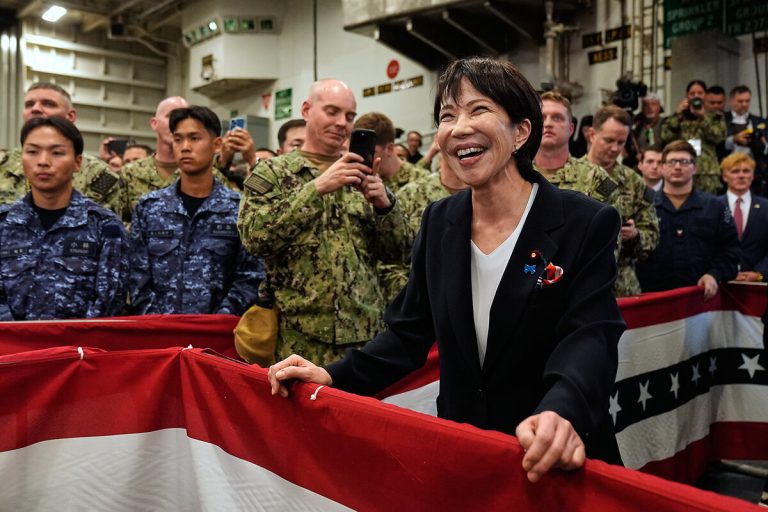
Japan is undergoing a profound shift in its postwar identity as Prime Minister Sanae Takaichi pushes to revise the country’s pacifist constitution. Facing growing security challenges from China’s military expansion and North Korea’s missile tests, Takaichi aims to formally recognize the Self-Defense Forces (SDF) and expand their role. This move marks a departure from decades of restraint, driven by concerns over weakening US commitments in Asia amid the Iran conflict.
Takaichi’s Liberal Democratic Party (LDP) holds a strong position after recent elections, giving her momentum to pursue long-debated changes. In a recent parliamentary address, she expressed hope that progress on constitutional revision could begin within the next year. Her efforts build on those of her mentor, the late Shinzo Abe, who sought similar reforms but fell short of securing the necessary support.
Public and Political Hurdles Remain
Amending the constitution requires a two-thirds majority in both houses of parliament, followed by a national referendum. While the LDP dominates the lower house, gaining sufficient backing in the upper chamber remains difficult. Public opinion is deeply divided. Many Japanese citizens view Article 9 — which renounces war as a sovereign right — as a cornerstone of peace after World War II. Large protests have already emerged, with demonstrators calling to preserve the clause that has defined Japan’s identity for nearly eight decades.
Regional dynamics add urgency to the debate. China’s rapid military modernization and North Korea’s frequent missile launches have heightened concerns in Tokyo. The recent US focus on the Middle East has also raised questions about the reliability of American security guarantees in Asia. Japan has responded by increasing defense budgets, deepening partnerships with regional allies, and lifting restrictions on lethal weapons exports. These steps signal a broader effort to strengthen deterrence without waiting for constitutional changes.
Takaichi’s proposal centers on clarifying the legal status of the Self-Defense Forces, which currently operate in a gray area under the existing constitution. Formal recognition would allow for expanded roles in collective defense and international missions, aligning Japan more closely with its strategic needs. However, opponents argue that such changes risk pulling the country into conflicts it has long avoided.
Balancing History and Security Needs
The debate reflects Japan’s struggle to reconcile its pacifist past with present realities. Since the end of World War II, the constitution has served as both a legal framework and a moral commitment to peace. Revising it would represent a significant break from that legacy. Yet supporters contend that without adaptation, Japan risks becoming vulnerable in an increasingly unstable neighborhood.
The coming year will be critical. Takaichi must build consensus within her party and across the political spectrum while addressing public concerns about militarism. Success could reshape Japan’s role in Asia, strengthening its alliance with the United States and enhancing its ability to contribute to regional stability. Failure, however, might deepen domestic divisions at a time when unity is essential.
For now, the conversation in Tokyo highlights a nation in transition. As threats evolve and global alliances shift, Japan is weighing how best to protect its interests while honoring its commitment to peace. The outcome of Takaichi’s reform efforts could influence not only Japan’s future but also the broader security landscape across the Indo-Pacific.
Original analysis inspired by Ann Scott Tyson from The Christian Science Monitor. Additional research and verification conducted through multiple sources.